English
 عربى
عربى Türk
Türk Español

Content
- 1 What POY Actually Is—and Why It Matters
- 2 The POY-DTY Process: Speed, Efficiency, and Quality Combined
- 3 How Spinning Technology Controls DTY Quality
- 4 DTY Performance Properties That Drive Application Choice
- 5 Recycled POY and the Sustainability Dimension
- 6 Selecting the Right Yarn: What Procurement Teams Need to Know
In polyester filament production, the journey from raw polymer to finished yarn is defined by one critical variable: spinning technology. The route a manufacturer chooses—from Partially Oriented Yarn (POY) through to Draw Textured Yarn (DTY)—determines not just process efficiency, but the mechanical properties, consistency, and end-use suitability of every meter of yarn produced. As global demand grows for higher-performance textiles, understanding what separates standard production from advanced spinning becomes commercially essential.
What POY Actually Is—and Why It Matters
POY is produced through high-speed melt spinning, where molten PET polymer is extruded through spinnerets, cooled, and wound at speeds typically between 3,000 and 3,600 m/min. The result is a filament whose molecular chains are only partially aligned—oriented enough to provide structural integrity, but with sufficient residual elongation (typically 120–170%) to support downstream texturing.
This partial orientation is the foundation of the entire POY-DTY process chain. It gives POY its processability advantage: the yarn can be stored, transported, and fed into texturing machines without the brittleness of fully drawn filaments. POY's controlled crystallinity—around 5%—means it responds predictably to heat and tension during draw-texturing, enabling manufacturers to dial in specific final properties with precision.
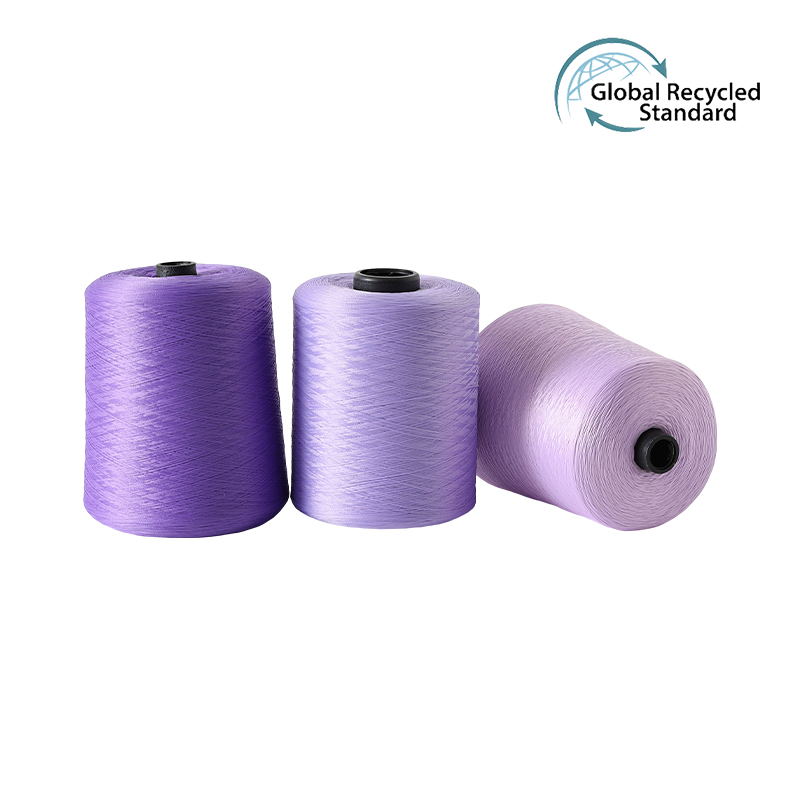
Explore our range of DTY/POY yarns developed for consistent downstream processing performance.
The POY-DTY Process: Speed, Efficiency, and Quality Combined
The POY-DTY route is the dominant two-step process in modern polyester filament production—and for good reason. After spinning, POY is fed into draw-texturing machines at post-processing speeds of 400 to 800 m/min, simultaneously drawn and false-twisted to produce DTY in the 50–167 dtex range. The process is characterized by short flow, high production efficiency, and relatively low infrastructure investment compared to older methods.
| Process Route | Spinning Speed | Post-Processing Speed | Yarn Quality |
|---|---|---|---|
| MOY-DTY | Medium-speed | 400–500 m/min | Lower efficiency, lower quality |
| POY-DTY | 3,000–3,600 m/min | 400–800 m/min | High efficiency, excellent quality |
| FDY (Spin-Draw) | 2,600–3,500 m/min | 5,100–5,500 m/min | Fully oriented, high strength |
The older MOY-DTY route—using medium-speed spinning at draw-twisting speeds of 400–500 m/min—produces lower-quality yarn with less efficiency and is being phased out by progressive manufacturers. The POY-DTY route's ability to handle long-distance transport and extended storage of the intermediate POY package gives supply chains a structural advantage that single-step processes cannot replicate.
How Spinning Technology Controls DTY Quality
DTY quality is not determined at the texturing stage alone—it is largely set during POY spinning. The key variables are interconnected:
- Quenching precision: Controlled cooling air in the quench chamber governs filament evenness. Advanced radial quenching systems maintain uniformity at fine titers down to 0.3 den, which directly affects dye uptake consistency in finished fabric.
- Spin pack and spinneret geometry: Filament cross-section—whether round, trilobal, or hollow—is fixed at extrusion. Trilobal POY, for instance, produces DTY with superior luster, making it the preferred input for carpet and blanket yarn applications.
- Winding tension: Package build quality at the POY stage determines how uniformly the yarn unwinds during texturing. Inconsistent tension creates CV% variation in the final DTY, leading to streaking or uneven crimp in downstream fabrics.
- Intermingling configuration: DTY can be produced in NIM (Non-Intermingle), SIM (Semi-Intermingle), or HIM (High-Intermingle) variants. The intermingling density affects cohesion, bulk, and suitability for specific weaving or knitting applications.
Manufacturers operating modern spinning lines with real-time process monitoring can hold denier uniformity, elongation, and tenacity within tight tolerances—a requirement for customers producing high-end apparel or technical textiles where batch-to-batch variation is commercially unacceptable.
DTY Performance Properties That Drive Application Choice
The value of the POY-DTY route ultimately rests on the performance profile of the finished yarn. DTY's crimped filament structure gives it properties that flat yarns cannot match: softness, bulk, stretch recovery, and warmth retention. With one-heater draw-texturing, DTY is more extensible and woolly in character; two-heater processing thermally sets the crimp, reducing elongation and improving dimensional stability for applications like upholstery and seat covers.
In tensile performance, high-tenacity DTY variants achieve strengths exceeding 7.0 g/d through specialized polymer formulations and tightly controlled orientation—meeting the demands of technical textiles in automotive interiors, geotextiles, and industrial webbing. At the fine end, sub-1.0 dtex microfilament DTY enables fabrics with enhanced drape, moisture management, and tactile softness for premium apparel.
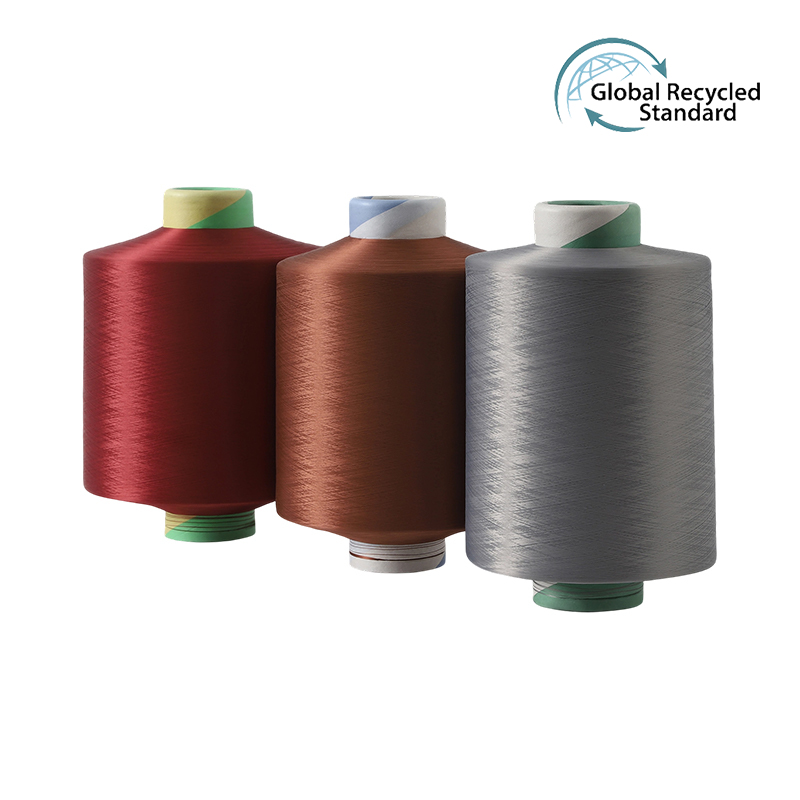
Browse our full polyester yarn product range, including specialty DTY specifications for apparel, home textiles, and industrial end-uses.
Recycled POY and the Sustainability Dimension
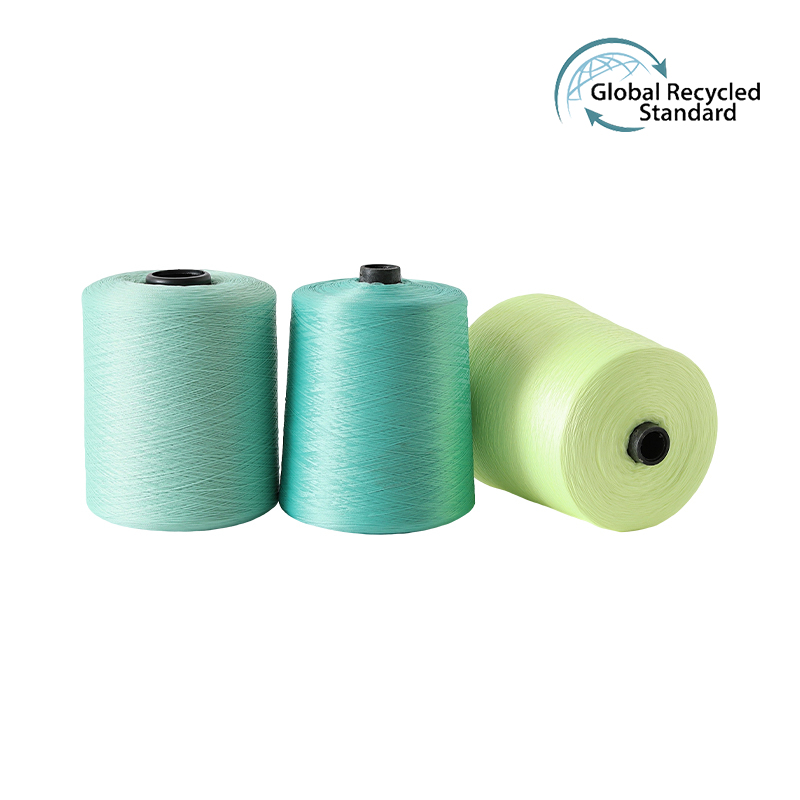
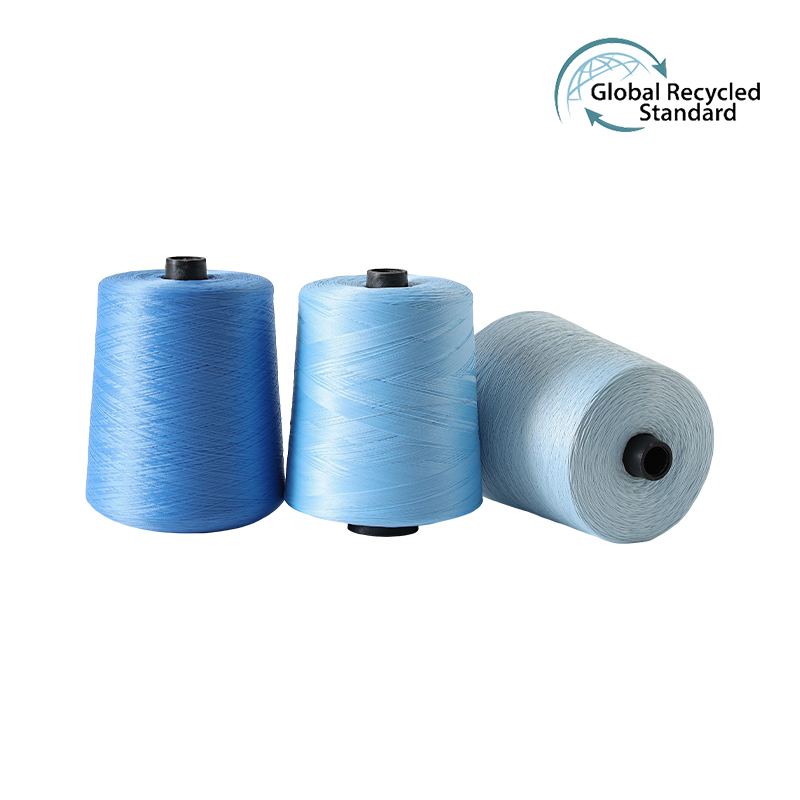
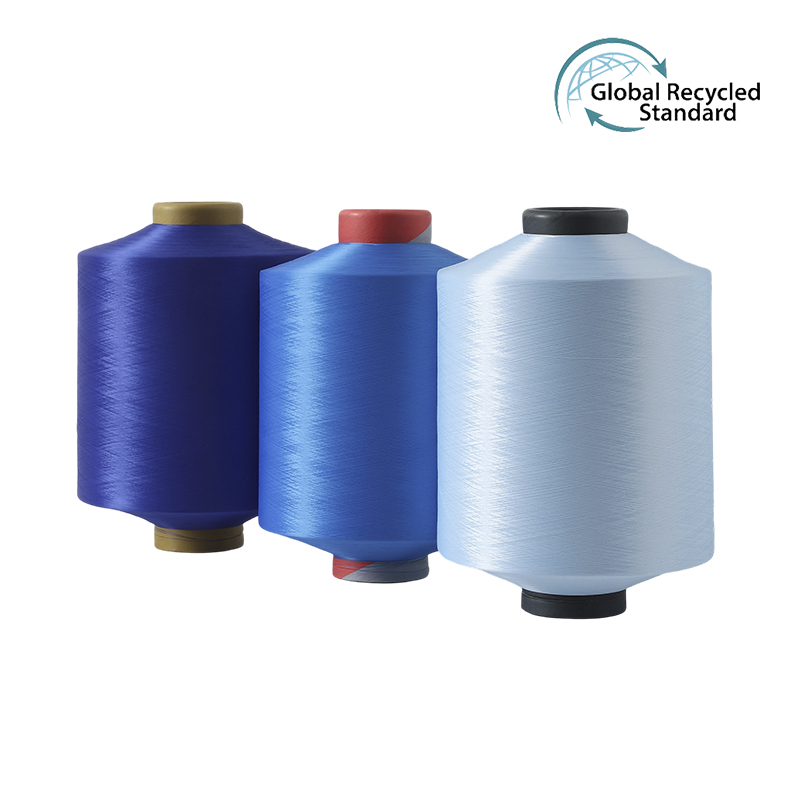
Advanced spinning technology has also enabled the integration of recycled PET (rPET) into the POY-DTY supply chain without sacrificing performance. Recycled POY—spun from post-consumer bottle flake or textile waste—can now be processed through standard draw-texturing lines, with thermal stability during downstream processing remaining a key quality criterion for procurement teams. Dope-dyed POY variants, where color masterbatch is incorporated at the spinning stage, eliminate the dyeing step entirely, reducing water consumption and chemical discharge while improving colorfastness to Level 4 and above.
These developments position the POY-DTY route not just as a quality benchmark, but as the platform through which sustainable polyester filament production scales commercially.
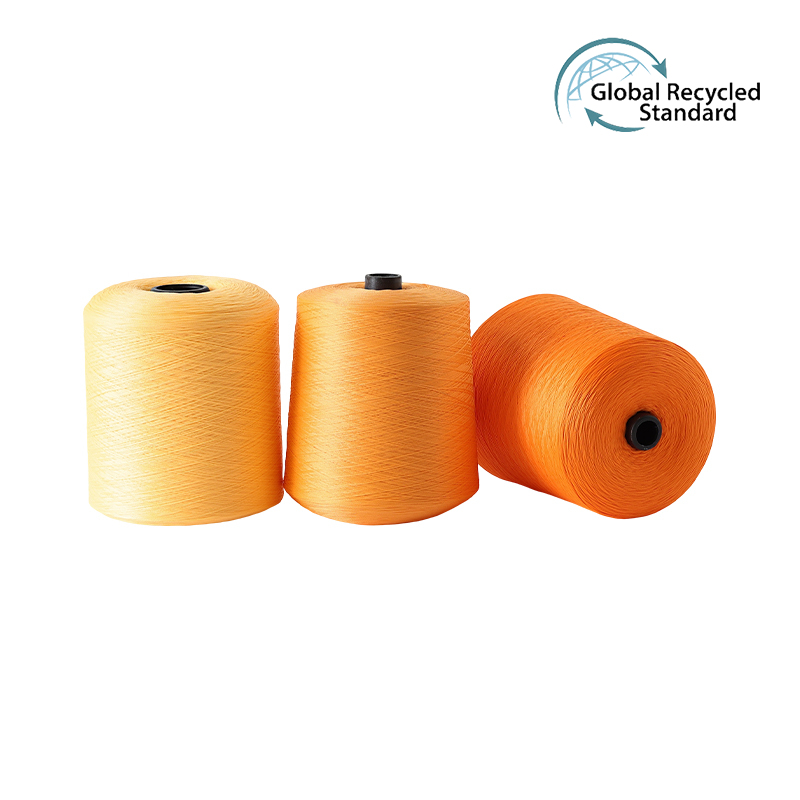
See our overlock sewing yarn range, produced using advanced filament spinning technology for consistent high-elasticity performance.
Selecting the Right Yarn: What Procurement Teams Need to Know
For buyers sourcing polyester filament yarn, the spinning route and machine platform of the supplier are material factors—not background detail. POY spun on precision German or Japanese equipment consistently outperforms commodity-grade alternatives in denier CV%, package weight uniformity, and dyeability. When evaluating DTY suppliers, key questions include: What POY specifications feed the texturing line? What intermingling and heater configurations are available? Is recycled content GRS-certified and batch-traceable?
The shift from older MOY-based processes to modern POY-DTY lines represents a structural improvement in yarn quality that is measurable in fabric performance—tighter construction, more even color, better handle, and longer service life.