English
 عربى
عربى Türk
Türk Español
Content
- 1 What Is POY Yarn and Why the Manufacturing Process Matters
- 2 Raw Materials: Starting with Polyester Chips
- 3 The Melt Spinning Process: Extruding the Filament
- 4 Quenching: Solidifying the Filaments
- 5 Oiling: Protecting and Bundling the Filaments
- 6 Winding Speed: The Key to "Partial" Orientation
- 7 Key Physical Properties of POY and Their Testing Standards
- 8 POY vs. DTY: Understanding the Relationship Between the Two
- 9 Recycled POY: Process Differences and Considerations
- 10 What to Look for When Sourcing POY from a Manufacturer
What Is POY Yarn and Why the Manufacturing Process Matters
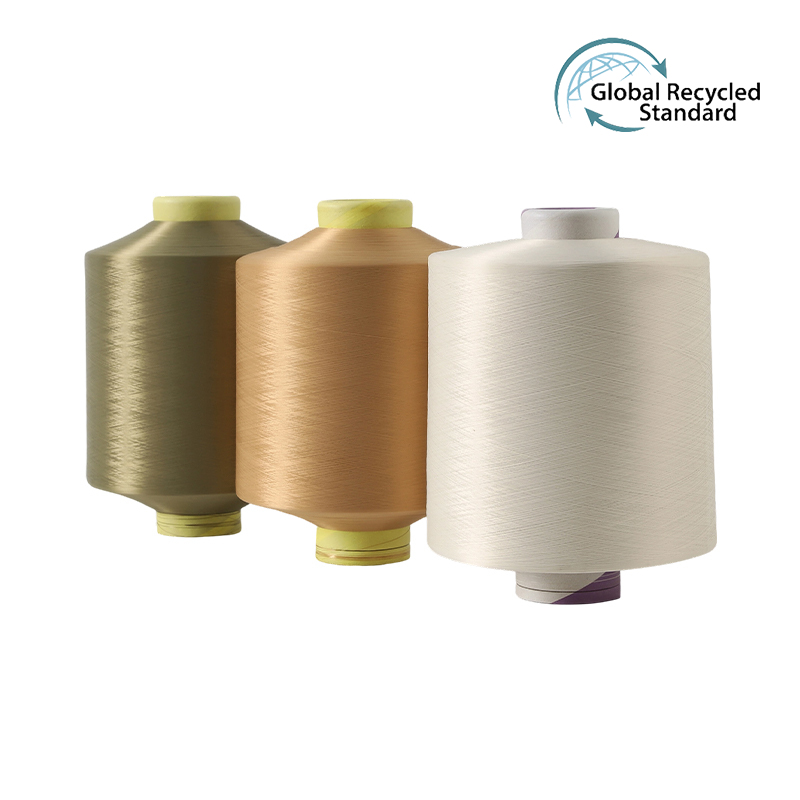
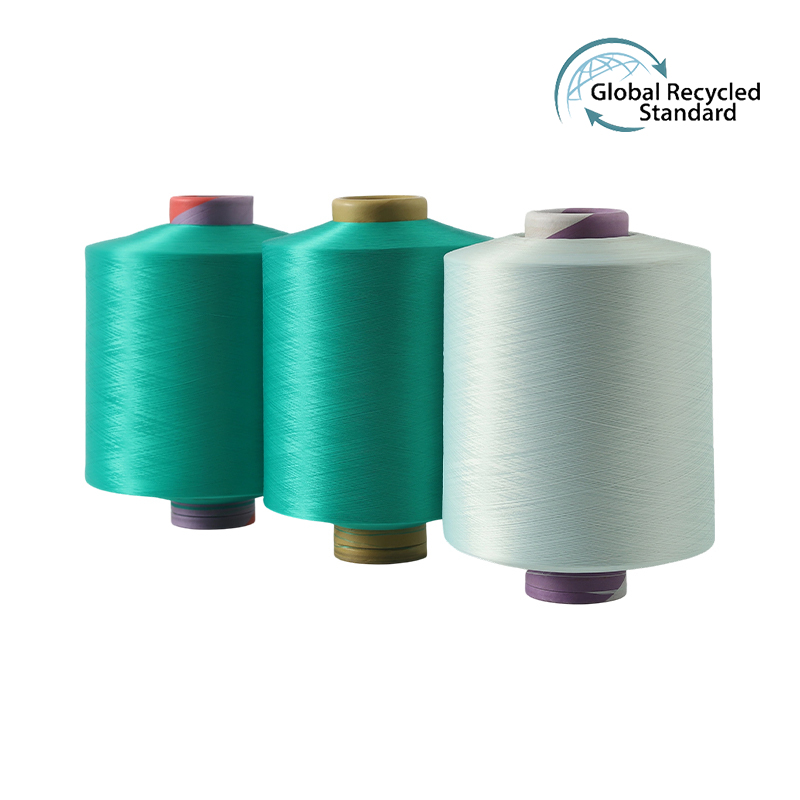
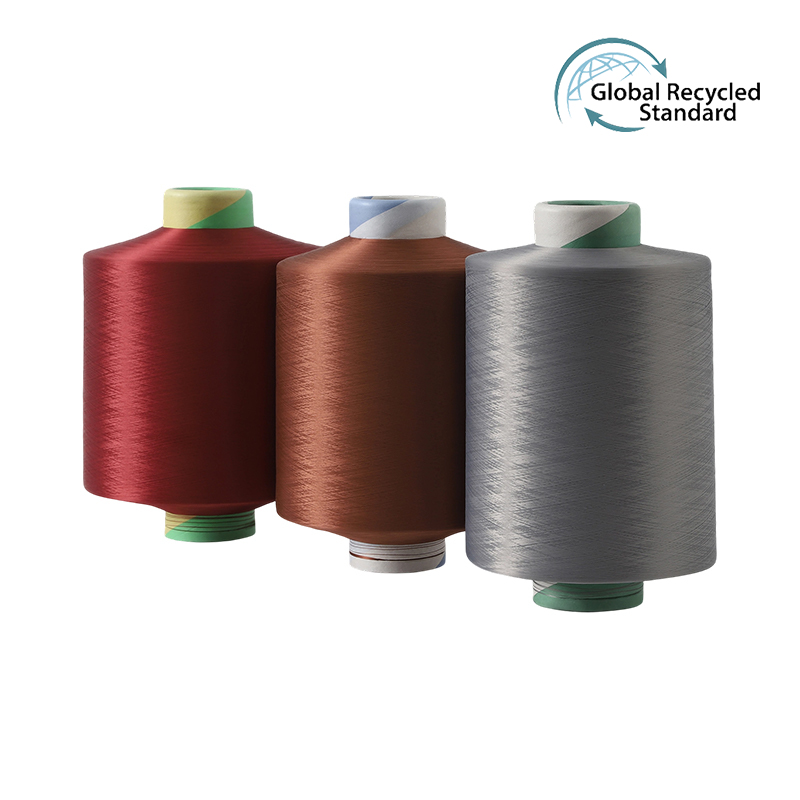
POY, or Partially Oriented Yarn, is one of the most fundamental intermediary yarns in the synthetic fiber industry. It sits at the very beginning of the polyester filament production chain — not a finished product itself, but the essential precursor to draw textured yarn (DTY), fully oriented yarn (FDY), and a wide range of other downstream filaments. Understanding how POY yarn is made is not just an academic exercise; it directly determines the quality, consistency, and performance characteristics of every product derived from it.
As a manufacturer who works with POY daily, we can tell you that the difference between mediocre POY and high-quality POY comes down to precise control at every stage of production — from raw material selection to winding tension. This guide walks through the complete manufacturing process in practical terms, covering the key variables that buyers and downstream processors should understand before sourcing.
Raw Materials: Starting with Polyester Chips
POY yarn production starts with polyester chips — solid granules of polyethylene terephthalate (PET). The intrinsic viscosity (IV) of these chips is one of the most critical input variables. For standard textile-grade POY, chips with an IV in the range of 0.62–0.65 dl/g are typically used. Higher IV values increase melt viscosity, which affects spinneret pressure and filament uniformity.
Before chips enter the spinning system, they must be thoroughly dried. PET is hygroscopic — it absorbs moisture from the environment — and even moisture levels above 30 ppm (parts per million) can cause hydrolytic degradation during melting, leading to molecular weight reduction and visible yarn defects such as drips, breaks, or uneven denier. Most facilities dry chips at 160–170°C for 4–6 hours in dehumidifying dryers to bring moisture content below 20 ppm.
The choice of chips also affects the final yarn's optical properties. Bright POY uses chips without delustrant (titanium dioxide), semi-dull uses chips with around 0.3% TiO₂, and full-dull uses chips with 2% TiO₂ or higher. This decision must be made at the raw material stage, as it cannot be corrected downstream.
The Melt Spinning Process: Extruding the Filament
Once the chips are dried, they are fed into a screw extruder where they are melted at temperatures typically ranging from 270°C to 295°C, depending on chip grade and yarn count. The screw extruder has multiple heating zones that progressively melt and homogenize the polymer. Consistent melt temperature is critical — a variation of even ±2°C across the melt zone can create filament denier variations that show up as dye streaks in the final fabric.
From the extruder, the molten polymer is fed through a metering pump, which controls the polymer flow rate with high precision — tolerances within ±0.5% are standard in modern facilities. The melt then passes through a filter pack to remove any undissolved particles or gels, which could block spinneret holes or cause filament breaks.
The spinneret is the die through which molten polymer is extruded into individual filaments. Spinneret hole count determines the final filament count (denoted as "F" in yarn specifications like 75D/72F). Hole diameters typically range from 0.18 mm to 0.35 mm depending on the target denier per filament (dpf). Precision machining of the spinneret is non-negotiable — any variation in hole diameter or shape creates uneven filaments that cannot be corrected in downstream processing.
Key Spinneret Configurations for Common POY Counts
| Yarn Count | Filament Count (F) | Typical dpf | Common Application |
|---|---|---|---|
| 50D | 36F | 1.39 | Fine woven fabrics, lingerie |
| 75D | 72F | 1.04 | Knitted sportswear, linings |
| 150D | 144F | 1.04 | Upholstery, curtains |
| 300D | 144F | 2.08 | Bags, carpet backing |
Quenching: Solidifying the Filaments
As the molten filaments exit the spinneret, they immediately enter a quench zone where controlled airflow cools them from melt temperature down to near-ambient. This quenching step is where the filament's cross-sectional shape and initial molecular orientation are set.
There are two main quench methods in industrial POY spinning:
- Radial quench (cross-flow): Air flows perpendicular to the filament bundle. Widely used for standard multifilament counts. Air velocity is typically 0.3–0.6 m/s, and temperature is maintained at 20–25°C.
- Annular quench (inward-flow): Air flows inward from a circular ring surrounding the bundle. Better suited to high-filament-count yarns because it provides more uniform cooling across all filaments simultaneously.
Inconsistent quenching — caused by fluctuating air temperature, humidity, or velocity — is one of the leading causes of inter-filament denier variation (U%), which manifests as uneven dyeing in downstream processing. Maintaining quench air humidity below 65% RH is standard practice in quality-oriented POY production.
Oiling: Protecting and Bundling the Filaments
After quenching, the cooled filaments pass over an oil applicator (typically a metered oil wheel or oil jet). The spin finish applied here serves several purposes: it reduces inter-filament friction, prevents static build-up, imparts cohesion to the bundle, and protects the filaments from mechanical abrasion on guides and rollers throughout the winding process.
Spin finish formulations are typically aqueous emulsions of lubricants, emulsifiers, antistatic agents, and sometimes cohesion promoters. Oil pick-up (OPU) levels for POY typically range from 0.3% to 0.6% by weight of the yarn. Too little oil leads to filament breakage and static problems; too much causes issues in downstream texturing such as smoke generation or uneven false-twist tension.
The choice of spin finish chemistry also affects downstream dyeability. Some finishes contain components that interfere with disperse dye absorption, so this must be aligned with the end application before production.
Winding Speed: The Key to "Partial" Orientation
The defining characteristic of POY — what makes it "partially oriented" rather than fully oriented — is the winding speed at which the filaments are taken up after spinning. This is the most consequential process variable in the entire POY manufacturing sequence.
Standard POY is wound at speeds between 2,800 and 3,200 meters per minute (m/min). At these speeds, the polymer chains are pulled into partial alignment along the filament axis — enough to provide moderate strength and a stable structure, but not so much that the material becomes fully crystallized and loses its ability to be further drawn and textured.
For comparison:
- Unoriented yarn (UDY) is wound at speeds below 1,500 m/min.
- POY is wound at 2,800–3,200 m/min — partially oriented.
- FDY (Fully Drawn Yarn) is produced at 4,500–6,000 m/min with in-line drawing.
Birefringence values for standard POY typically fall between 0.040 and 0.065, measured by polarized light microscopy. This range corresponds to the degree of molecular orientation that makes POY suitable for downstream DTY texturing — the yarn retains sufficient amorphous content to allow the draw-texturing process to impart crimp and elasticity effectively.
Winding tension must also be carefully controlled during take-up. Inconsistent tension creates package deformation (a problem called "saddle" or "bulge" in packages) and internal stress variations that cause uneven drawing behavior in subsequent texturing.
Key Physical Properties of POY and Their Testing Standards
From the manufacturer's perspective, the following properties are routinely measured to confirm that a batch of POY meets specification before it is released or shipped to customers:
- Denier (linear density): Measured in grams per 9,000 meters. Tolerance is typically ±2% of nominal. Tested per ASTM D1907 or ISO 1889.
- Tenacity (breaking strength): POY typically has tenacity in the range of 2.0–2.8 cN/dtex — significantly lower than FDY (3.5–5.0 cN/dtex) because of its lower orientation degree.
- Elongation at break: POY has high elongation — typically 120–160% — which is what enables subsequent stretching in the DTY process without filament breakage.
- Evenness (U%): Measures filament-to-filament denier variation. Values above 1.5% indicate process instability. Tested using Uster evenness testers.
- Oil pick-up (OPU): Verified by solvent extraction to confirm the spin finish is within specification.
- Boil-off shrinkage (BOS): POY typically shows shrinkage of 55–70% when treated in boiling water — far higher than DTY — confirming the yarn's residual drawability.
These properties are not just quality checkboxes — they directly determine how the POY will behave when texturized into DTY or processed into downstream fabric. A buyer who receives POY with out-of-specification elongation, for example, will encounter frequent yarn breaks on their texturing machines, resulting in significant production losses.
POY vs. DTY: Understanding the Relationship Between the Two
POY and DTY are closely related but serve very different functions in the supply chain. POY is an intermediate product — it cannot typically be used directly in fabric manufacturing because it lacks sufficient strength and structural stability. DTY (Draw Textured Yarn) is produced by taking POY through a draw-texturing machine, where it is simultaneously stretched (drawn) and false-twisted to introduce crimp, elasticity, and bulk.
The draw ratio applied during DTY production — typically 1.5–1.7× for standard polyester — consumes the residual drawability built into the POY during spinning. This is why POY birefringence and elongation values are so important: they directly determine the maximum draw ratio achievable and the crimp characteristics of the resulting DTY.
Some buyers in the textile industry source POY directly when they have their own texturing capacity. Others prefer to purchase finished DTY. For those who need either option, our DTY/POY yarn product page covers the range of specifications we produce and supply.
Recycled POY: Process Differences and Considerations
An increasingly important category is recycled POY — produced from post-consumer PET, primarily recycled plastic bottles (rPET). The manufacturing process is largely the same as virgin POY, but with some meaningful differences in the pre-processing stage.
rPET flakes must first be cleaned, sorted by color, and pelletized (or used as flakes directly in chip-free systems). The intrinsic viscosity of recycled feedstock is typically more variable than virgin chips — IV values can range from 0.58 to 0.72 dl/g within the same lot, depending on source quality. This variability makes melt temperature calibration and filter pack maintenance more critical in recycled POY production.
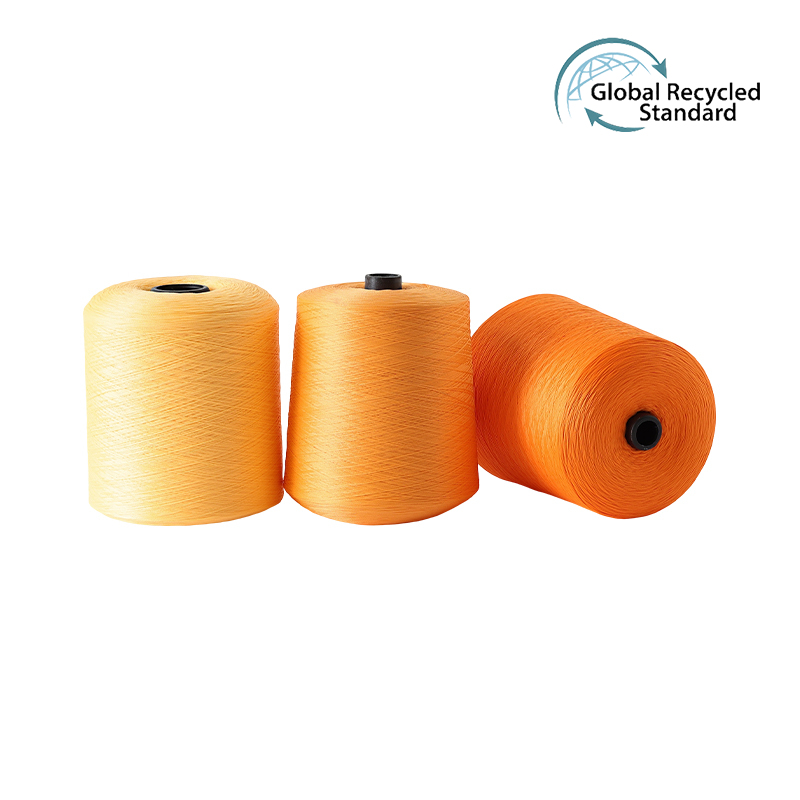
The resulting recycled POY typically carries GRS (Global Recycled Standard) certification, which is increasingly required by European and North American brands as part of their sustainability sourcing commitments. Performance properties of certified recycled POY are broadly comparable to virgin material for most end-use applications, though bright luster variants are more difficult to achieve consistently due to residual contaminants in the rPET feedstock.
What to Look for When Sourcing POY from a Manufacturer
If you are sourcing POY for a texturing operation or downstream processing, these are the practical questions that determine whether a supplier can consistently meet your needs:
- Do they control their own spinning process? Suppliers who trade POY without manufacturing it cannot guarantee batch-to-batch consistency. Look for manufacturers with in-house spinning capacity.
- What is their Uster evenness capability? Ask for Uster statistics (U%, CVm, thin and thick places per km, neps). These numbers reveal far more about production quality than general capability claims.
- What chip supplier do they use? The intrinsic viscosity and TiO₂ content of the feedstock chips directly affects finished yarn consistency. Reputable manufacturers use certified chip grades from established PET producers.
- Can they provide COA (Certificate of Analysis) with every lot? A COA should include denier, tenacity, elongation, OPU, and U% for each production batch.
- What are their winding package specifications? Package weight, core type, and wind angle affect how cleanly the yarn unwinds on texturing machines. Standard POY packages are typically 8–12 kg, wound on paper or plastic cones.
- What is their minimum order quantity and lead time? For buyers who need custom denier/filament combinations or specific luster grades, understanding the MOQ and production scheduling is essential.
These questions filter out trading companies and lower-tier suppliers quickly. A manufacturer who genuinely controls their own spinning process can answer all of them with specific data — not general assurances.