English
 عربى
عربى Türk
Türk Español

Content
A commercial laundry once rejected an entire shipment of bath mats because the serged edges unravelled after ten wash cycles, and the machine, tension settings, and operator all checked out fine. The problem was the yarn. Overlock sewing yarn is not general sewing thread sold in a bigger cone; it is a polyester thread engineered to wrap around a raw edge at high speed, stretch with the fabric, and survive abrasion, heat, and repeated laundering. Based on our production experience with carpet and towel edges, reliable results come down to three decisions: match the denier and filament count to the fabric weight, choose the right level of elasticity for the end use, and verify dimensional stability before committing to bulk volumes. Handle those three well, and edge failure turns from a recurring claim into a rare event.
What Overlock Sewing Yarn Actually Is
An overlock machine forms its stitch differently from a conventional lockstitch machine. A needle pierces the fabric, but most of the work is done by loopers, which carry the yarn around the trimmed edge and interlace it with the needle thread while the knife cuts a clean edge on every stitch. Because loopers feed continuously, an overlocker consumes roughly three to five times more thread than a lockstitch machine over the same seam length. That consumption pattern shapes the product itself: the yarn is supplied on large cones, wound to pay off smoothly at 5,000 to 8,000 stitches per minute, and produced with a uniform denier so looper tension stays stable across a full shift.
Construction is the second difference. Most overlock yarns for carpets and towels are textured polyester, known in the trade as DTY, where filaments are drawn and false-twisted to build crimp into each strand. That crimp delivers bulk and a controlled amount of stretch that a smooth spinning filament cannot match. General-purpose sewing thread, by contrast, is built to stay rigid so a construction seam holds two panels firmly together. The two products overlap only at the margins, and using the wrong one on an edge is where most failures start.
| Characteristic | Overlock sewing yarn | General-purpose sewing thread |
|---|---|---|
| Primary job | Wraps and binds raw edges at high speed | Holds two panels together in a seam |
| Typical construction | Textured polyester (DTY) or twisted filament with built-in stretch | Spun polyester or core-spun, low stretch |
| Elasticity | Moderate to high, follows fabric movement | Low, keeps seams rigid |
| Supply format | Large cones sized for looper consumption | Standard spools and small cones |
| Typical uses | Carpet serging, towel binding, garment edge finishing | Construction seams and topstitching |
The Properties That Decide Edge Performance
Strength Where It Counts: Loops, Not Straight Pulls
In a serged edge, the yarn is loaded in loops and wraps rather than in a straight line, so loop strength predicts real performance better than the straight tensile figure on a datasheet. Filament architecture matters here: a 150D/144F yarn packs 144 fine filaments into a 150-denier package, so it bends easily around a fabric edge and spreads stress across many strands. A coarse construction of the same denier resists bending, sits stiffly on the edge, and concentrates load in fewer points. When comparing quotes, ask for loop strength and elongation data, not just breakage force.
Elasticity and Recovery
Draw texturing sets a crimp into every filament, so the yarn extends under load and recovers when the load is released. For towels, that extension lets the binding follow the terry ground as the towel flexes in use and in the dryer. For carpets, recovery keeps the wrapped edge tight after a rug is rolled for shipping, unrolled on a floor, and walked on daily. Without sufficient recovery, the thread casing loosens and the raw edge begins to peek through, a defect buyers immediately notice as open or grinning edges.
Heat, Moisture, and Abrasion
Polyester melts at roughly 255 to 260°C, comfortably above the temperatures a needle reaches at industrial serging speeds, so the thread will not fuse or weaken mid-run. Its moisture regain is around 0.4 percent, which means performance barely changes between a humid summer workshop and a dry winter one. Abrasion is the quiet test: carpet edges meet foot traffic, vacuum cleaners, and door frames, while towel bindings rub against drum walls for an hour per drying cycle. A yarn that loses surface integrity under abrasion will look aged long before the fabric wears out.
Matching the Yarn to the Application
Carpet Edges and Rug Serging
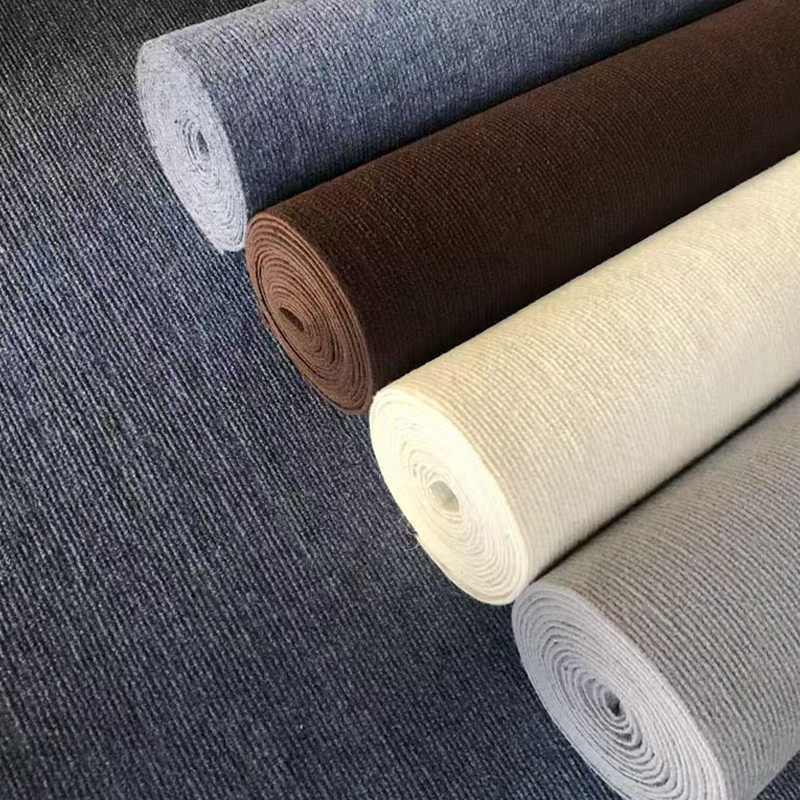
Carpet serging is both a structural and a visual operation: the wrapped edge carries load when a rug is handled, and it is one of the first things a buyer touches in a showroom. For most carpet and rug work, that points to heavier deniers in the 300D to 600D range, with high filament counts so the edge stays soft against skin and toes. Draw-textured polyester is the default choice here because the crimp gives the wrap a full, cushioned profile even at high machine speeds.
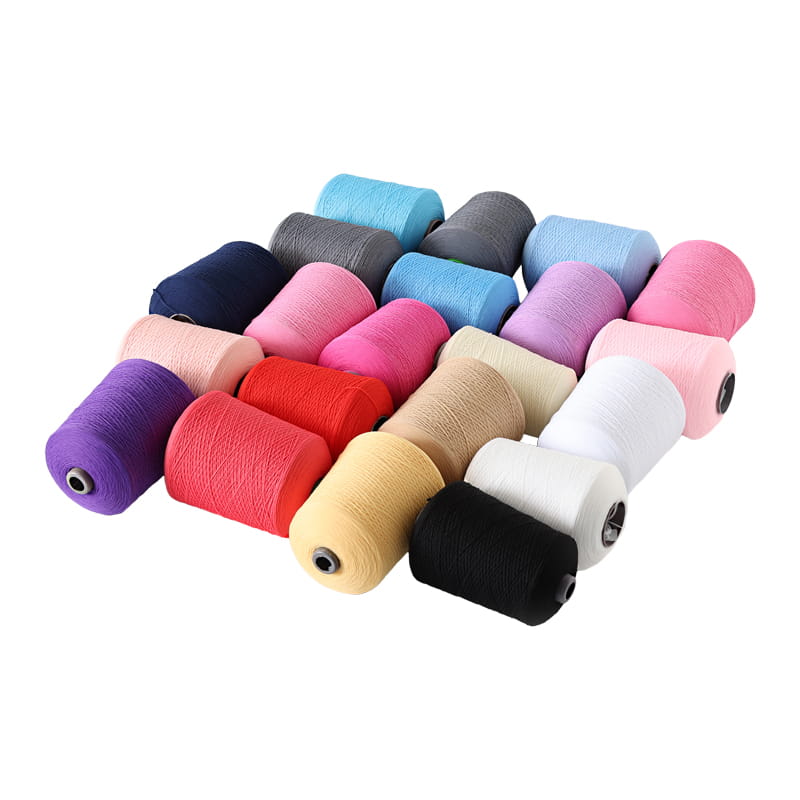
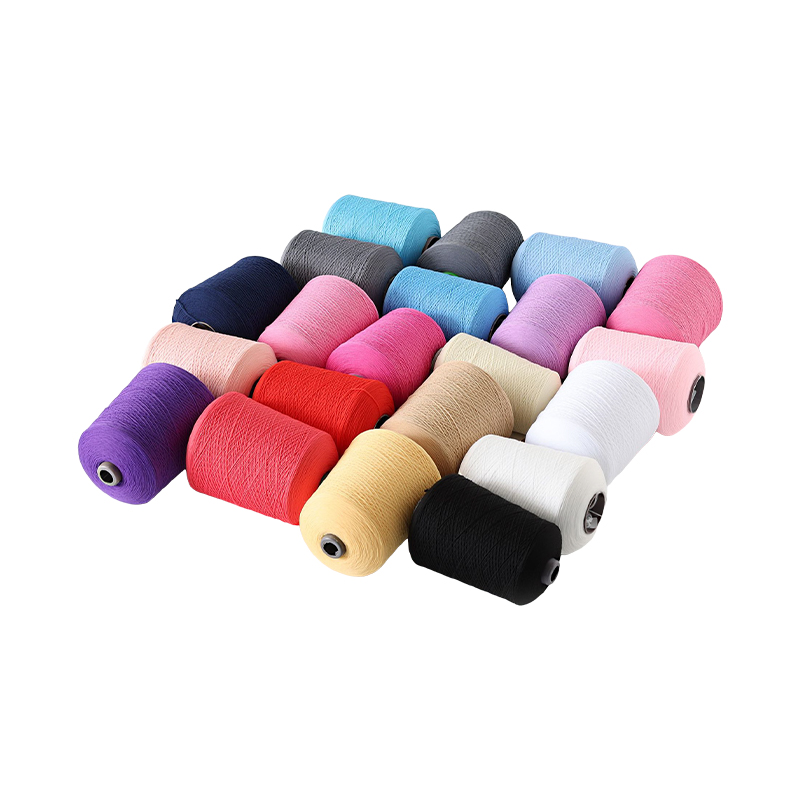
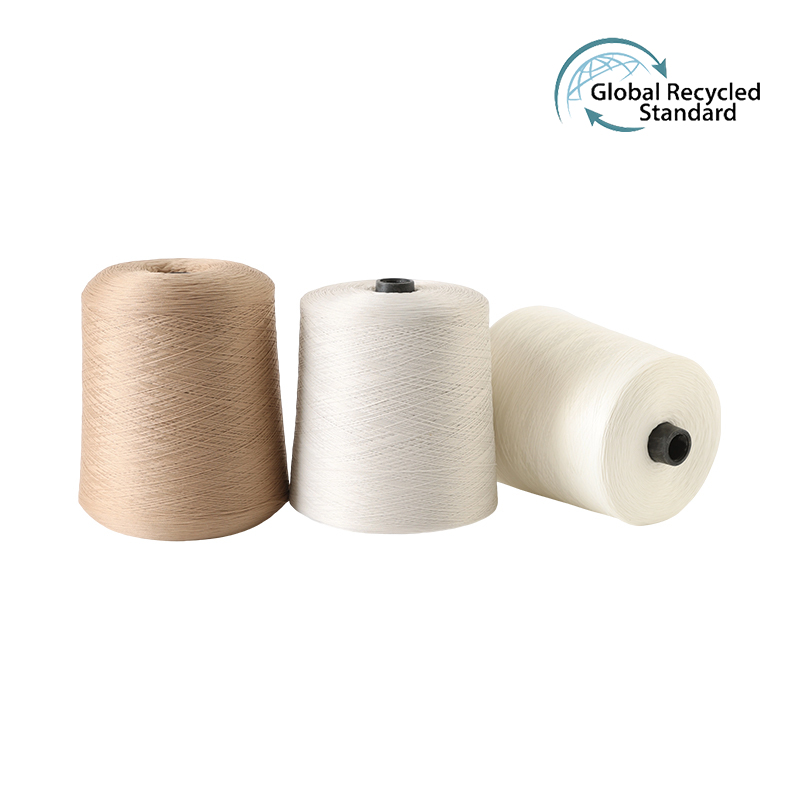
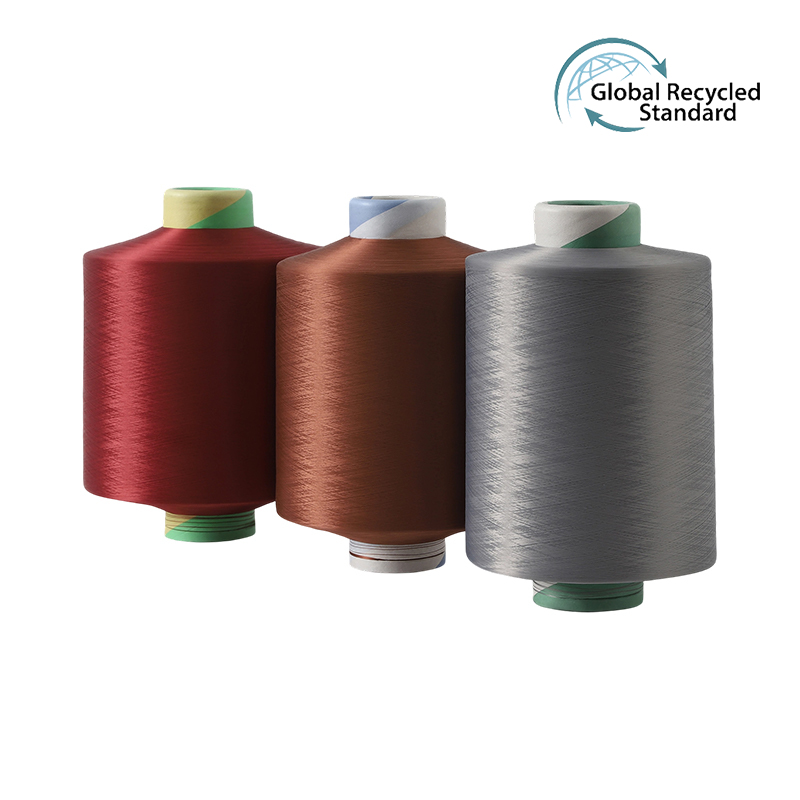
DTY overlock thread for carpets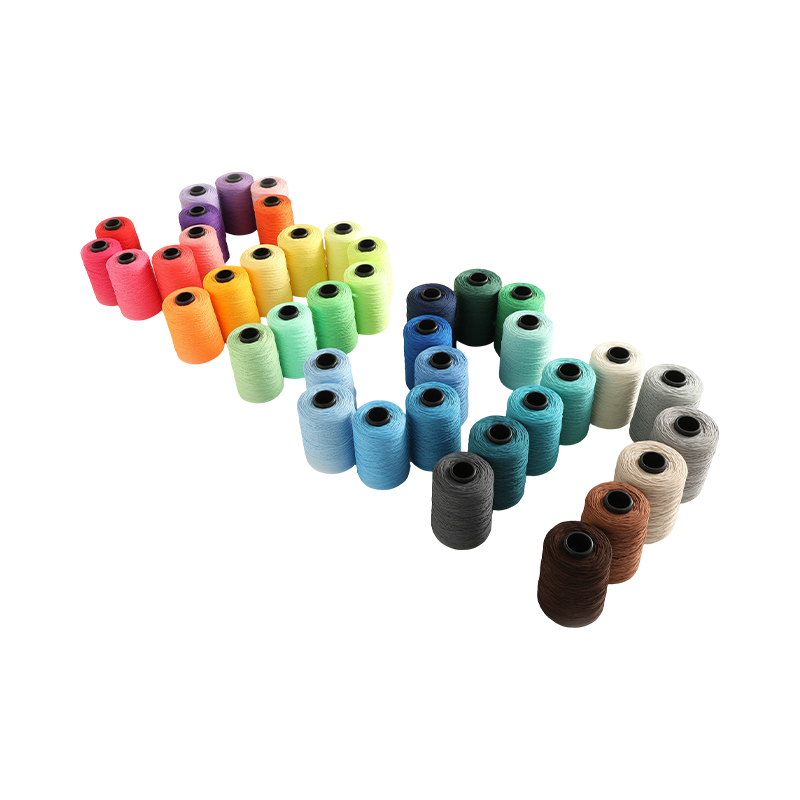 DTY Overlock Thread for Carpet EdgingDraw-textured polyester overlock thread in the 300D–600D range suits carpet serging, offering dense coils, high elasticity, 200+ colors, and seamless high-speed operation for full, durable edges.View Product →
Where the edge must look especially full and stand up to doorway and stair traffic, a twisted, bulked construction adds body and abrasion resistance while keeping the flexibility a serger needs. UV stability is also worth confirming for any rug that will live near a window or on a covered porch, because edge yarn tends to fade and weaken before the pile does.
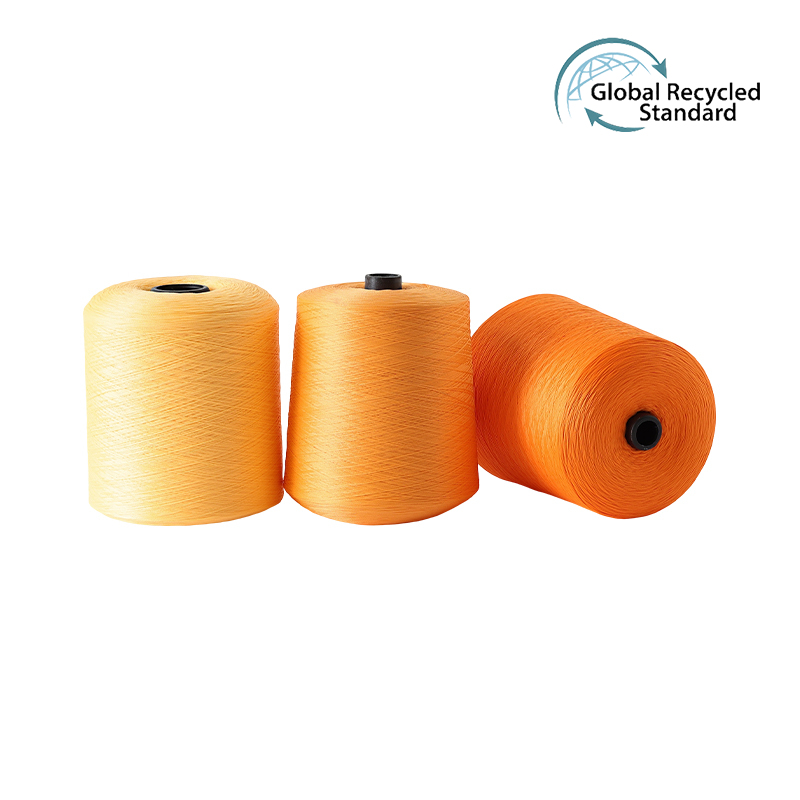
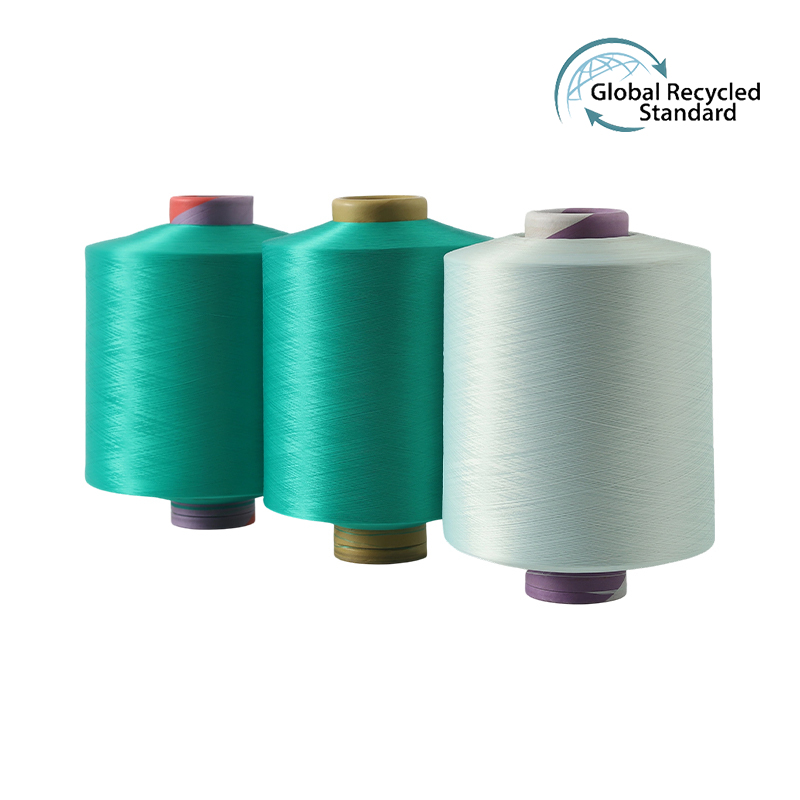
twisted bulked high-elastic polyester carpet yarn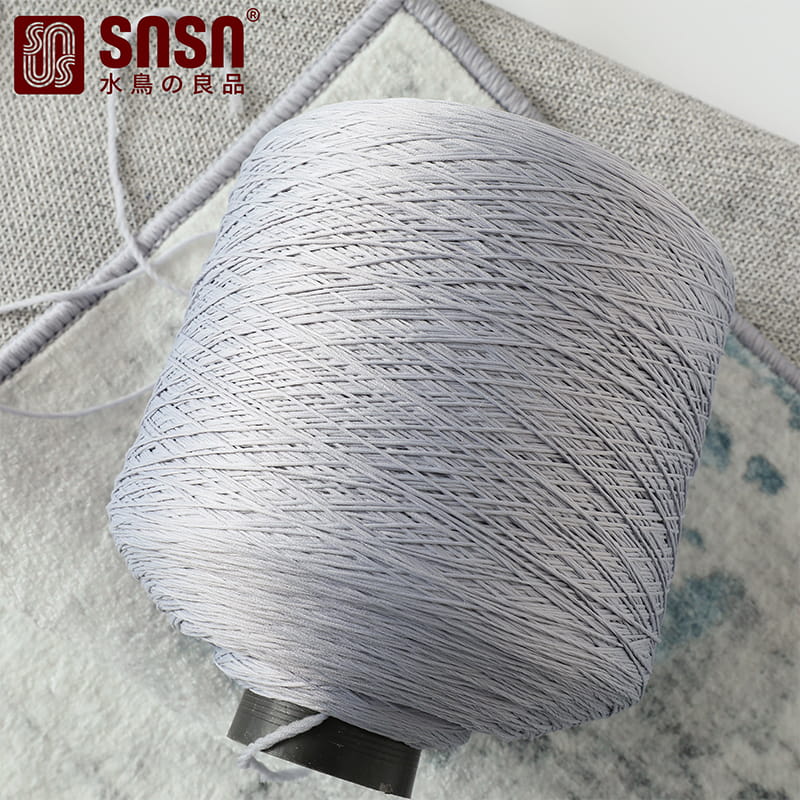 Twisted Bulked High-Elastic Polyester Carpet YarnThree-strand twisted bulked polyester yarn with high elasticity, abrasion resistance, and customizable twists, ideal for overlocking carpet edges that must stay full and withstand heavy foot traffic.View Product →
Towel Overlocking and Binding
Towels punish an edge with water, detergent, and tumble heat, and the binding must move with the terry loop instead of fighting it. High-elastic polyester overlock yarn keeps its extension and recovery after repeated laundering, so the binding neither shrinks away from the ground fabric nor balloons after washing. The decisive test for buyers is simple: wash and dry a bound sample twenty times under the harshest cycle your customer will use, then inspect for shrinkage, stretch, and thread exposure before scaling the order.
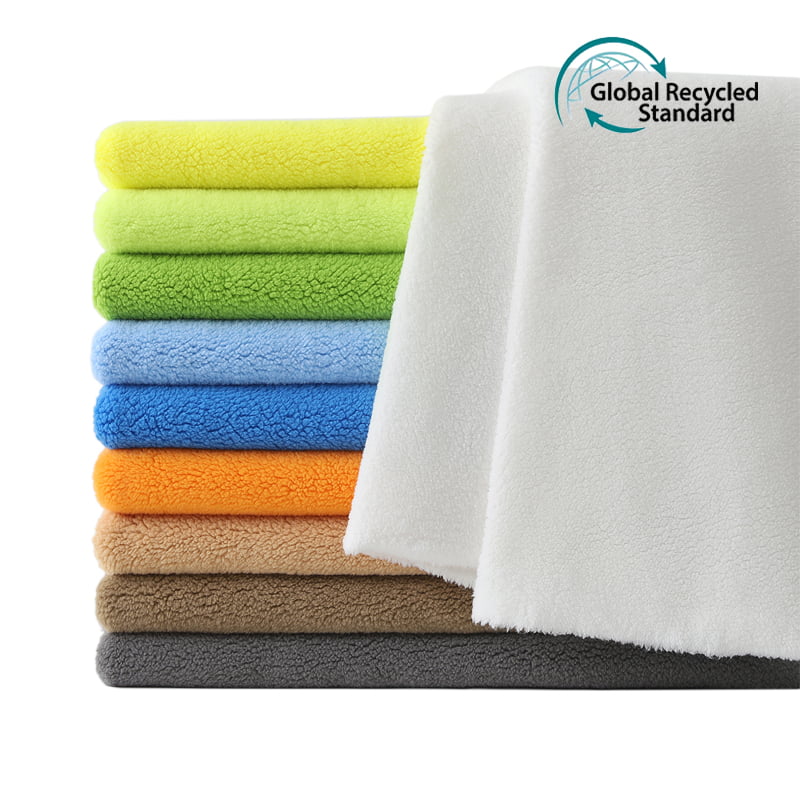
polyester high elastic towel overlock sewing yarn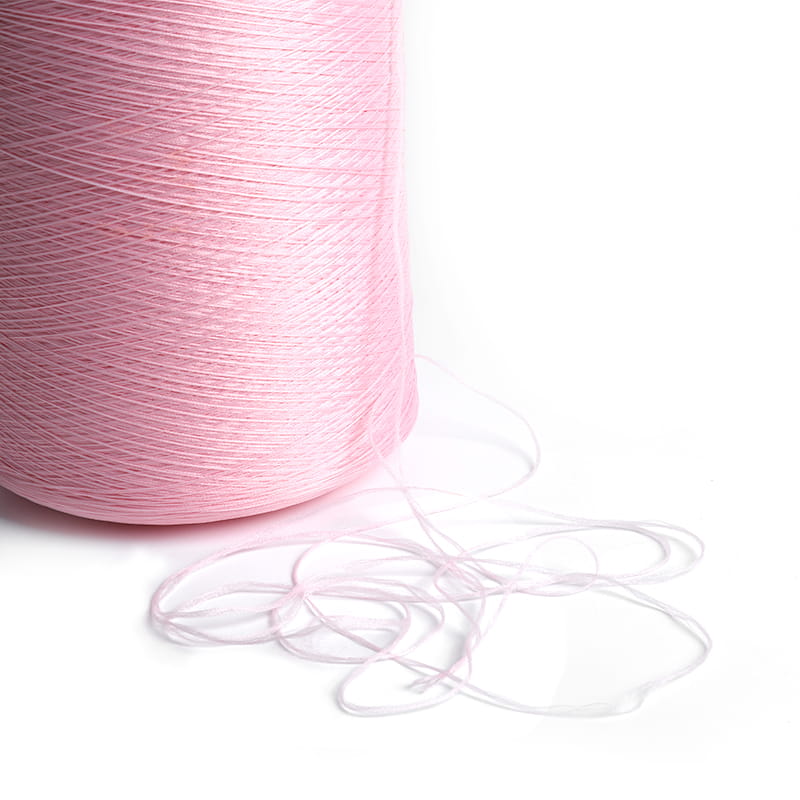 Polyester High Elastic Towel Overlock Sewing YarnHigh-elastic polyester overlock yarn for towel binding, keeping extension and recovery through repeated washing and drying, with good absorbency, UV resistance, and level 4 color fastness.View Product →
Garment Serging
Apparel work uses the same chemistry at lighter weights. Finer packages, typically 50D to 150D, produce a flat, soft edge that will not irritate skin, and the priority shifts from abrasion resistance to comfort and a neat finish on seams that are mostly hidden inside the garment.
Common Problems and the Specs That Prevent Them
Thread breakage on the overlocker usually traces to four causes: looper tension set too tight for a low-elongation thread, a rough or worn thread guide, uneven denier from a poor winding job, or an inconsistent finish on the yarn surface. Machine-side fixes help, but specifying yarn with tight evenness tolerances and a stable finish level removes most breakage at the source. For a full machine-and-material walkthrough, see our guide on how to prevent overlock sewing yarn from breaking during sewing.
Color mismatches appear when the thread and the face fabric are dyed in different lots, or on substrates that take dye differently. The practical controls are lot traceability, dyeing the yarn to match approved fabric swatches, or using solution-dyed yarn where the palette allows. Whichever route you take, agree the tolerance band with your supplier before mass production, not after the first complaint.
Shrinkage or stretch after washing usually points to insufficient heat setting in the yarn, or a mismatch between the yarn's thermal history and the finishing temperature of the fabric. Ask for dimensional-stability data, and run samples through the same wash-and-dry sequence your end customer will use. Ten minutes of testing prevents a container of rework.
What to Verify Before Placing a Bulk Order
Spec sheets describe the yarn; the supplier's process determines whether every cone matches it. Before committing volumes, work through a short verification list:
- Ask whether spinning, draw texturing, and winding are done in one facility, because each extra handoff adds batch-to-batch variation you cannot see on arrival.
- Request per-lot data for denier, tenacity, elongation, and shrinkage, and keep the reports with your purchase records.
- For towel yarns, get wash and tumble-dry test results; for carpet yarns, ask for abrasion and UV-stability evidence.
- Inspect cone winding quality, since density, soft edges, and a clean thread path all affect payoff at 7,000 stitches per minute.
- Run a sample at your own machine speed before scaling, and keep a sealed reference cone from the approved lot for every repeat order.
Integrated production makes this list easier to complete. At Suzhou Tongdeli, spinning, draw texturing, winding, packaging, and warehousing run under one roof in a 30,000-square-meter plant in the Yangtze River Delta textile belt, so lot consistency holds across bulk orders and denier, color, twist, and cone size can be adjusted to a customer's line. Buyers are welcome to audit the factory in person, and we exhibit regularly at the Shanghai and Greater Bay Area yarn fairs for anyone who prefers to meet first.
The takeaway is that overlock sewing yarn is a specification decision, not a commodity purchase. The properties you lock in at the ordering stage determine how the edge behaves for the life of the product:
- Match denier to fabric weight: 50D to 150D for apparel edges, 300D to 600D for carpets, with elasticity prioritized for towel binding.
- Prefer textured (DTY) constructions when the edge must stretch and recover, and twisted bulked yarns when the edge must look full and resist wear.
- Validate wash, abrasion, and dimensional stability on samples before scaling to bulk.
- Source from a manufacturer that controls the process end to end, so lot-to-lot variation stays inside your tolerance.
If you are evaluating suppliers, a sample run plus a short factory audit will tell you more than any datasheet, and we are glad to arrange both.