English
 عربى
عربى Türk
Türk Español
Content
- 1 What Is Polyester Yarn and Why It Dominates Textile Manufacturing
- 2 POY, DTY, and FDY: Know the Difference Before You Order
- 3 Specifications That Prevent Costly Mistakes
- 4 Match the Yarn to the End Use
- 5 Virgin or Recycled: What the Difference Means for Your Supply Chain
- 6 What a Reliable Polyester Yarn Supplier Should Offer
An order for 150D polyester yarn looked straightforward. The buyer had used the same denier before, for curtain panels. This time the yarn went into upholstery, and the first abrasion test failed. The weave shifted, the fabric distorted, and the whole batch had to be re-specified. Polyester yarn is not a single product. It is a family of filaments that differ in orientation, texture, draw ratio, and finishing. The generic name on a quote tells you very little; the type and the specification sheet tell you everything.
What Is Polyester Yarn and Why It Dominates Textile Manufacturing
Polyester yarn is a melt-spun thermoplastic filament made from polyethylene terephthalate (PET). Extruded through spinnerets and then drawn or texturized, it combines high tensile strength, low moisture regain (around 0.4 percent), excellent dimensional stability, and strong resistance to abrasion, stretching, and shrinking. These properties make polyester the most widely used synthetic fiber in the world, appearing in apparel, home textiles, carpets, towels, and technical fabrics.
For a buyer, the practical meaning is predictability. Correctly specified polyester yarn gives uniform dye uptake, stable stitch formation, and consistent behavior in weaving, knitting, or overlock sewing. Incorrectly specified, the same polymer becomes the source of failed tests and lost production time.
POY, DTY, and FDY: Know the Difference Before You Order
The most common purchasing error is treating POY, DTY, and FDY as interchangeable. They are not. The three names reflect different production stages and filament structures.
POY (partially oriented yarn) is an intermediate product. Its filaments are only partially drawn, giving it high elongation and moderate tenacity. POY is feedstock: it is sold to processors who further draw or texturize it into finished yarn.
DTY (draw textured yarn) is produced by draw-texturing POY. The process adds crimp and bulk, creating a soft, stretchy, wool-like hand. DTY is the workhorse of apparel knitting, towel fabrication, and carpet edge finishing.
FDY (fully drawn yarn) is drawn to its final orientation during spinning. It is smooth, uniform, and stronger than DTY at the same denier, but it lacks bulk. FDY suits woven fabrics, curtains, and applications where surface smoothness matters.
| Type | Production stage | Key characteristics | Typical applications |
|---|---|---|---|
| POY | Partially drawn filament | High elongation, moderate tenacity, low cost | Feedstock for texturizing and draw-twisting |
| DTY | Draw-textured from POY | Crimped, bulky, soft hand, elastic | Apparel, knitwear, towel edges, carpets |
| FDY | Fully drawn during spinning | Smooth, uniform, high tenacity | Woven fabrics, curtains, sewing thread |
The table is a starting point, but the specifications behind each type matter just as much. For a more detailed comparison, see this guide to DTY vs POY yarn specifications. When a weaving or warping application needs both strength and process stability, a 300D/122F high-strength tensile DTY/POY yarn is a frequent choice: the D number defines linear density, the F number controls filament count, and together they determine fabric hand, coverage, and strength.
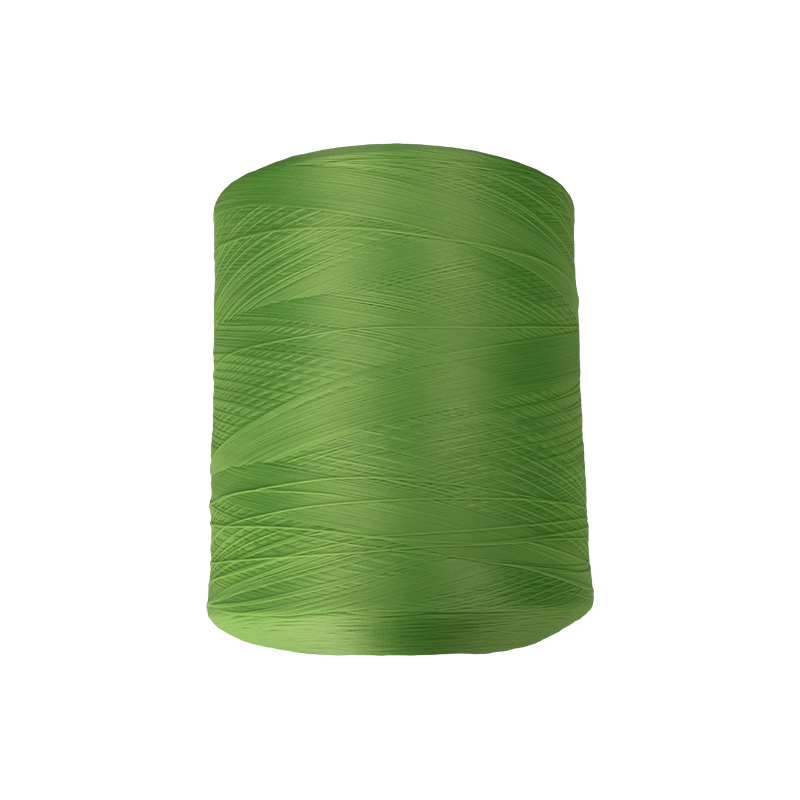 300D/122F High Strength Tensile Dty Polyester Yarn Partially Oriented Yarn ManufTongdeli is China 300D/122F High Strength Tensile Dty Polyester Yarn Partially Oriented Yarn Manufacturers and Wholesale Factory, Custom ...View Product →
Specifications That Prevent Costly Mistakes
Before you confirm a purchase order, review these parameters:
- Denier and filament count. The D number tells linear density; the F number tells how many filaments are bundled. A 75D/72F yarn feels soft and fine; a 300D/122F yarn is heavier and more robust. Do not substitute one for the other without re-evaluating the end use.
- Tenacity and elongation. Tenacity is breaking strength per unit of linear density; elongation at break shows how much the yarn stretches before it snaps. Fabrics under stress need a balanced combination, since overly elastic yarns cause seam slippage and poor abrasion results.
- Shrinkage. Polyester shrinks when exposed to heat during dyeing or finishing. Low-shrinkage grades suit colored and finished goods; standard grades work when the fabric will be relaxed later.
- Twist and luster. Twist affects loop formation and edge definition in overlock sewing; luster is an aesthetic choice among bright, semi-dull, and full-dull.
- Functional treatments. Moisture-wicking, stain-resistant, anti-pilling, and flame-retardant variants are engineered into the polymer or filament, not added after weaving.
A specification sheet is a contract. If the supplier approves it and the delivered yarn matches it, the risk belongs to the process. If the spec is vague, the risk belongs to the buyer. Insist on a written spec and verify it against a pre-production sample.
Match the Yarn to the End Use
Different end products demand different yarn behavior. Define the stress the yarn will face, then choose the structure that handles it.
Apparel and sportswear
Moisture management and comfort come first. A fine-denier DTY with a high filament count, such as the 75D/72F moisture-wicking DTY polyester yarn, draws sweat away from the skin and dries quickly. Texturizing also gives knit fabrics a soft, breathable hand for daily wear.
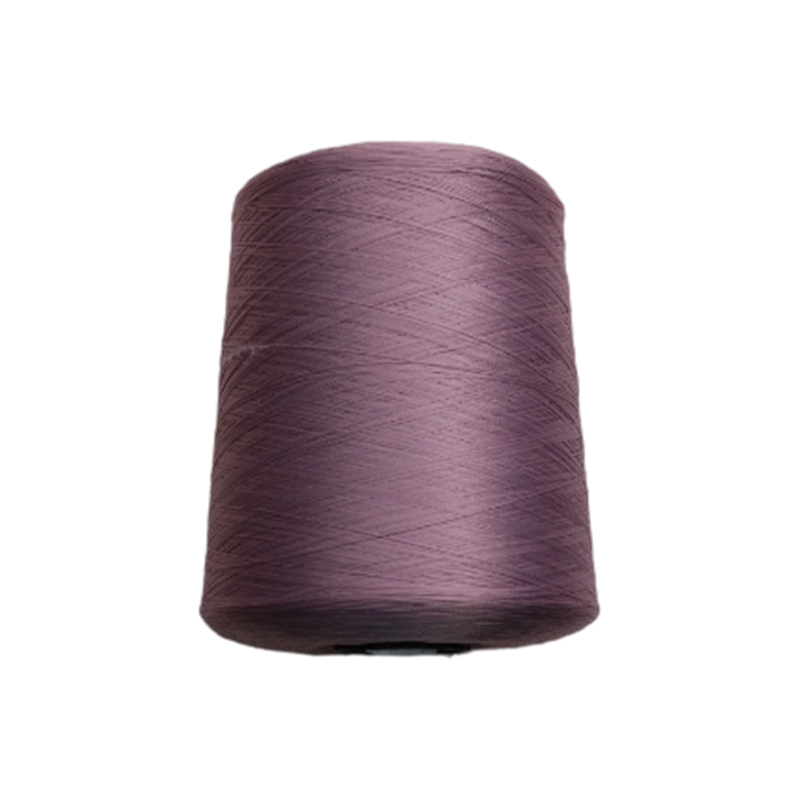 75D/72F Moisture-Wicking Dty Polyester Yarn Poy Manufacturers, Factory - Suzhou Tongdeli is China 75D/72F Moisture-Wicking Dty Polyester Yarn Poy Manufacturers and Wholesale Factory, Custom 75D/72F Moisture-Wicking Dt...View Product →
Towels and home textiles
Towel edges face repeated washing and mechanical stress. A high-elastic overlock yarn with good abrasion resistance keeps the edge from fraying or curling. The polyester high-elastic towel overlock sewing yarn is built for this role and stays dimensionally stable through frequent washing and drying.
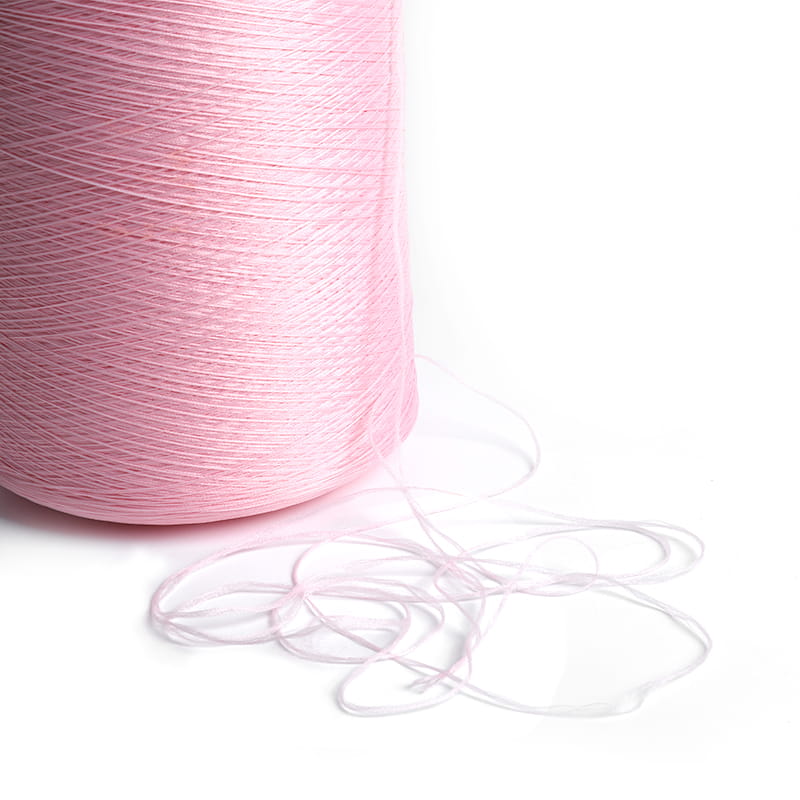 Polyester High Elastic Towel Edge Locking Yarn ManufacturerTongdeli : Custom Polyester High Elastic Towel Overlock Sewing Yarn Manufacturers and Factory, Wholesale Polyester Towel Edge Locking Yar...View Product →
Carpets and rugs
Face yarns for carpets need wear resistance, stain resistance, and adequate UV stability. Higher-denier filaments with engineered cross-sections deliver the durability that residential and commercial flooring requires, and stain-resistant variants reduce long-term maintenance costs.
Technical and industrial textiles
Conveyor belts, webbings, and structural fabrics require high tenacity and low creep. High-strength polyester yarn outperforms standard DTY because greater molecular orientation translates into better load-bearing capacity and less deformation over time.
Virgin or Recycled: What the Difference Means for Your Supply Chain
Recycled polyester yarn is made from post-consumer or post-industrial PET, usually bottles or production waste. Its carbon footprint is lower than virgin polyester, and for many brands recycled content is now a sourcing requirement rather than a premium option.
Recycled yarn is not always a drop-in replacement. Color retention can vary, and dye uptake can shift between batches if the input material is not tightly controlled. Buyers switching to recycled yarn for colored products should request laboratory reports on batch-to-batch consistency. It also matters whether the supplier makes recycled DTY, recycled POY, or regenerated yarns, because the processing route changes the final properties just as much as the raw material does.
If the end product carries a recycled claim, the supplier must document the chain of custody. If the product is white or very dark, color retention is less of a risk, but tenacity and elongation still need to be verified against the original specification.
What a Reliable Polyester Yarn Supplier Should Offer
A supplier is more than a price quote. For buyers who depend on steady production, evaluation should cover four areas:
- Integrated manufacturing. A manufacturer that controls spinning, draw-texturing, winding, and packaging in one plant can keep quality consistent and respond faster to specification changes. A trader who resells cones from different mills cannot offer the same control.
- Customization. Adjusting denier, filament count, twist, or finish matters when the final product is differentiated. A supplier with its own production line can run trial batches before a full-scale order.
- Capacity and delivery. Ask about stock levels, lead times, packaging, and palletization. Clarity here prevents surprises at the warehouse or port.
- Technical communication. Technical questions deserve technical answers. A good supplier will review your application, recommend a specification, and follow up after delivery.
Polyester yarn is a mature product, and the price per kilogram is rarely the deciding factor between a good order and a bad one. The deciding factor is whether the filament type, the specification, and the supplier's production capability match the application. If you are working through a sourcing decision, contact our technical team directly with your application details; a manufacturer with integrated production can evaluate options honestly instead of sending you the closest stock item.