English
 عربى
عربى Türk
Türk Español

Content
A production manager once told us why he stopped buying the cheapest overlock sewing yarn he could find. After three months of intermittent machine stoppages, his sewing operators had memorized the rethreading sequence, and his end-of-line defect rate for edge seams had climbed above four percent. The yarn that saved him a fraction of a cent per cone was now costing him lead time and customer complaints. That conversation explains what most textile buyers eventually learn: overlock sewing yarn is a small input with an outsized effect on machine efficiency, seam quality, and product appearance.
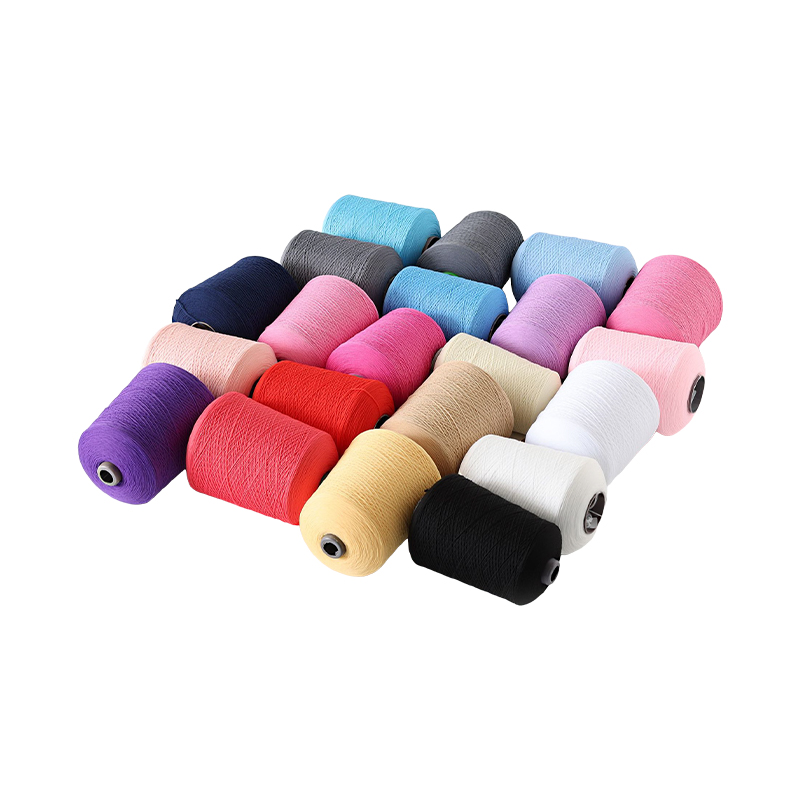
Overlock sewing yarn is the thread used in overlock and serger machines to form interlocked, looped seams on towel edges, carpet borders, knit garments, and many other sewn products. Unlike a standard lockstitch, an overlock seam uses two, three, or four threads that wrap around the fabric edge together, so the demands placed on the yarn are different. In this guide, we walk through the characteristics that matter, the specifications to compare, and the failures to avoid when buying overlock sewing yarn in volume.
What makes overlock sewing yarn different from regular sewing thread
Because no single thread carries the entire load of an overlock seam, the yarn does not need to be as strong as a needle thread used in conventional lockstitch sewing. What it needs is uniform thickness, controlled elasticity, and consistent quality from one cone to the next.
The first practical difference is fineness. Overlock yarn is generally finer than regular sewing thread because several threads are combined in the seam; excessive bulk would make the edge stiff and uncomfortable, especially on towels and clothing. Even so, the yarn must withstand the pull of loopers and tension discs at several thousand stitches per minute.
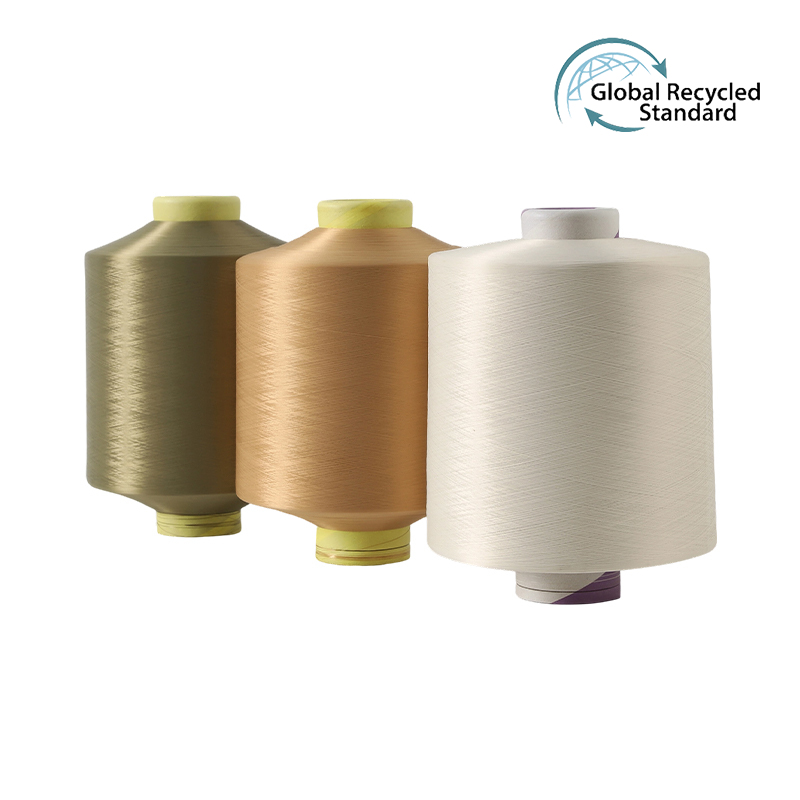
The second difference is elasticity. Overlock seams are used on stretchy or frequently handled products such as towels, knitwear, and activewear. The yarn must elongate with the fabric and return to its original shape, or the seam will pucker or break. Polyester is the dominant material for overlock sewing yarn because it offers a good balance of elongation, recovery, abrasion resistance, and wash durability. Within the polyester family, DTY (draw textured yarn) is the most common type for overlock threads because texturing adds the bulk, softness, and stretch behavior that the seam needs.
Key specifications to check before ordering
Before placing a large order, review the technical datasheet of the overlock sewing yarn just as you would any other production input. The parameters below have the greatest impact on the factory floor.
| Parameter | What it controls | Typical range | What to verify |
|---|---|---|---|
| Denier (D) | Yarn thickness and seam coverage | 75D to 300D for apparel and towels; 450D to 600D for carpet edges | Match denier to fabric weight and edge thickness |
| Filament count (F) | Softness, flexibility, and surface coverage | 36F to 288F | Higher filament counts give softer and fuller edges |
| Elongation at break | Elasticity of the seam | Approximately 20% to 45% for textured polyester | Choose higher elongation for knitwear and towel borders |
| Shrinkage | Dimensional stability after washing | Low-shrink grades available | Essential for towels washed at high temperatures |
| Color fastness | Resistance to fading and bleeding | Grade 4 or above is commonly required | Request test reports for dark and bright shades |
These parameters are related. A high-denier yarn with a low filament count feels firm and rope-like, which may suit a heavy carpet edge but create an uncomfortable ridge on a towel. A fine yarn with a very high filament count feels soft but may not survive the abrasion of a floor covering. Testing on your own machine is the only reliable way to confirm the right combination.
Matching overlock sewing yarn to your application
Towels and terry products
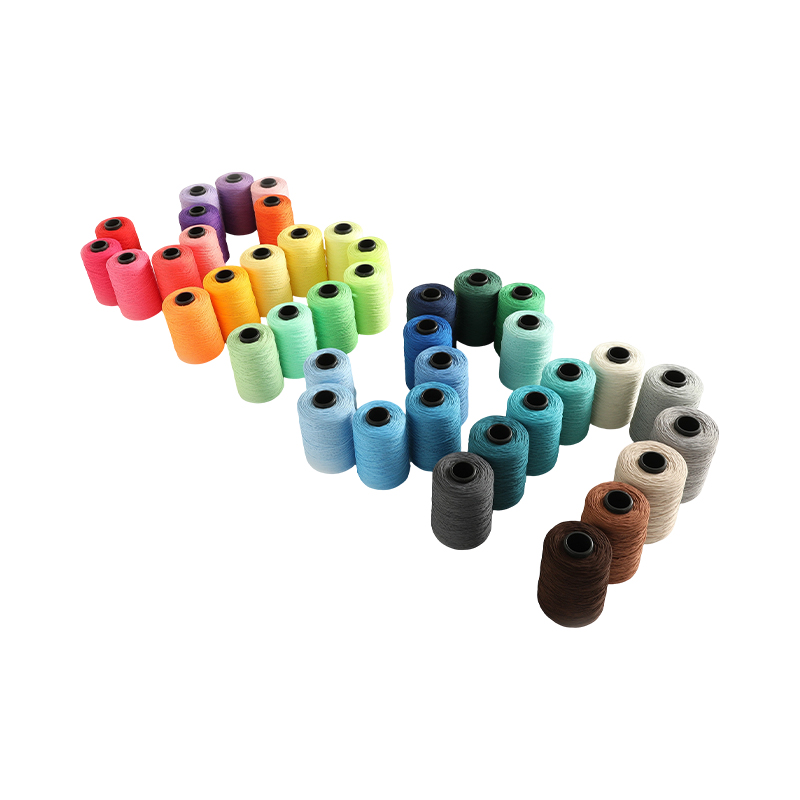
Towels are washed, bleached, and tumble dried over and over again, often with aggressive detergents. The edge seam must hold for the life of the product and remain flat and soft against the skin. For this reason, towel mills prefer a high-elastic overlock yarn with controlled shrinkage. A polyester high-elastic towel overlock sewing yarn is a common choice for terry borders; it stretches with the border during washing and recovers without distorting the edge.
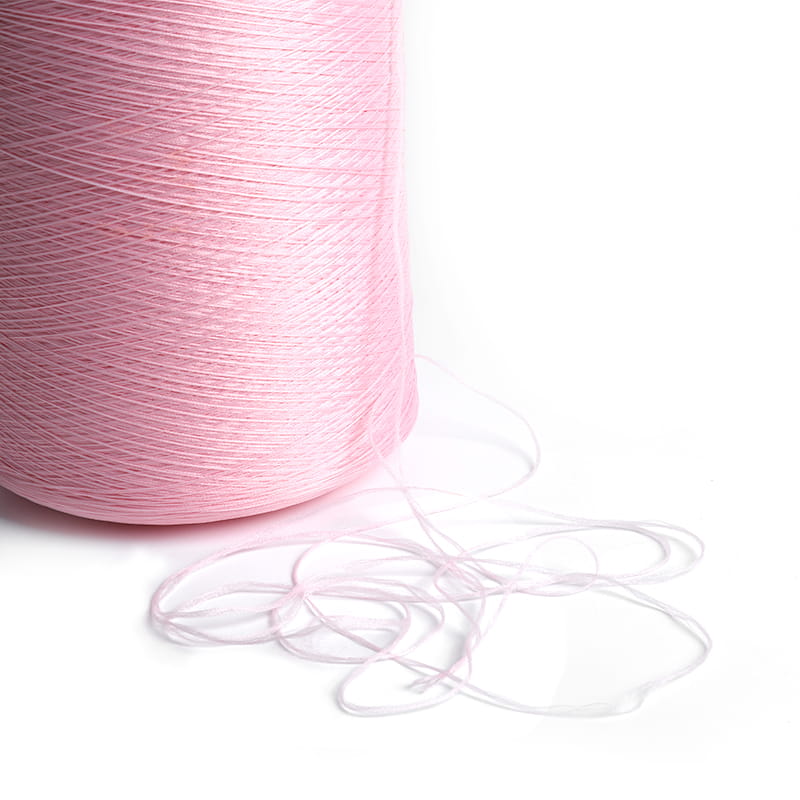 Polyester High Elastic Towel Edge Locking Yarn ManufacturerTongdeli : Custom Polyester High Elastic Towel Overlock Sewing Yarn Manufacturers and Factory, Wholesale Polyester Towel Edge Locking Yar...View Product →
Carpets and rugs
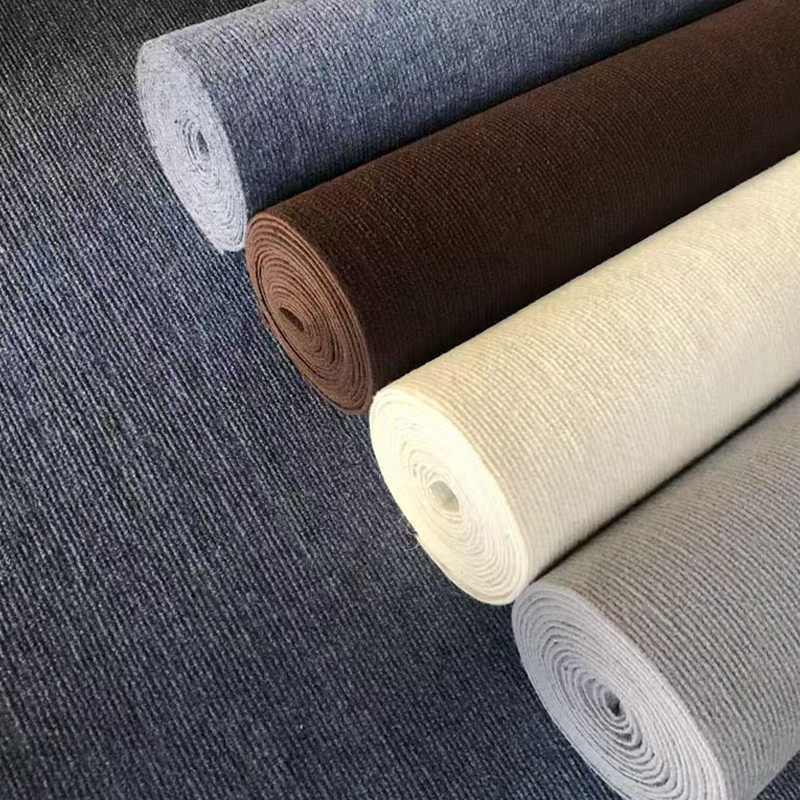
Carpet edges are overlocked with heavier yarn, and the seam must tolerate foot traffic, vacuuming, and long periods of sunlight near windows. Abrasion resistance and ultraviolet stability are the priorities. DTY overlock thread for carpets is a proven option for standard tufted rugs; it combines the toughness of a thick polyester yarn with enough texturing to lie flat on the backing. If the rug has a dense, structured edge that needs a firmer finish, some manufacturers switch to a twisted sewing bulked polyester high-elastic carpet yarn, which produces a more defined border and resists deformation over time.
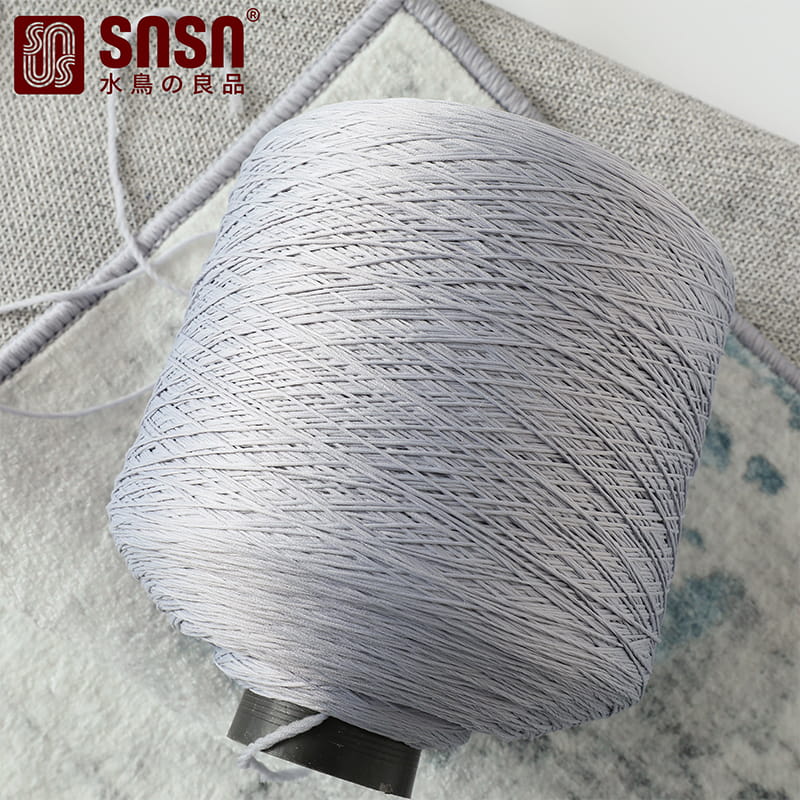 Polyester Carpet Edge Locking Yarn Manufacturers, SuppliersTongdeli - Custom Twisted Sewing Bulked Polyester Chemical Fiber high-elastic Carpet Yarn Manufacturers, Wholesale 100% Polyester Bulk Te...View Product →
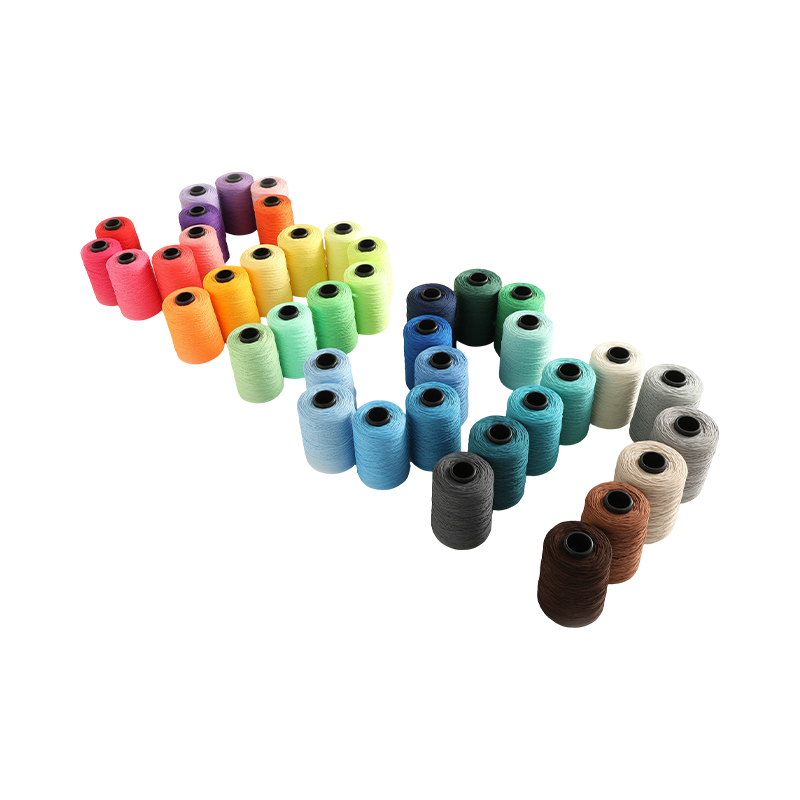 DTY Overlock Thread For Carpets Manufacturers, Factory - Suzhou Tongdeli New MatTongdeli is China DTY Overlock Thread For Carpets Manufacturers and Wholesale Factory, Custom DTY Overlock Thread For Carpets for sale, 1...View Product →
Garments and knitwear
For apparel, the priorities are seam flexibility, low bulk, and skin comfort. Fine denier yarns in the 75D range, with filament counts from 36F to 72F, are common for knit garments and activewear. The yarn should match the stretch behavior of the fabric. A rigid yarn in a stretchable garment will produce wavy seams at best and broken seams at worst.
Common failure modes and how to avoid them
Most overlock problems can be traced back to one of four causes. Knowing them helps you react quickly when a line stops.
- Thread breakage. This is the most visible failure. It can result from excessive tension, a weak spot in the yarn, or poor winding with knots and snarls. Review the tension settings and ask your supplier about the number of joins per cone and the strength of those joins. Our guide on how to prevent overlock sewing yarn from breaking during sewing covers this in more detail.
- Wavy or puckered seams. Usually a sign of insufficient elasticity or excessive tension. Switch to a higher-elasticity yarn and reduce the differential feed on the machine.
- Skipped stitches. Often a needle size mismatch or an unbalanced looper tension. Check the needle type and the relationship between upper and lower looper tensions.
- Color differences between cones. Dye lot variation is the usual culprit. If the order requires exact color matching, request cones from the same dye lot and verify that the lot number is printed on the cone label.
What to look for in an overlock sewing yarn manufacturer
Once the specification is clear, the next question is where the yarn is made. A trader who buys and resells yarn may not be able to explain why a certain yarn behaves differently on your machines. A manufacturer with in-house spinning, draw texturing, and winding has direct control over the parameters that affect your production line.
Three things are worth checking. First, ask for the production process and test data behind each grade. Second, confirm that the supplier can customize denier, filament count, twist, color, and package type for your application. Third, run a pre-production sample through your own machines before committing to a bulk quantity.
We produce overlock sewing yarn in our own facility, from spinning and texturing through winding and packing. You can contact our team to discuss your application and request a sample.
Overlock sewing yarn is a small line item in your purchasing budget, but it decides whether your seams survive washing, stretching, and daily use. Let your application, not the price per cone, set the specification. Test it on your machines, inspect the test data, and build a working relationship with a manufacturer who delivers consistent quality at scale.