English
 عربى
عربى Türk
Türk Español

Content
A production manager at a towel mill once told us that a bad batch of overlock sewing yarn is the fastest way to lose a full day of output. The thread snaps, the loopers skip, and a high-speed overlock machine stops every few minutes. In most cases the fault is not the machine but a mismatch between the yarn and the application.
Here is the conclusion before the details: when you source overlock sewing yarn, focus on three things — denier and filament count, elasticity, and batch-to-batch consistency. These determine whether the yarn runs cleanly, holds the seam, and stays uniform from one delivery to the next. Every other factor is secondary.
What Makes Overlock Sewing Yarn Different from Ordinary Sewing Thread
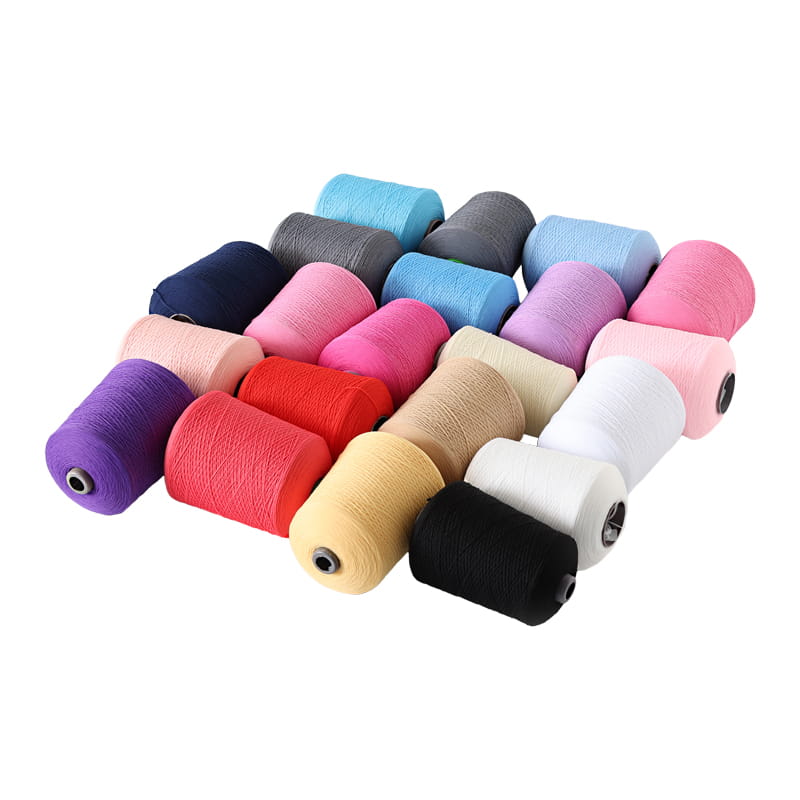
Overlock sewing yarn is the thread used in overlock machines, often called sergers, that trim, seam, and overcast the edge of fabric in a single operation. Home sewing guides often note that overlock thread is finer than regular sewing thread, and that it can feel weaker when pulled between your hands. Both observations are correct, but only in context. A garment-weight overlock yarn is intentionally lighter because the stitch is formed by loopers that share the load.
In a lockstitch machine, the needle thread carries most of the seam load, so it needs high twist and tensile strength. In an overlock machine, two or more loopers interlock with one or two needles, distributing the tension. The yarn therefore does not need maximum tenacity. It needs flexibility, bulk, evenness, and a surface finish that keeps it running cleanly at high speed. A lockstitch thread that feels strong in your hands may still perform badly in an overlock machine, because it lacks the elasticity and round cross-section that looper formation requires.
The stitch pattern also matters. A two-thread overlock gives the narrowest seam and suits lightweight edges. A three-thread overlock trims, seams, and overcasts in one pass and is the most common choice for towel and carpet edges. A four-thread overlock adds a safety stitch for knit garments. In every configuration, the yarn passes through the loopers repeatedly, so evenness matters more than absolute strength.
Key Properties to Check Before You Buy
The buyer who knows four numbers will make far fewer mistakes: the denier, the filament count, the elongation, and the color fastness rating. Together they tell you whether the yarn will handle the machine tension, cover the seam edge, follow the fabric's stretch, and keep its color through washing and use.
| Property | What to check | Why it matters |
|---|---|---|
| Denier (D) | Thickness of the yarn bundle | Fine counts suit lightweight knits; heavier counts give strength and coverage on towel and carpet edges. |
| Filament count (F) | Number of micro-filaments in the yarn | A higher filament count produces a softer hand and better edge coverage, while a lower count makes a crisper, more compact stitch. |
| Elongation at break | Stretch before the yarn breaks, usually expressed as a percentage | The yarn must stretch with the fabric edge; if it stretches less than the fabric, seams pucker or break. |
| Breaking strength | Tensile force the yarn can resist | Too low, and the yarn fails under high-speed looping action; too high, and the yarn may become stiff and hard to sew. |
| Twist level | Turns per meter | Lower twist improves bulk and coverage; higher twist improves abrasion resistance for carpet edges. |
| Fastness to washing and light | Test results for washing, rubbing, and light exposure | Towels and carpets are washed and exposed to sun; poor fastness causes fading and bleeding. |
| Surface finish | Lubrication or softener applied to the yarn | Good lubrication prevents needle heating and thread breaks during continuous high-speed sewing. |
Denier, Filament Count, and Bulk
Bulk comes from denier and filament count together. A 150D/144F yarn, for example, contains many fine filaments and therefore covers the fabric edge softly. A 150D/48F yarn of the same denier has coarser filaments, a harder hand, and a more visible seam. For garment seams, a softer and finer construction is usually the right starting point; for carpet edges, a denser and tougher structure wins.
Elasticity and Recovery
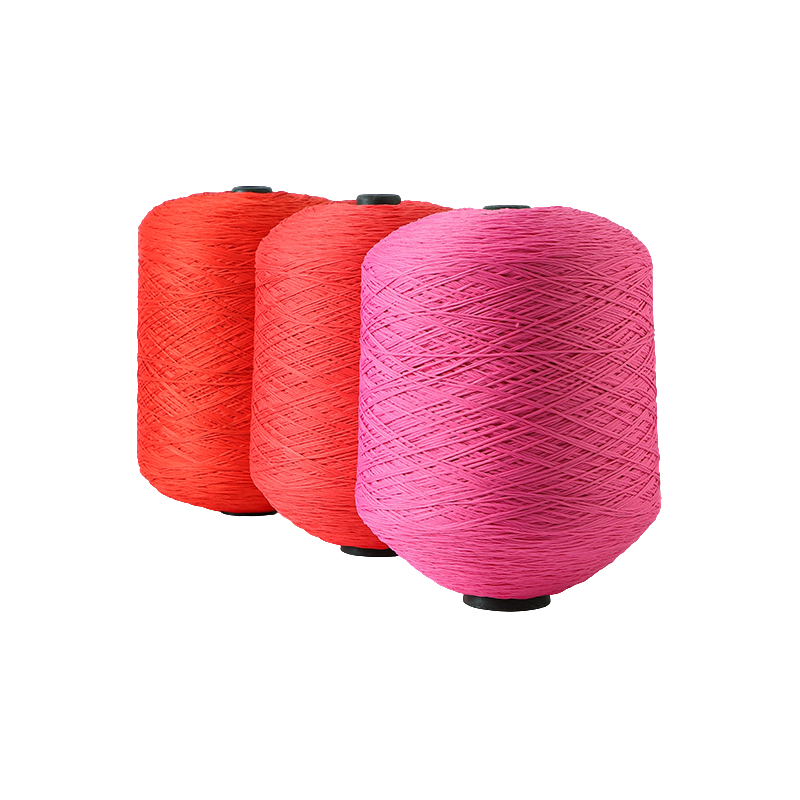
Elasticity is the property that separates a comfortable seam from a broken one. A towel edge stretches every time the towel is pulled, twisted, or wrapped; a carpet edge stretches during installation and foot traffic. If the overlock yarn cannot follow that movement, something fails. The ideal behavior is a yarn that stretches with the fabric and then recovers, keeping the edge flat and the seam intact. That is exactly why towel mills prefer a high-elastic polyester construction over standard stiff yarns. For carpet borders that must absorb installation pulls, a twisted bulked high-elastic carpet yarn provides the same recovery with a fuller, cushioned edge profile.
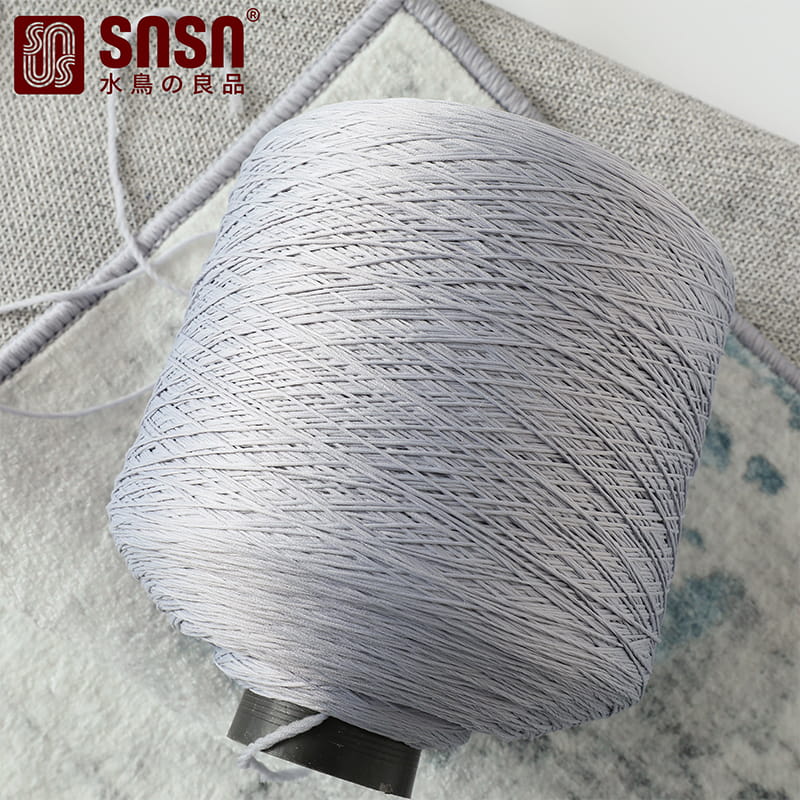 Polyester Carpet Edge Locking Yarn Manufacturers, SuppliersTongdeli - Custom Twisted Sewing Bulked Polyester Chemical Fiber high-elastic Carpet Yarn Manufacturers, Wholesale 100% Polyester Bulk Te...View Product →
Color Fastness and Finish
Polyester overlock yarn is easily dyed to vivid shades, which is one of its strong points. But buyers must check fastness, because washing detergents, chlorine, and sunlight all attack dye molecules. Ask your supplier for washing fastness and light fastness ratings before you place a repeat order. Equally important is the finish: a yarn with a smooth, lubricated surface feeds better through the needle and loopers and causes fewer stops.
Matching Overlock Sewing Yarn to the Application
Different products need different overlock yarns. The fastest way to judge a yarn is to run it on a machine over the actual fabric edge, but the shortlist should start with the application itself.
Towels and Terry Cloth
Towels are washed more often than almost any other home textile. The overlocked edge must survive repeated washing, high drying temperatures, and constant stretching, which makes high elasticity the first priority. At our own facility, the polyester high-elastic towel overlock sewing yarn is the product we recommend for this exact job, because it keeps the edge flat after laundering and resists shrinking and stretching over the life of the towel.
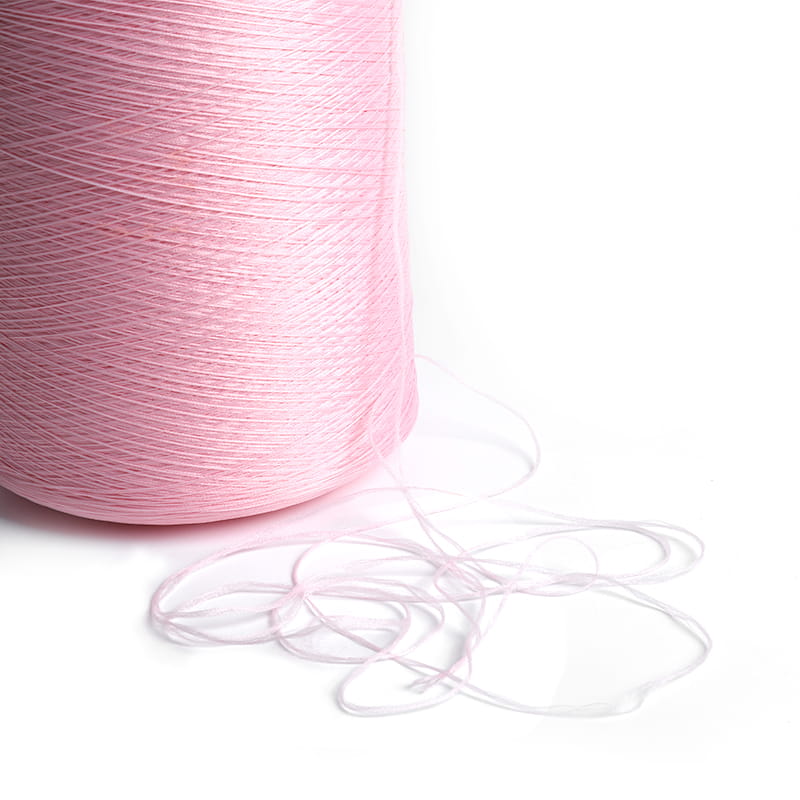 Polyester High Elastic Towel Edge Locking Yarn ManufacturerTongdeli : Custom Polyester High Elastic Towel Overlock Sewing Yarn Manufacturers and Factory, Wholesale Polyester Towel Edge Locking Yar...View Product →
Carpets and Rugs
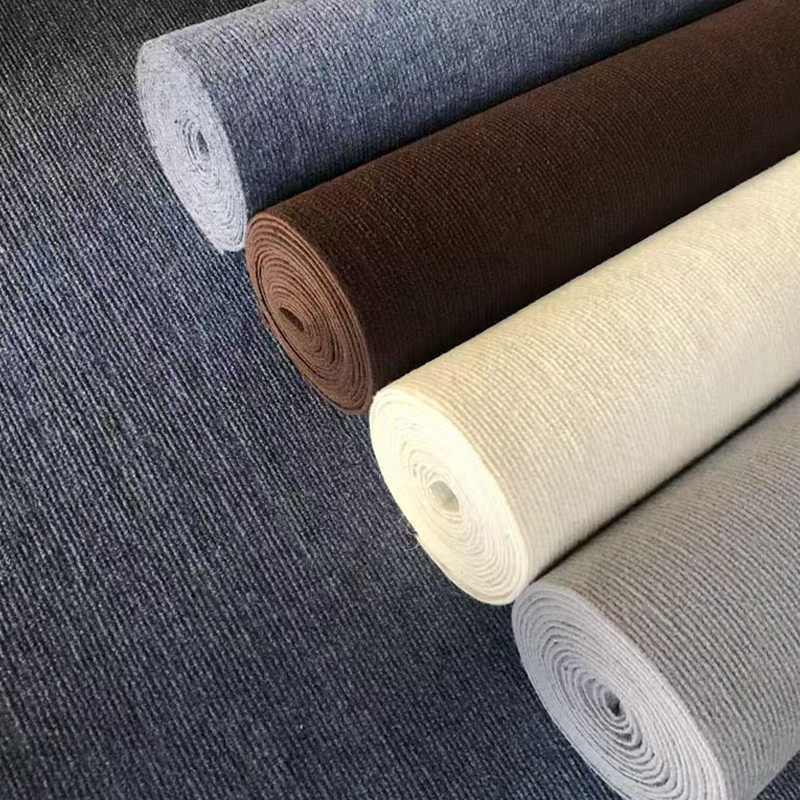
Carpet edges face a different set of stresses: abrasion from foot traffic, pulling during installation, and in some cases ultraviolet light near windows. For these end uses, a DTY overlock thread for carpets offers the abrasion resistance and dimensional stability a rug mill needs, especially on cut-pile products where the edge remains visible after finishing.
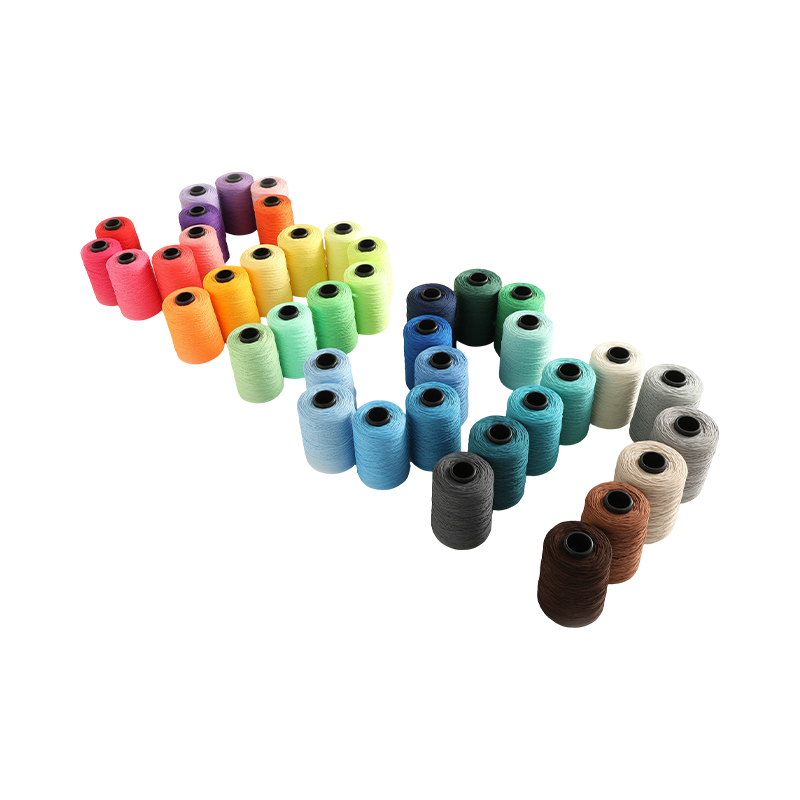 DTY Overlock Thread For Carpets Manufacturers, Factory - Suzhou Tongdeli New MatTongdeli is China DTY Overlock Thread For Carpets Manufacturers and Wholesale Factory, Custom DTY Overlock Thread For Carpets for sale, 1...View Product →
Garments and Knitwear
For clothing, the priority shifts to softness and fine gauge. A coarse carpet yarn would be far too heavy for a jersey hem. Garment manufacturers normally choose a fine overlock yarn with a high filament count, so the seam lies flat inside the garment and does not irritate the skin. Seam strength still matters, but comfort and drape take the lead; this is why the same machine can use very different yarns for a bath towel and a T-shirt.
Common Problems: Breaking Yarn and Shade Differences
Two complaints dominate the feedback we receive from buyers: the overlock yarn breaks during sewing, and the color does not match between batches. Both are preventable when you know what to look for.
Overlock Yarn That Keeps Breaking
If the yarn breaks only on the overlock machine, check the tension settings and the needle path first. If breakage continues on a correctly set machine, the yarn itself is likely uneven — too thin in places, with a weak point that fails under looping tension. A reliable supplier will provide yarn with controlled evenness and a consistent finish. For a step-by-step approach to troubleshooting, see the guide to preventing overlock yarn breakage during sewing.
Color Differences Between Batches
Even small differences in dyeing temperature or lot timing can produce visible shade differences on a sewn edge. The practical fix is to request a sample from the same production lot as the delivery and keep a sealed reference sample for comparison when the bulk order arrives. When shade matching is critical, many buyers order all yarn for one article from a single lot. Learn more about avoiding color differences when using overlock sewing yarn before committing to a large order.
Why Sourcing from a Manufacturer Makes a Difference
The quality of overlock sewing yarn is decided long before the final package: at the spinning, drawing, texturing, and winding stages. A trading company may buy yarn from several factories and sell it under one name, which is the most common source of batch-to-batch inconsistency. A manufacturer, by contrast, controls every step. We produce overlock sewing yarn from spinning to finished product at our own factory, which allows us to keep evenness, elasticity, color, and winding uniform across orders.
For industrial buyers, this matters in three ways:
- Consistency reduces downtime: a yarn that runs smoothly today will run smoothly next month if the process does not change.
- Customization is easier: denier, filament count, twist, color, and packaging can be adjusted to the buyer's machine and end product.
- Technical support comes from the maker: the people who actually produce the yarn can answer production questions directly rather than passing them through a reseller.
The practical sequence for a first order is simple:
- Define the application and the stresses the seam will face in use.
- Choose the closest standard product from the manufacturer's range.
- Run a trial on a full roll under your own production conditions.
- Scale up only after the yarn performs through a real shift.
The rule to remember: match the yarn to the edge it must protect, and verify consistency before you commit to volume.