English
 عربى
عربى Türk
Türk Español
Content
Two samples can both be labeled "100% polyester" and still behave nothing alike: one keeps its surface after a year in a hotel corridor, while the other pills, flattens, and sheds within a season. The difference starts earlier than the fabric — it starts at the fiber. In textile terms, a fiber is the smallest usable strand of material: slender, flexible, and far longer than it is wide, capable of being spun into yarn or formed directly into fabric. Every property you judge later — yarn strength, dye uptake, resilience underfoot — traces back to what that fiber is and how it was produced. This article defines what qualifies as a textile fiber, explains how fibers are classified, and shows how to read the fiber data on a supplier spec sheet before committing to an order.
What Qualifies a Strand as a Textile Fiber
Fiber is defined by geometry and function, not by chemistry. Textile technicians describe it as a strand with a length-to-width ratio of several hundred to one or more — thin enough to stay flexible, long enough to be processed — that can be converted into yarn and then into a woven, knitted, bonded, or felted fabric. Cotton, wool, silk, and polyester filament share almost nothing chemically, yet all fit the definition.
Not every hair-like strand qualifies. To be commercially spinnable, a fiber must clear a few practical minimums:
- Length. Staple fibers need a minimum workable length: cotton runs roughly 13 to 38 mm, and fragments shorter than that cannot form a coherent yarn. Manufactured filaments, by contrast, are continuous and can run for kilometers without a break.
- Tensile strength. The strand must survive carding, drawing, spinning, and the tension of weaving or knitting, then withstand wear in the finished article.
- Flexibility. A fiber that cannot bend repeatedly around itself and through machine guides will snap during processing.
- Fineness and cohesion. Fibers must be fine enough to pack densely into yarn, and staple fibers must grip one another so that twist can lock them together.
Natural fibers meet these requirements as they grow, which is why staple length, fineness, and strength vary with harvest, breed, and climate. Manufactured fibers are engineered to hit the same targets deliberately, which is why a yarn supplier can quote a denier and filament count and hold them within narrow tolerances, batch after batch.
How Textile Fibers Are Classified
Every fiber on the market falls into one of two families, and each family splits into sub-groups that behave differently in production and in use.
Natural fibers are harvested directly from plants, animals, or minerals. Plant fibers such as cotton, flax (linen), jute, and hemp are cellulose-based and are valued for absorbency and breathability. Animal fibers such as wool and silk are proteins: wool insulates and recovers its shape, while silk pairs light weight with high strength. Mineral fibers form the smallest group — asbestos was the historical example, and it no longer appears in consumer textiles.
Manufactured fibers are constructed rather than harvested, and they split into three groups. Regenerated fibers start from natural cellulose, usually wood pulp, that is dissolved and re-extruded; viscose, lyocell, and modal belong here. Synthetic fibers are built from petrochemical polymers: polyester, nylon, polypropylene, acrylic, and elastane. Inorganic fibers such as glass, carbon, and metallic strands serve reinforcement, filtration, and technical roles rather than everyday apparel. Functional variants are also spreading through the market, with silver-coated conductive yarns for static control and heating yarns for warming textiles among the most visible examples.
| Family | Sub-group | Common examples | Typical characteristics |
|---|---|---|---|
| Natural | Plant (cellulosic) | Cotton, linen, jute, hemp | Absorbent, breathable, biodegradable; staple length varies by harvest |
| Natural | Animal (protein) | Wool, silk | Elastic, insulating, strong for their weight; sensitive to alkalis and high heat |
| Manufactured | Regenerated | Viscose, lyocell, modal | Cellulose-based with a soft drape; wet strength depends on the process route |
| Manufactured | Synthetic | Polyester, nylon, polypropylene, acrylic | High strength and abrasion resistance, low moisture uptake, stable pricing |
| Manufactured | Inorganic | Glass fiber, carbon fiber, metallic yarn | Reinforcement, conductivity, filtration, and other technical functions |
For a buyer, the classification matters because it predicts behavior before any test report arrives. Polyester's low moisture uptake explains why polyester carpet dries quickly and resists water-based stains; cotton's absorbency explains why it dominates towels. Neither fiber is better — each fits a different end use, and the classification tells you which questions to ask next.
From Fiber to Yarn to Fabric
Textiles are built in a chain, and fiber sits at the front of it. Staple fibers must be spun: cleaned, carded into a parallel web, drawn into sliver, and twisted into yarn. Filament yarns skip most of that work because the strand is already continuous, but producers routinely modify filaments after extrusion to change how they feel and perform.
Polyester shows the pattern clearly. Partially oriented yarn (POY) is the as-spun intermediate that leaves the spinneret; drawing and texturizing it produces draw textured yarn (DTY), which carries crimp, bulk, and stretch that flat filament lacks. That texturized structure is a large part of why DTY is the standard choice for carpet overlock edges, towel binding, and knitted fabrics where a soft, full hand matters more than a glass-smooth surface. For the mechanics side by side, this comparison of DTY, FDY, and POY explains how each yarn type is made and where each fits.
The chain also clarifies who controls what in your supply base. A trader buys finished yarn and resells it. A spinner controls extrusion and texturizing but outsources everything downstream. An integrated manufacturer runs spinning, texturizing, winding, and packaging inside one plant, so the fiber parameters agreed at the start stay connected to finished-product performance under a single quality system.
Reading Fiber Data on a Supplier Spec Sheet
Fiber-level data is where most yarn and fabric decisions are decided, so it is worth decoding the two numbers that appear on almost every polyester quote.
Denier (D) measures strand weight: it is the mass in grams of 9,000 meters of yarn, so lower denier means finer yarn. Around 50D is fine enough for linings and lightweight knits; 75D to 150D covers most apparel and home-textile applications; 300D to 600D is heavy-duty territory for upholstery, luggage, and carpet construction, where abrasion resistance matters more than drape.
Filament count (F) tells you how many individual filaments the yarn contains. A 150D/144F yarn spreads its weight across 144 fine filaments, which produces a soft hand, good coverage, and a smooth surface. A 150D/48F yarn uses fewer, thicker filaments and trades softness for stiffness and durability. Same denier, very different fabric.
Spec examples make this concrete. For upholstery and home textiles where spills are likely, a stain-resistant 150D/144F DTY is a common starting point, because it balances surface fineness with enough bulk to build a full fabric face:
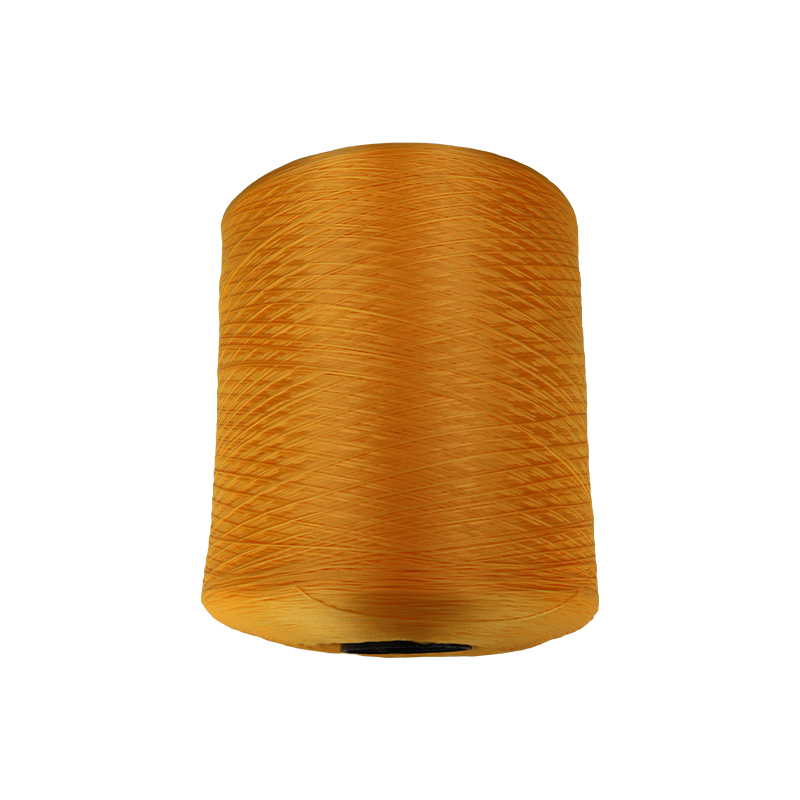 150D/144F Stain-Resistant DTY Polyester Yarn for UpholsteryThis stain-resistant 150D/144F DTY offers fine filaments with enough bulk for a full fabric face, suiting upholstery and home textiles where spills are likely and easy cleaning matters.View Product →
For heavy-traffic flooring, the balance shifts toward durability. A 300D/144F wear-resistant and pressure-resistant yarn carries more mass per strand and resists flattening under repeated load, which is what corridor and office installations demand:
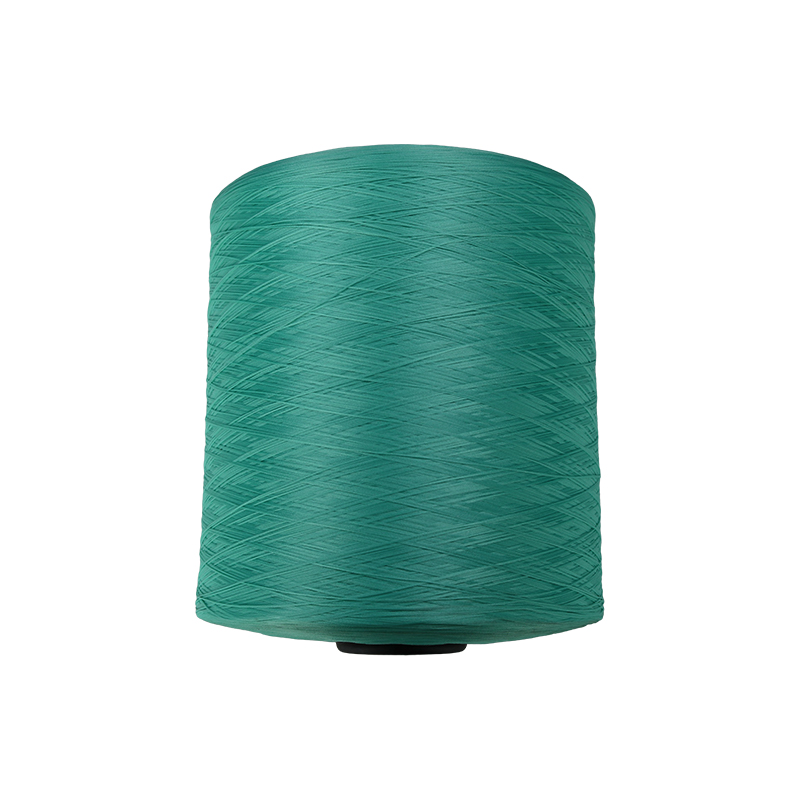 300D/144F Wear-Resistant Polyester Yarn for Heavy-Traffic FlooringWith more mass per strand, this 300D/144F yarn resists flattening under repeated load, making it a durable choice for corridor and office carpet installations.View Product →
Practical Checks Before You Commit to an Order
Because the fiber determines downstream performance, put fiber questions at the front of supplier discussions rather than the end:
- Match the fiber to the end use. Abrasion and pressure resistance for carpet, moisture management for activewear, UV stability for outdoor applications — name the application first and let it rule the spec.
- Ask how the fiber was processed. Texturized versus flat filament, draw ratio, and heat setting change hand feel and dimensional stability even when the polymer is identical.
- Fix tolerances in writing. Denier variation, tenacity in cN/dtex, elongation at break, and shrinkage limits belong in the order confirmation, not only in a catalog page.
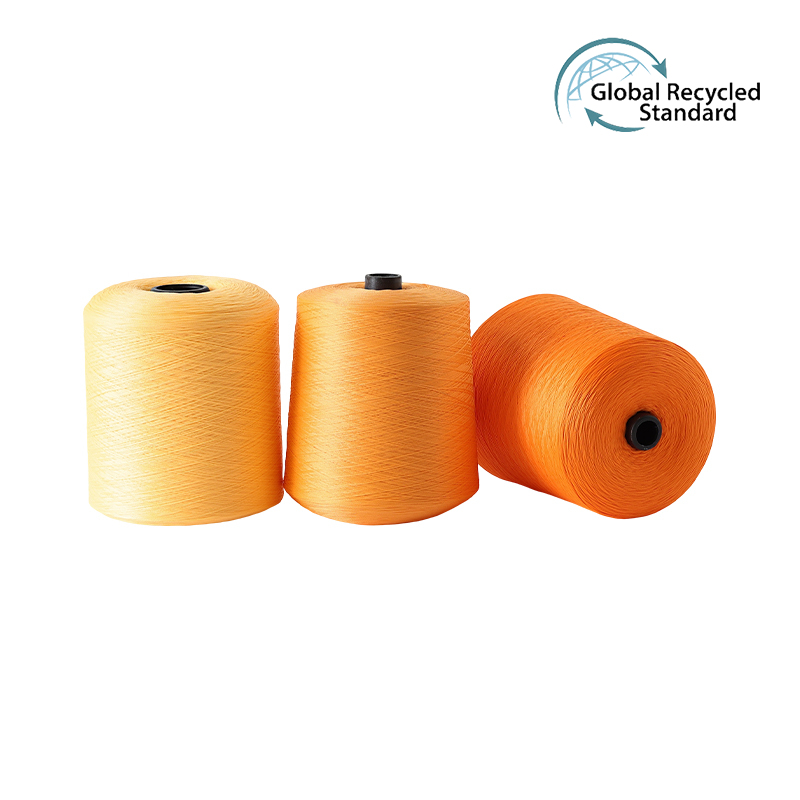
- For recycled grades, confirm which certification covers the specific lot you are buying, and ask for lot-level traceability rather than a general claim.
- Prefer suppliers who control the fiber stage themselves, because fiber-level adjustments are the cheapest point to correct performance problems before they reach fabric.
Recycled polyester illustrates why documentation matters more than chemistry. The fiber is classified exactly like virgin polyester, properties sit close to virgin grades, and the real procurement difference is proving where the material came from:
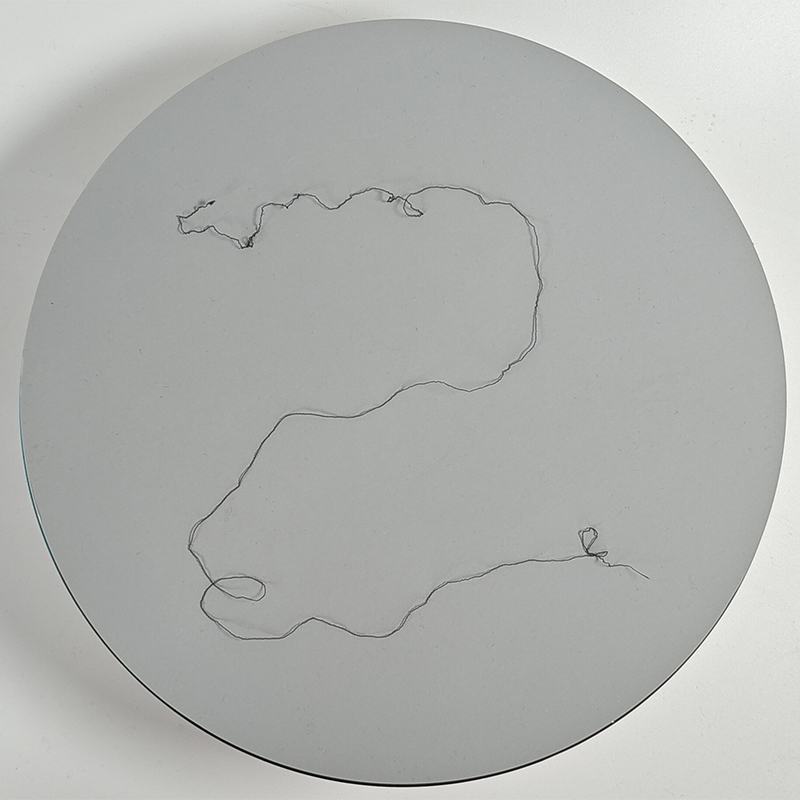 Super Polyester Elastic Yarn as a Spandex AlternativeSuper polyester gains elasticity when exposed to temperature and retains it like spandex, with strong stability, fatigue resistance, and pilling resistance for blended knits.View Product →
If you are weighing polyester against other options for a specific product, a structured guide to polyester yarn types, uses, and properties is a sensible next read before you arrange sampling.
A textile fiber is not a vague marketing word; it is the specific strand — natural or manufactured — that everything else in the product is built from. When you can read a figure like 150D/144F and know what each number does to hand, durability, and cost, fiber data stops being background noise and becomes the main lever in your sourcing decisions.