English
 عربى
عربى Türk
Türk Español

Content
- 1 The Definitive Role of POY in Soft and Durable Textiles
- 2 Understanding Partially Oriented Yarn
- 3 Manufacturing Excellence Through Full-Chain Integration
- 4 Property Profiles That Deliver Softness and Durability
- 5 Specialty Applications Requiring Precision POY
- 6 Quality Assurance from Incoming Resin to Outgoing Package
- 7 The Supply Chain Advantage of an Integrated Factory
- 8 Making the Right POY Decision
The Definitive Role of POY in Soft and Durable Textiles
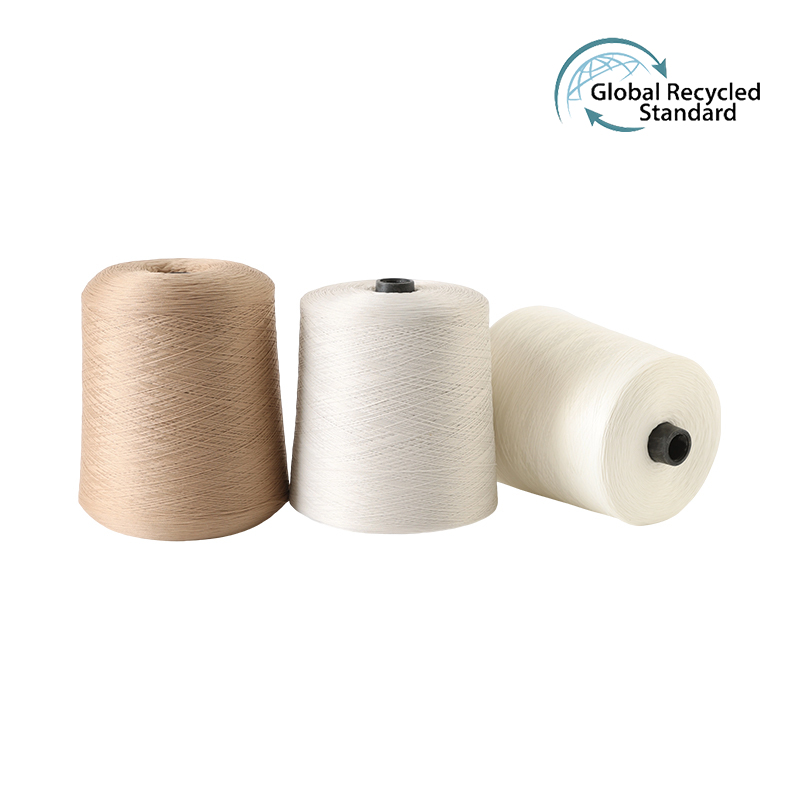
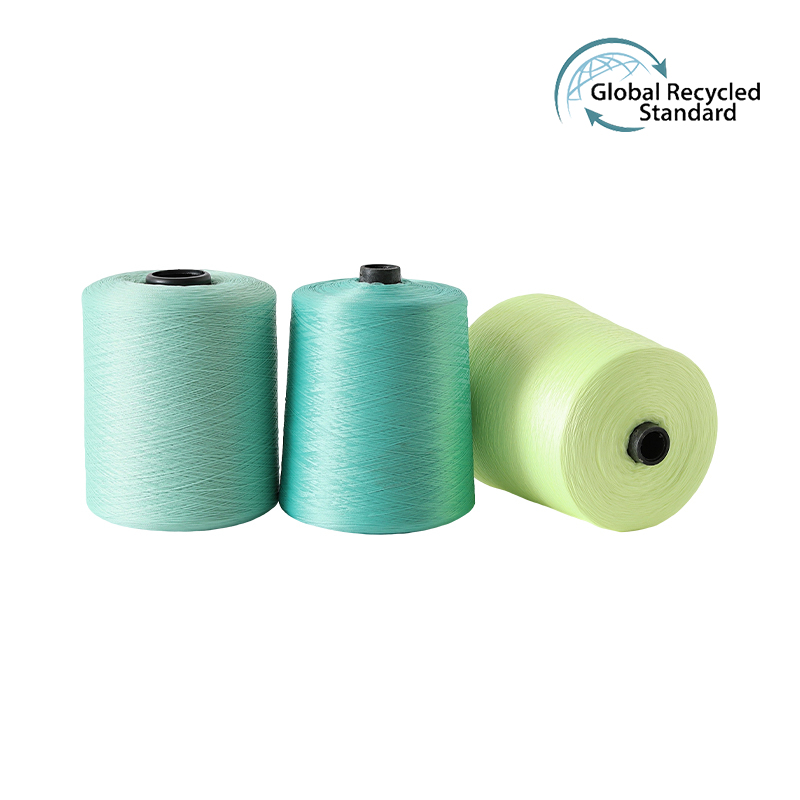
Partially oriented yarn (POY) is the essential intermediate that delivers the softness and durability required for high-performance edge binding, towel borders and conductive threads. Its semi-crystalline structure, produced through controlled melt spinning and limited drawing, retains an elongation at break typically between 120% and 160%. This molecular orientation is precisely calibrated so that during texturing the filaments develop the crimp, bulk and elastic recovery that translate directly into a supple hand feel and long-lasting toughness. Without POY as the feedstock, it would be extremely difficult to achieve a finished yarn that is both gentle against the skin and resistant to repeated mechanical stress.
Understanding Partially Oriented Yarn
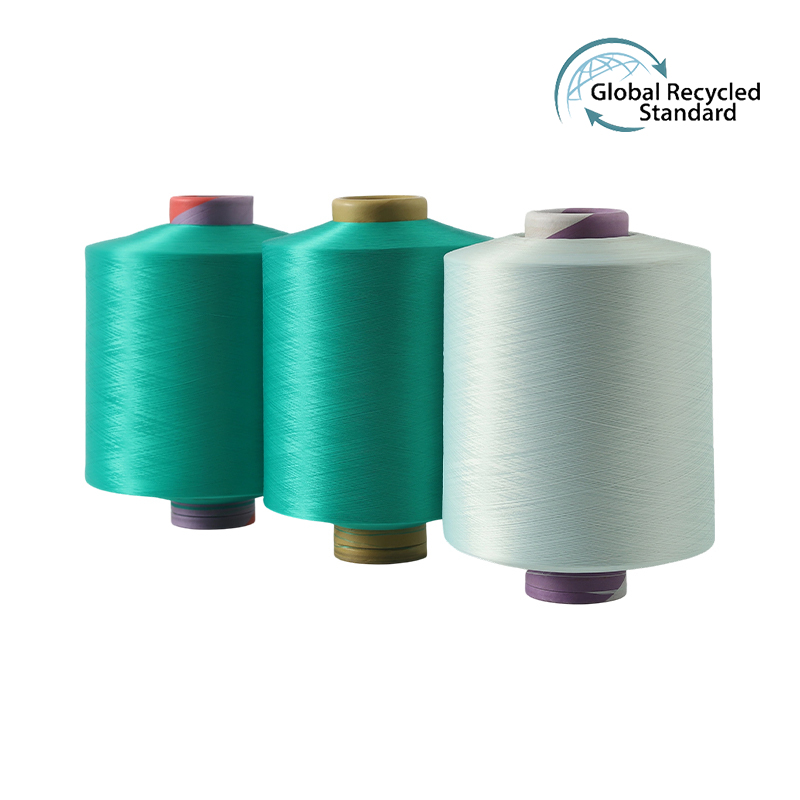
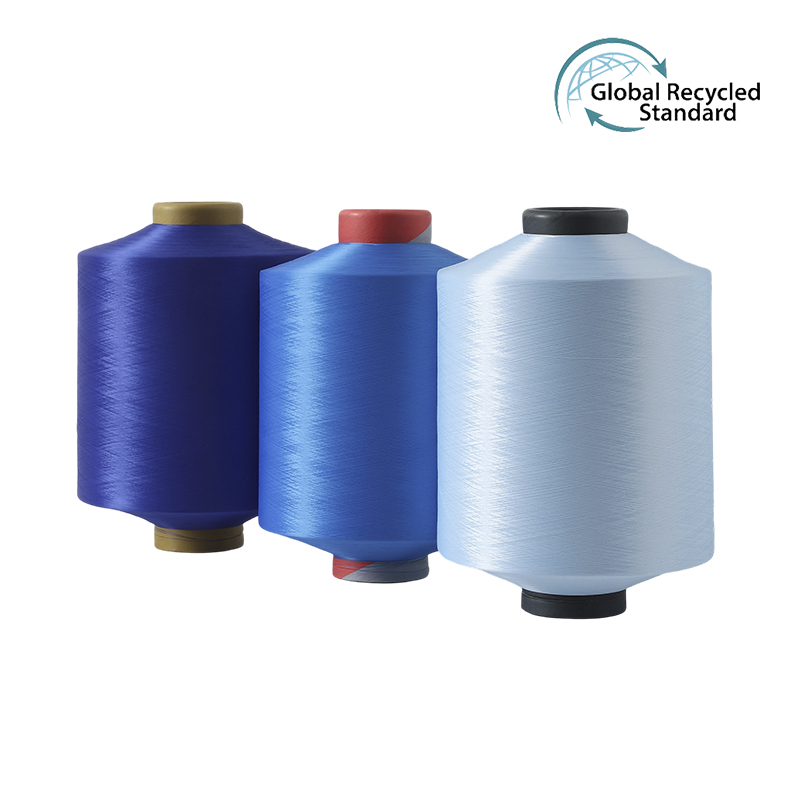
POY is produced by extruding molten polymer through spinnerets and cooling the filaments rapidly. The yarn is then wound at a speed that introduces partial molecular alignment along the fiber axis, but it is not fully drawn. This leaves a significant amount of residual elongation, which is the key parameter for downstream processing. Standard POY specifications for polyester typically show a tenacity of 2.0 to 2.5 grams per denier and an elongation of 120% to 150%, while the boiling water shrinkage is kept low to ensure dimensional stability during texturing. The semi-drawn state gives POY the unique ability to be further stretched and textured into drawn textured yarn (DTY) without breaking the filament integrity.
The molecular architecture of POY can be contrasted with fully drawn yarn (FDY) to highlight why it is preferred for applications demanding softness and resilience. The following table summarizes the key property differences that guide yarn selection.
| Property | POY | FDY |
|---|---|---|
| Elongation at break | 120% – 160% | 25% – 40% |
| Tenacity | 2.0 – 2.5 g/den | 3.8 – 4.5 g/den |
| Boiling water shrinkage | 4% – 8% | 7% – 12% |
| Typical application | Texturing feedstock | Direct use fabric |
The pronounced elongation of POY is not a weakness but a design feature. It permits a draw ratio in texturing that develops crimp, bulk and softness, while the subsequent heat-setting locks in durability and shape memory for demanding end uses.
Manufacturing Excellence Through Full-Chain Integration
Consistently producing soft and durable POY demands more than precise spinning. A fully integrated production system that links every stage from polymer chip to finished package is critical. One advanced production base, situated along the Yangtze River with convenient transport connections, spans over 30,000 square meters and operates with a registered capital of 10 million yuan. This scale allows the seamless combination of multiple processing technologies under one roof: melt spinning, texturing (ammunition adding), cylinder reversing, precision winding, inspection and finished product packaging. Such integration eliminates handling damage, reduces lot-to-lot variation and ensures that the POY maintains its designed elongation and tenacity throughout the entire pipeline.
A closed-loop quality approach is employed. During spinning, the filament denier and interlace are monitored online. The subsequent texturing stage applies precisely controlled heat and mechanical force to impart the target crimp contraction and elasticity. Cylinder reversing and winding tensions are optimized so that the final POY package build is perfect, with no sloughs or distortion, ready for high-speed knitting or weaving of edge binding lines. This mature technology, diversified equipment and strict management create a product stability that directly benefits manufacturers of carpet lock edge lines, high-elastic towel binding and conductive yarns.
Property Profiles That Deliver Softness and Durability
A truly soft and durable POY yarn is defined by a narrow set of critical parameters. The most important properties that end users evaluate include:
- Evenness and imperfection rate: a Uster evenness below 1.2% and low IPI values guarantee consistent dye uptake and surface smoothness in finished binding.
- Elongation consistency: batch-to-batch elongation variation kept within ±3% ensures reproducible texturing conditions and final stretch.
- Tenacity and breaking elongation ratio: a balance that prevents filament breakage during knitting while giving the final product a strong yet flexible structure.
- Oil pick-up uniformity: a spin finish level of 0.3% to 0.6% applied evenly to reduce friction and static, crucial for high-speed processes.
These parameters are not achieved by chance. They result from a stable melt temperature profile, quench air control and carefully calibrated godet roller speeds. When the POY exhibits uniform elongation and low shrinkage, the textured yarn acquires the bulky softness that makes it ideal for next-to-skin applications, while the underlying orientated crystal structure imparts the toughness to survive repeated laundering and abrasion.
Specialty Applications Requiring Precision POY
Carpet Lock Edge Lines and Towel Binding
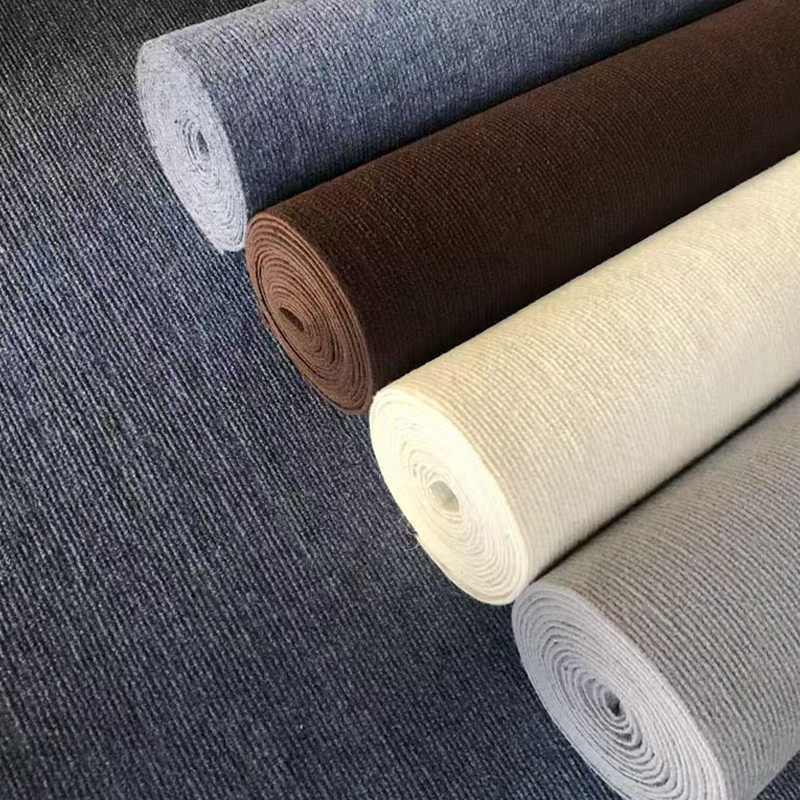
The ability of POY-based textured yarn to combine high elastic recovery with a smooth surface makes it the material of choice for edge binding that must withstand constant flexing. In carpet lock edge lines, the yarn locks the pile edge permanently without scratching or fraying. For towel binding, soft POY-derived high-elastic yarns provide a comfortable, durable edge that does not lose shape after washing. The integrated approach allows tailoring of the crimp and heat-setting to the specific edge line requirement, delivering a product that performs consistently on high-speed binding machines.
Silver Fiber Conductive and Graphene Thermal Threads
Advanced textile innovations place even greater demands on the base yarn. Silver fiber conductive wires and graphene hair hot wires need a carrier POY that maintains filament integrity while being coated or embedded with functional particles. A POY with controlled shrinkage and consistent surface morphology ensures that the conductive or thermal additive layer adheres uniformly. The result is a smart textile component where the core yarn remains soft and supple, yet the functionality is durable through repeated stretch and wear cycles.
Quality Assurance from Incoming Resin to Outgoing Package
Strict quality management anchors the production system. Incoming polymer chips are tested for intrinsic viscosity and degradation. During spinning, real-time monitoring detects filament break and denier deviation. Finished POY packages undergo a final inspection protocol that includes:
- Dynamic elongation and tenacity testing on automated tensile testers.
- Boiling water shrinkage evaluation for texturing predictability.
- Package hardness and build assessment to guarantee smooth unwinding.
- Visual and instrumental evenness checks to meet Uster targets.
Only lots that pass all criteria are released. This science-based methodology means that a manufacturer of carpet edge lines or conductive yarns receives a POY that behaves exactly as expected on their texturing machines, reducing waste and downtime.
The Supply Chain Advantage of an Integrated Factory
A production facility that houses spinning, texturing, cylinder reversing, finished product packaging and storage creates a seamless supply chain with fewer intermediaries. This translates into shorter lead times, controlled inventory and the ability to customize POY properties for niche applications. With developed road networks connecting to major hubs such as Shanghai and Nantong, logistics efficiency further supports just-in-time delivery. The combination of mature technology, diversified equipment and rigorous management makes the product output reliable, which is the fundamental reason users continue to source from such integrated operations.
Making the Right POY Decision
The path to a successful carpet lock edge line, elastic towel binding or advanced conductive yarn always starts with the correct POY. A yarn that combines 120%–160% elongation, tightly controlled evenness and a stable shrinkage profile will deliver a textured product that is both incredibly soft and remarkably durable. Choosing a supply partner that integrates all processing stages from spinning to finished goods eliminates hidden variability and ensures that every cone of POY performs identically. This fundamental reliability is what allows downstream manufacturers to create high-value products that meet exacting standards and delight end users in daily use.