English
 عربى
عربى Türk
Türk Español

Content
- 1 The Short Answer by Application
- 2 Fiber Chemistry Drives Every Practical Difference
- 3 Strength and Elongation: How Seams Actually Fail
- 4 Shrinkage and Repeated Washing
- 5 Heat, Abrasion, UV and Color Retention
- 6 Towels, Carpets and Technical Textiles: When the Fabric Chooses for You
- 7 Cost, Sourcing and a Practical Spec Checklist
Seam failures rarely announce themselves politely. A towel edge begins fraying after the fourth industrial wash. A carpet border pulls loose where the serging crosses a corner. A quilted jacket puckers because the thread shrank faster than the shell fabric. In every one of those cases, the fiber inside the thread — not the stitch type, not the needle brand — decided the outcome.
Here is the short version. Polyester thread wins wherever abrasion, moisture and repeated laundering dominate: towel overlock edges, carpet serging, activewear, outdoor textiles and anything routed through a commercial laundry. Cotton thread wins where heat and surface feel dominate: quilting, heirloom sewing, hot-iron pressing and garments that must never melt against a soleplate.
The rest of this guide explains why, using the properties that actually drive a purchasing decision rather than general opinions about "natural versus synthetic."
The Short Answer by Application
Choose polyester when the seam must survive abrasion and moisture. Choose cotton when the seam must survive heat.
- Towel edge locking and overlock seams: polyester high-elastic yarn, because cotton thread abrades and snaps at the needle line under repeated washing.
- Carpet serging and borders: polyester DTY overlock thread, which handles the mechanical stress of a heavy needle passing through thick pile.
- Quilting and pressing-heavy work: cotton, or cotton-wrapped polyester, because a polyester core can fuse onto a hot iron.
- Outdoor and UV-exposed textiles: polyester, especially solution-dyed or dope-dyed yarns that hold color without surface dyeing.
- Stretch knits and elastic edges: polyester, because its elongation matches the fabric instead of fighting it.
Fiber Chemistry Drives Every Practical Difference
Polyester is a thermoplastic. It softens around 230–240 °C and melts rather than burns, and it absorbs almost no water — moisture regain sits near 0.4% at standard conditions. Cotton is a cellulose fiber: it takes up roughly 7–8% moisture, chars instead of melting, and begins to degrade when ironing temperatures push past about 150 °C.
Those two facts cascade into every downstream behavior — how the thread behaves in a hot wash, how it reacts to needle friction at 5,000 stitches per minute, and how long a seam stays intact on a floor that sees daily foot traffic.
| Property | Polyester thread | Cotton thread |
|---|---|---|
| Tensile strength (dry) | High, roughly 5–8 g/den | Moderate, roughly 3–4.5 g/den |
| Elongation at break | 15–30% | 5–8% |
| Shrinkage after hot wash | Under 1% when heat-set | 2–5% unless pre-shrunk |
| Abrasion resistance | Excellent | Fair |
| Moisture regain | About 0.4% | About 7–8% |
| Heat behavior | Softens near 230 °C, melts | Scorches slowly above 150 °C |
| Color retention in washing | Good, better with dope-dyed yarn | Good, but fades differently |
| Typical cost per kg | Lower and more stable | Higher, tied to crop cycles |
Read that table as a decision matrix rather than a ranking. Cotton is not a weaker material in any absolute sense — it is simply optimized for a different failure mode.
Strength and Elongation: How Seams Actually Fail
Elongation matters more than raw tenacity in most real seams. A thread that is strong but inextensible concentrates stress at the needle hole and breaks when the fabric flexes. That is why cotton performs well on woven shirting and poorly on stretch jersey: the seam demands 20% recovery and cotton offers less than half of that.
Polyester, particularly textured DTY yarn, stretches with the fabric and recovers. On a towel hem or a carpet border, this means the seam absorbs movement instead of transferring it to the fibers underneath.
There is one counter-current worth knowing about. At very high machine speeds, needle friction can push local temperatures high enough to soften polyester, causing thread fusion or skipped stitches. Cotton tolerates that friction better because it does not melt. If your line runs above roughly 5,000 stitches per minute on dense fabric, either slow down, use a needle cooler, or accept a cotton-blend thread at the needle.
Shrinkage and Repeated Washing
Heat-set polyester thread typically shrinks less than 1% in a hot wash. Unmercerized cotton can lose 2–5% of its length, and that difference shows up as puckered seams after the first commercial cycle. Industrial laundries running at 70–90 °C expose the gap quickly: polyester seams stay flat while cotton seams ripple and pull.
This is exactly the failure pattern documented in testing of polyester towel edge-locking yarn under frequent washing and drying, where the elastic core keeps the overlock stitch tight even after the fabric itself relaxes.
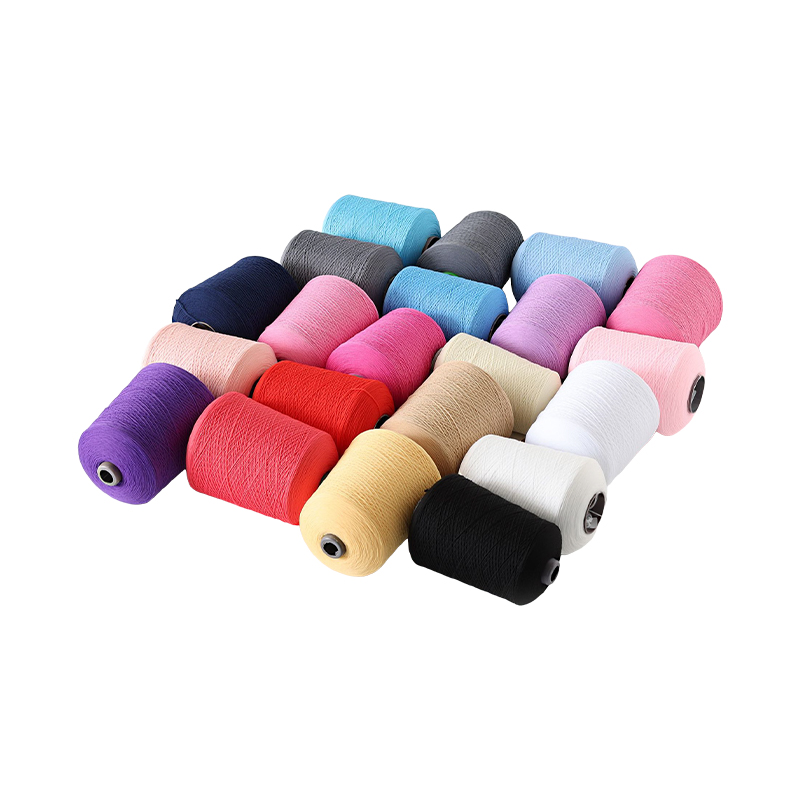
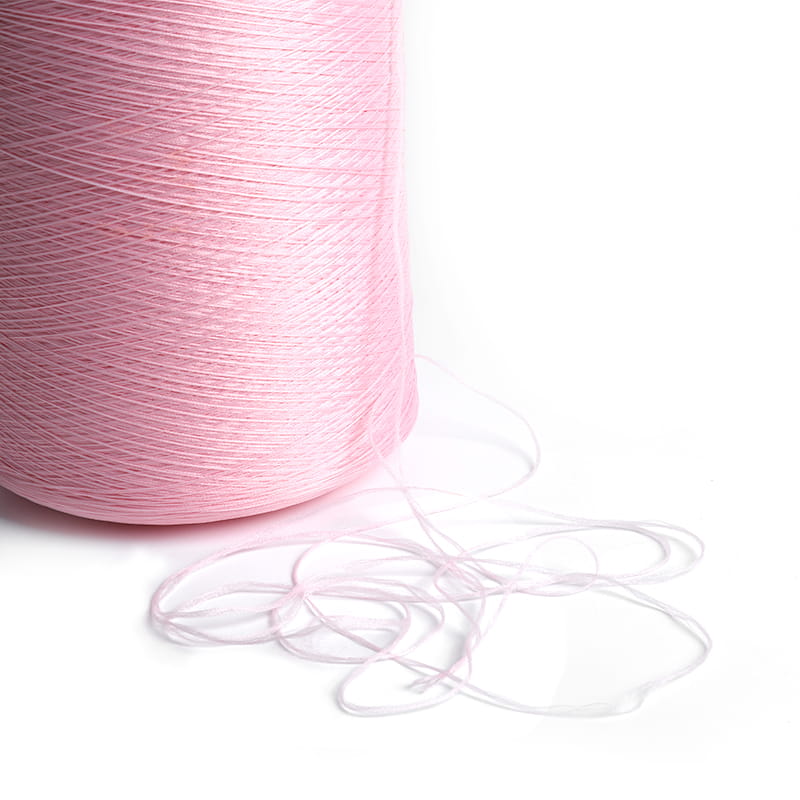 Polyester High Elastic Towel Overlock Sewing YarnA single piece of polyester high-elastic overlock thread is often used for high-end kitchen towels and disposable towel seaming. Suitable for all types of manual overl...View Product →
The practical takeaway for towel and terry producers is straightforward: if the finished product will be laundered more than twenty times in its service life, cotton thread is a warranty risk, not a saving.
Heat, Abrasion, UV and Color Retention
Heat
Cotton wins outright. It will scorch and char before it melts, which is why pressing-heavy work such as quilting and tailoring still favors it. Polyester can glaze onto a hot iron and leave a permanent shiny mark.
Abrasion
Polyester wins by a wide margin. A cotton thread rubbing against cut pile or loop pile loses mass and eventually thins to failure, while polyester filament keeps its diameter.
UV exposure
Both are acceptable, but dope-dyed polyester holds color better outdoors because the pigment sits inside the filament rather than on its surface.
Color depth
Cotton dyes easily to deep, saturated and matte shades. Polyester requires disperse dyeing or dope dyeing, which can be less responsive for short color runs but more consistent across large repeat orders.
Towels, Carpets and Technical Textiles: When the Fabric Chooses for You
In industrial edge-locking, the substrate usually makes the decision before the buyer does. A 500 gsm terry towel with loose pile abrades a cotton thread from the outside in; a polyester high-elastic overlock yarn rides over the pile and holds tension. Carpet borders behave the same way, only more violently — a serged edge takes the full impact of vacuuming, foot traffic and furniture drag.
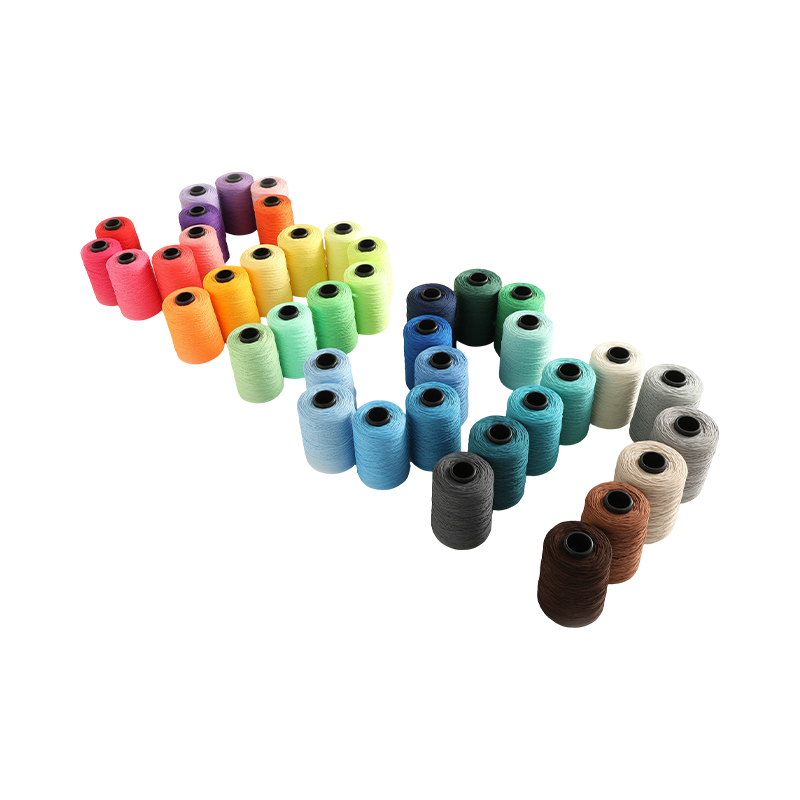 DTY Overlock Thread For Carpets1. Uniform/compact and dense: good wear resistance, bright colors, advanced technology and sophisticated equipment make the coils more denseView Product →
For technical textiles — geotextiles, filtration media, automotive trim — polyester is almost always the default, because the specification usually demands low moisture uptake, resistance to rot and predictable dimensional stability.
Where cotton still holds a legitimate position is in contact-sensitive products: bedding where a soft hand matters, children's items where natural fiber is a marketing requirement, and any application where heat exposure is unavoidable.
Cost, Sourcing and a Practical Spec Checklist
Standard polyester thread generally costs less per kilogram than cotton and its price is more predictable, since it is not exposed to crop volatility. But thread is a small fraction of total seam cost — the real expense is a failed seam discovered after shipping. Buy on performance specification, not on unit price alone.
Before you place an order, confirm these points with your supplier:
- Tensile strength and elongation at break, measured dry and conditioned.
- Shrinkage after three wash cycles at your actual laundry temperature.
- Colorfastness to washing, crocking and light.
- Thread ticket number matched to needle size and fabric weight.
- Elastic recovery if the seam will flex in service.
- Certification requirements, including recycled content claims if applicable.
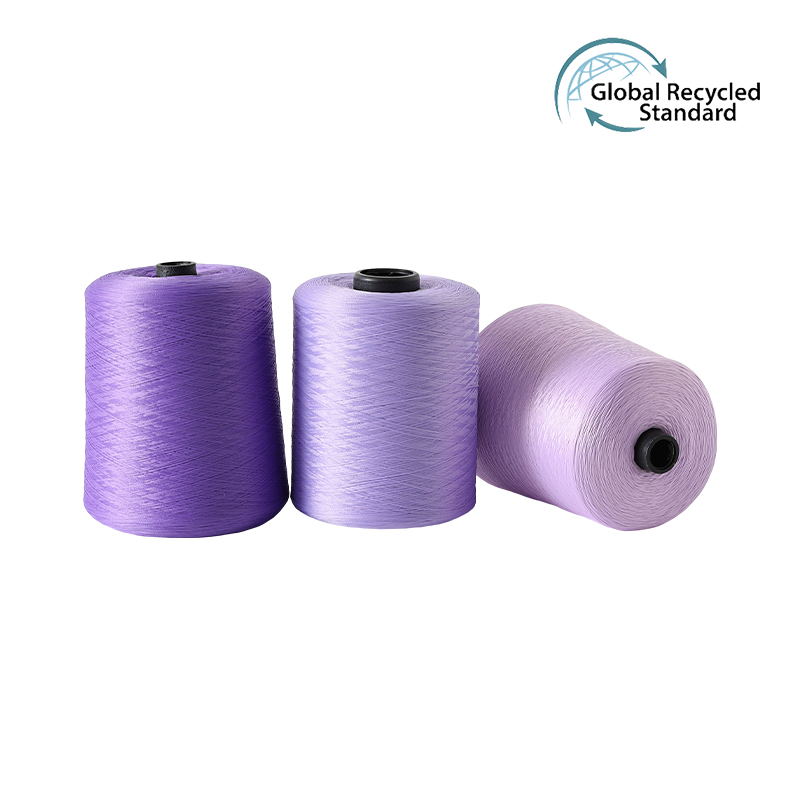
Buyers working with recycled feedstock should note that recycled polyester behaves close to virgin material in seam strength, provided the draw-texturing step is controlled properly. A draw-textured polyester yarn produced in-house from spinning through texturing gives you one accountable party for the whole chain, which shortens problem-solving when a seam does go wrong. If you need help matching a thread specification to a specific fabric, our team can review your parameters through the contact page.
The decision rule is simple and worth repeating: polyester for moisture, abrasion and repeat washing; cotton for heat and surface feel. Everything else — denier, twist, ply, finish — fine-tunes a choice that the fiber already made. Pick the fiber against the failure mode you can least afford, then tune the specification from there.