English
 عربى
عربى Türk
Türk Español

Content
Two quotations for the same towel-overlock job can arrive in completely different units: one thread quoted at 30 wt, the yarn behind it specified as 300D/144F on the mill's data sheet. Buyers who read those as unrelated numbers often end up with the wrong thickness running on the machine. The rule that resolves the confusion is simple: thread weight (wt) is a length-per-weight measure — 40 wt means 40 kilometers of that thread weigh exactly 1 kilogram — so a larger wt number always means a finer thread. This guide explains what the wt system measures, how to convert it into Tex and denier, which weights suit which jobs, and the specification checks that keep errors out of your seams before an order is confirmed.
What Thread Weight (wt) Actually Measures
The wt system defines a thread by how much length fits into a fixed weight. A 30 wt thread needs 30 kilometers to reach 1 kg, which works out to roughly 0.033 g per meter; a 40 wt thread needs 40 kilometers, about 0.025 g per meter; a 60 wt thread needs 60 kilometers, about 0.017 g per meter. Because a fixed weight of a finer thread stretches over a longer length, the scale runs opposite to most sizing numbers: lower wt means thicker thread.
Three details matter when the label meets a purchase order:
- The wt number describes the finished thread with all plies combined, not each component strand.
- The label is weight-based, not diameter-based, so two threads both marked 40 wt can differ slightly in physical diameter depending on twist and finish.
- Listed values assume standard conditioning; moisture uptake and finishing oil shift real measurements by a small percentage.
Thread wt, Tex, and Denier: Converting Between Systems
Retail sewing thread usually carries a wt label, but industrial procurement runs on Tex and denier, and polyester filament data sheets — including those for DTY and POY yarns — are written almost entirely in denier. A thread wt marking, a Tex number, and a denier figure all describe the same property, mass per unit length, from different directions.
| System | Definition | Direction | Typical setting |
|---|---|---|---|
| wt | kilometers of thread per kilogram | higher = finer | retail sewing and quilting thread |
| Tex | grams per 1,000 meters | higher = thicker | industrial sewing specs and seam standards |
| Denier (D) | grams per 9,000 meters | higher = thicker | polyester filament yarn data sheets |
The conversion math is short: Tex is approximately 1,000 divided by wt, and denier equals 9 times Tex. A 40 wt thread therefore lands near 25 Tex, roughly 225 denier before construction effects are added. Run it the other way and a 300 denier polyester filament reads as about 33 Tex, equivalent to a heavy-duty 30 wt sewing thread; a 150 denier yarn sits near 17 Tex, in 60 wt territory. That is how a spec sheet listing 300D/144F and a cone labeled 30 wt can describe products serving the same thickness class.
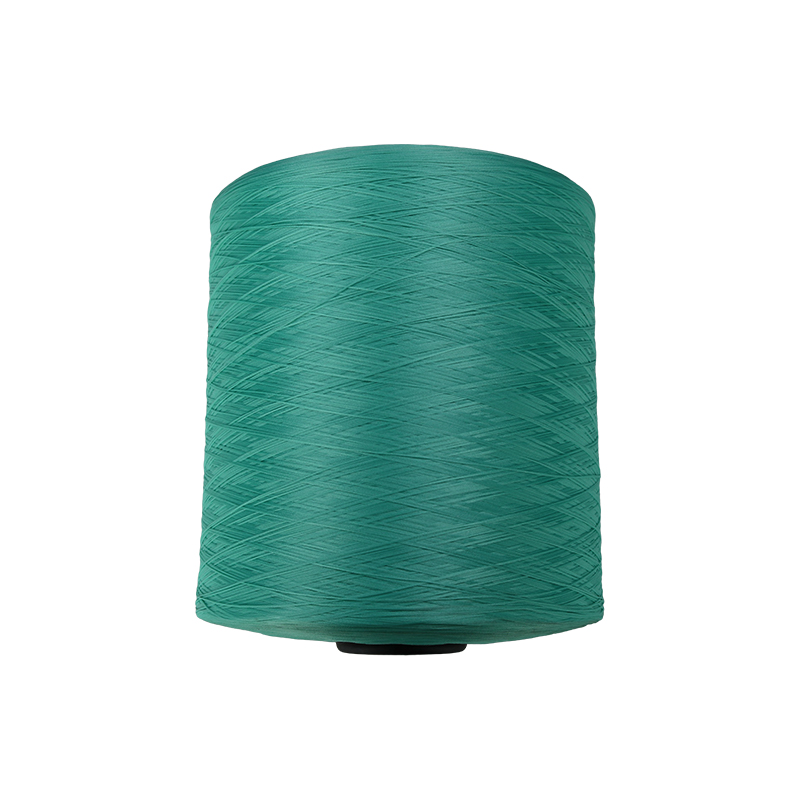 300D/144F POY Polyester Partially Oriented DTY YarnThis coarse 300D/144F polyester filament matches the heavy 30 wt / 300 denier class discussed in the surrounding conversion math, offering wear resistance and strength for tents, backpacks, conveyor belts, and filter materials.View Product →
Treat every conversion as nominal rather than exact. Twist compresses the cross-section, finishing oil adds measurable weight, and the filament count (the F number) changes hand feel and coverage without changing total denier. Before comparing offers, ask suppliers for measured grams per 1,000 meters and the tolerance they will guarantee; a few percent on paper becomes a visible difference in stitch appearance along the edge of a carpet.
Common Thread Weights and Where They Work
Most production sewing happens between 30 wt and 60 wt. Outside that window, threads become special-purpose tools rather than general stock.
| wt range | Approx. Tex | Approx. denier | Typical applications |
|---|---|---|---|
| 12–20 wt | 50–83 | 450–750 | upholstery, topstitching, leather and heavy decor |
| 30 wt | ~33 | ~300 | heavy-duty seams, carpet edge overlocking, towel hems |
| 40 wt | ~25 | ~225 | the all-purpose workhorse for embroidery and garment sewing |
| 50 wt | ~20 | ~180 | general construction, piecing and hemming |
| 60 wt | ~17 | ~150 | fine detail work, dense embroidery, bobbin thread |
| 80 wt and finer | 12 or less | 110 or less | micro quilting and fine decorative stitching |
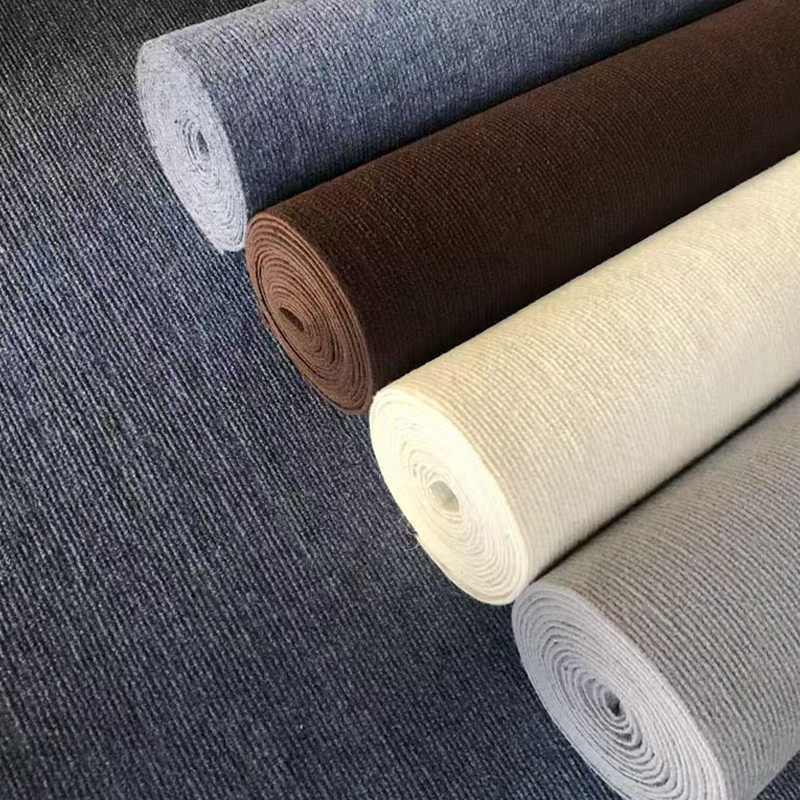
Edge work concentrates stress, so it pulls the specification toward the heavy end. A carpet that gets walked on daily, or a towel that survives hundreds of wash and dry cycles, needs an edge thread in the same weight class as its base fabric — which is why industrial carpet overlock yarns commonly start around 300 denier rather than dropping into the fine 50–60 wt range used for garment seams.
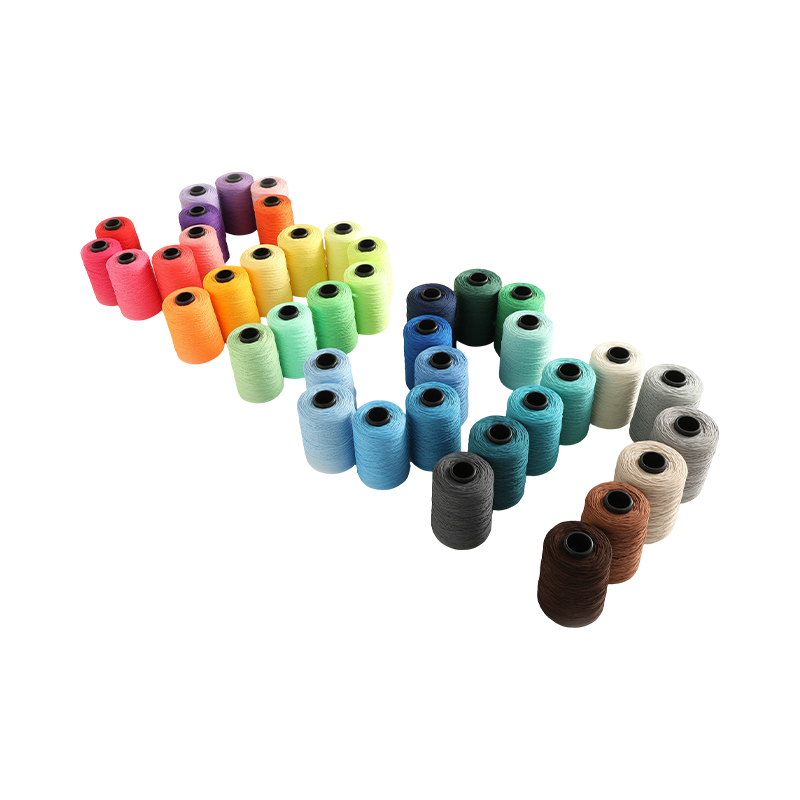 DTY Overlock Thread for Carpet Edge SewingCarpet and towel edges concentrate stress, calling for heavy threads around 300 denier. This joint-free DTY overlock yarn offers strong resilience, abrasion resistance, and 200+ colorfast color options for durable edge finishing.View Product →
Ply, Needle, and Tension Settings Change the Equation
Same weight, different build
Two threads marked 40 wt can still sew differently. Since the wt number already accounts for all plies, a 3-ply 40 wt and a 2-ply 40 wt weigh the same per meter, but the 3-ply build generally wins on abrasion resistance and seam strength — a real advantage on edges exposed to constant friction — while a 2-ply build runs leaner through dense embroidery. Construction choices like these explain much of why two nominally identical threads behave differently under load; for a closer look, see how overlock sewing yarn contributes to seam strength in demanding applications.
Matching needle and tension to thread wt
Machine setup then has to follow the thread:
- Size the needle to the thread: as a rule of thumb, the thread should fill roughly 40% of the needle eye. In practice, 30 wt typically pairs with 90/14 to 100/16 needles, 40 wt with 75/11 to 80/12, and 60 wt with 65/9 to 70/10.
- Ease top tension slightly for thicker, lower-wt threads and lengthen the stitch; excessive tension on a fine 60 wt thread shreds it against the eye.
- For stretch-sensitive edges, elasticity matters as much as weight. A towel hem has to survive tumble drying, so recovery and shrinkage data belong in the specification next to the weight number.
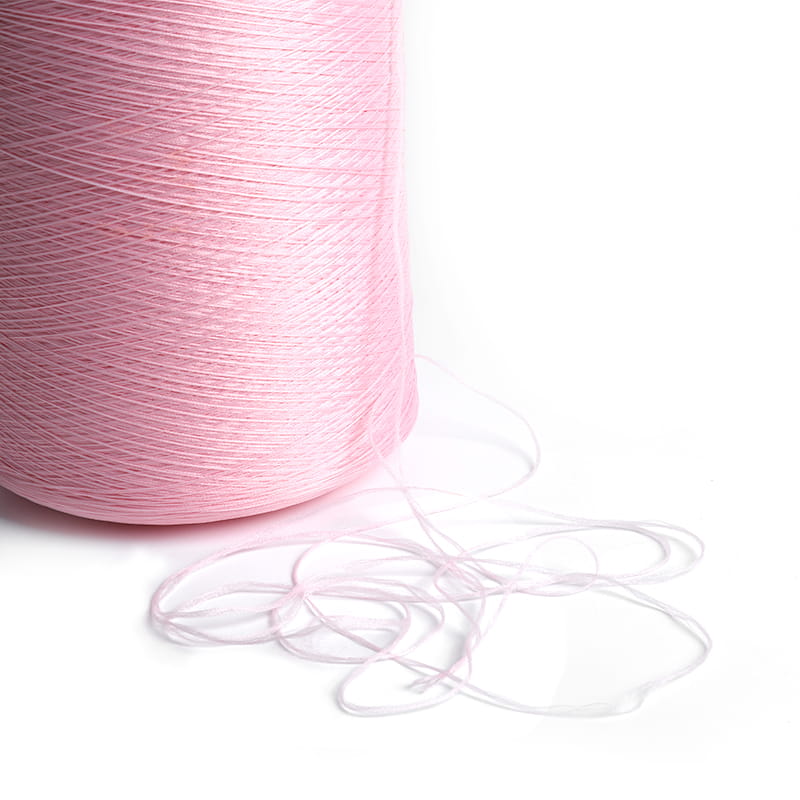 Polyester High Elastic Towel Overlock Sewing YarnA 300D/96F high-elastic polyester yarn for towel overlocking, suited to manual and automatic machines. Its resilience keeps towel edges flat and secure, fitting the heavy-weight class covered before the setup checklist.View Product →
Five Checks Before You Confirm a Thread Order
Weight conversion problems are cheapest to catch at the desk, not on the sewing floor. Run this list before signing:
- Convert every quote into a single unit — Tex — before comparing prices; wt-labeled and denier-labeled offers are easy to misalign by a factor of nine.
- Request measured grams per 1,000 meters with the tolerance the mill will actually guarantee, not just the nominal label number.
- Confirm ply construction, tenacity in cN/tex, and elongation data for the exact lot you will receive.
- Verify needle, plate, and machine-speed compatibility at your real production rate, not at showroom speed.
- Sew a trial on the actual substrate; carpet backing and terry loops both behave differently from the woven swatch in a sample book.
If you are narrowing down an edge yarn for a specific product line, this guide to choosing the right overlock sewing thread walks through the selection factors in more detail.
Once you accept the inversion at its core — the wt number counts kilometers per kilogram, so a smaller number means a thicker thread — labels stop being a nuisance. Convert everything to Tex, pin down ply and measured weight data, and the marking on the cone becomes what a specification should be: a number you can hold a supplier to.