English
 عربى
عربى Türk
Türk Español
Content
Understanding Polyester Yarn
Polyester yarn production exceeds 55 million metric tons annually—over 60% of all synthetic fiber output. That dominance rests on an unrivaled balance of tensile strength, chemical resistance, and cost efficiency. The yarn starts as polyethylene terephthalate (PET) polymer chips, melted and extruded through spinnerets to form continuous filaments. These filaments are then drawn and, depending on the end use, textured to impart bulk, stretch, or a specific surface character.
Most polyester yarn is produced via melt spinning, where the take-up speed largely determines the yarn's orientation and crystallinity. Low-speed spinning yields partially oriented yarn; subsequent drawing and texturing produce the crimp and elongation that converters need. Because the process can be tightly controlled, mills can engineer yarns ranging from ultra-low denier for fine fabrics to heavy decitex for industrial belts.
Types of Polyester Yarn
Partially Oriented Yarn (POY)
POY is the direct output of high-speed melt spinning at 2,500–3,500 m/min. It has moderate orientation and low crystallinity, making it semi-stretchy and perfectly suited as a feeder yarn for texturing. POY is rarely used in its raw state; instead, it becomes the starting point for draw-textured yarn. DTY/POY yarn range options let manufacturers skip separate POY procurement and move straight to a finished crimped product.
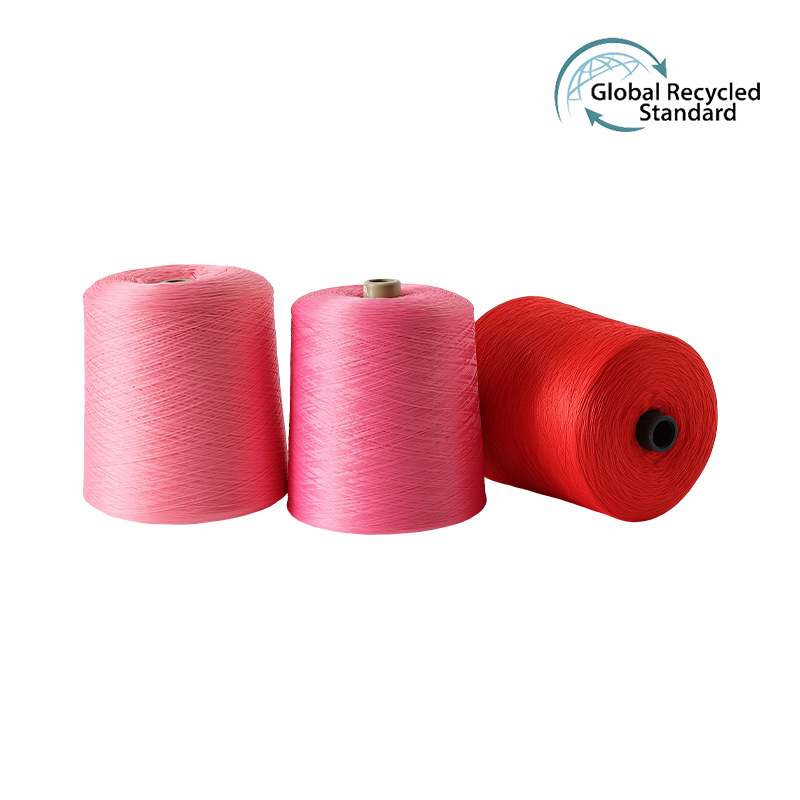
Draw Textured Yarn (DTY)
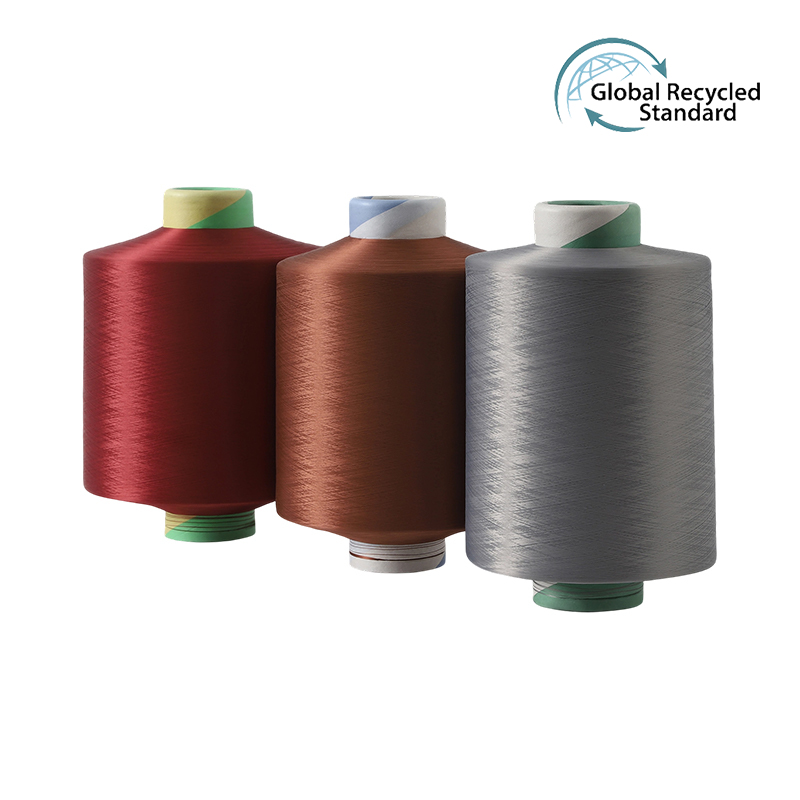
DTY forms when POY is simultaneously drawn and false-twist textured, resulting in a bulked, crimped continuous filament. This texture gives the yarn a soft hand, high stretch, and good cover, making it the workhorse for sportswear, upholstery, and automotive fabrics. Tenacity typically sits between 3.5 and 4.5 cN/dtex, with elongation around 20–35%. For tailored deniers and filament counts, consult our DTY yarn selection.

Fully Drawn Yarn (FDY)
FDY is drawn to full orientation straight from the spin line, yielding a flat, lustrous continuous filament with high tenacity (4.5–6.0 cN/dtex) and low elongation. Because it does not require downstream texturing, FDY produces smooth, often shiny fabrics used in linings, laces, and technical textiles. It is also the go-to choice for weaving warp yarns that need minimal stretch.
Air Textured Yarn (ATY)
ATY uses a compressed-air jet to intermingle and loop the filaments, creating a yarn that mimics spun staple fibers in appearance and handle. This type brings a natural, cotton-like feel to 100% polyester fabrics while retaining the strength advantages of continuous filament yarn. Common applications include outerwear, car seat covers, and soft luggage.
Recycled Polyester Yarn
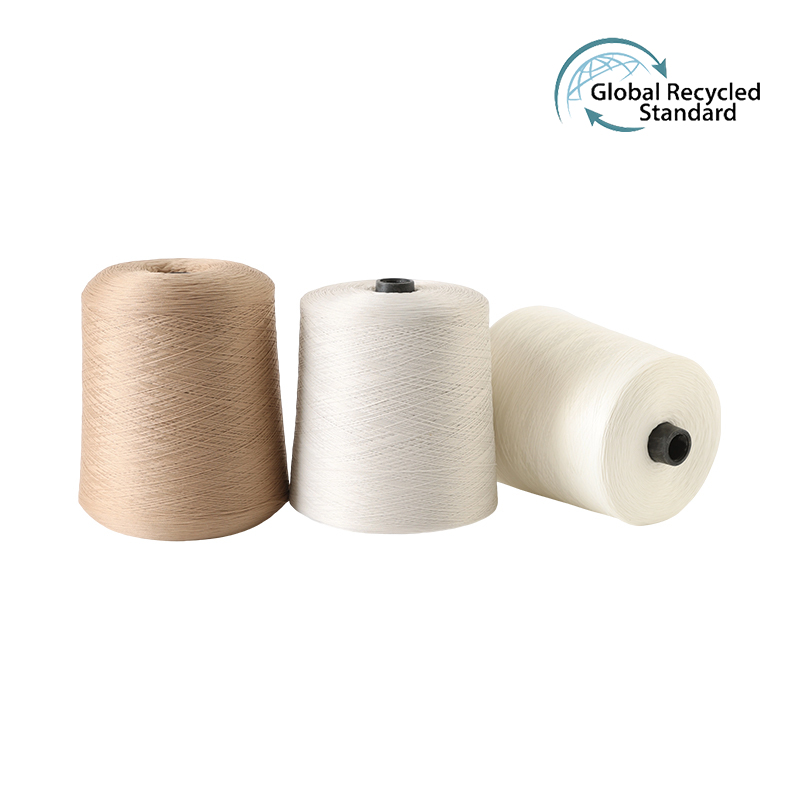
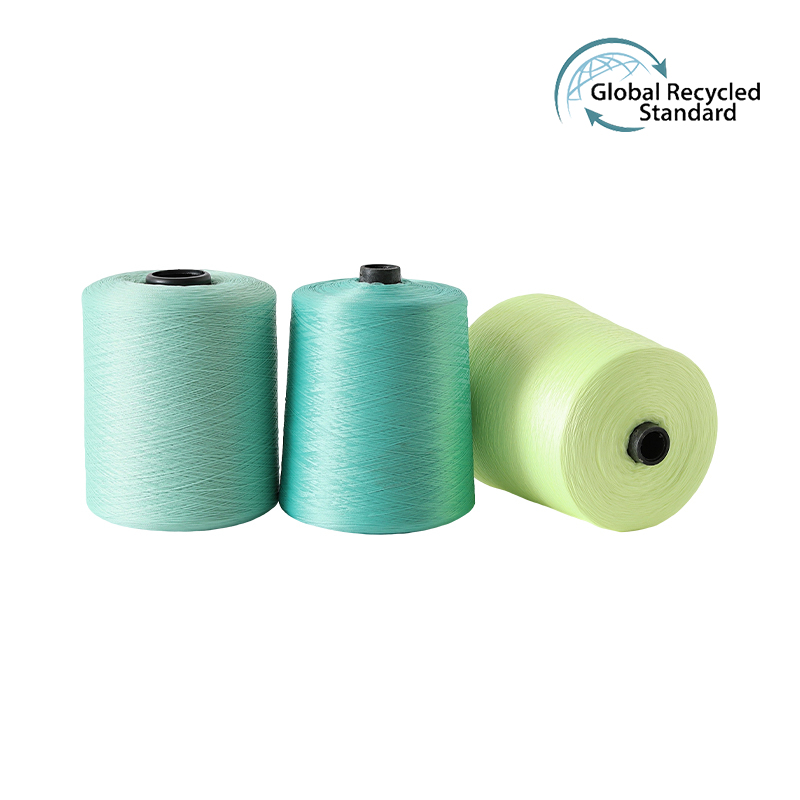
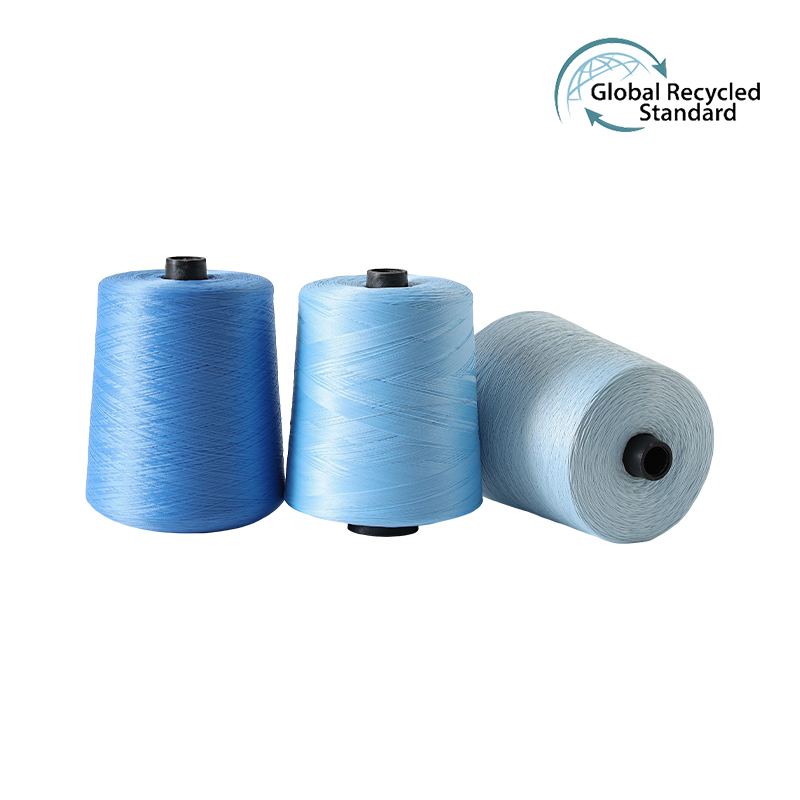
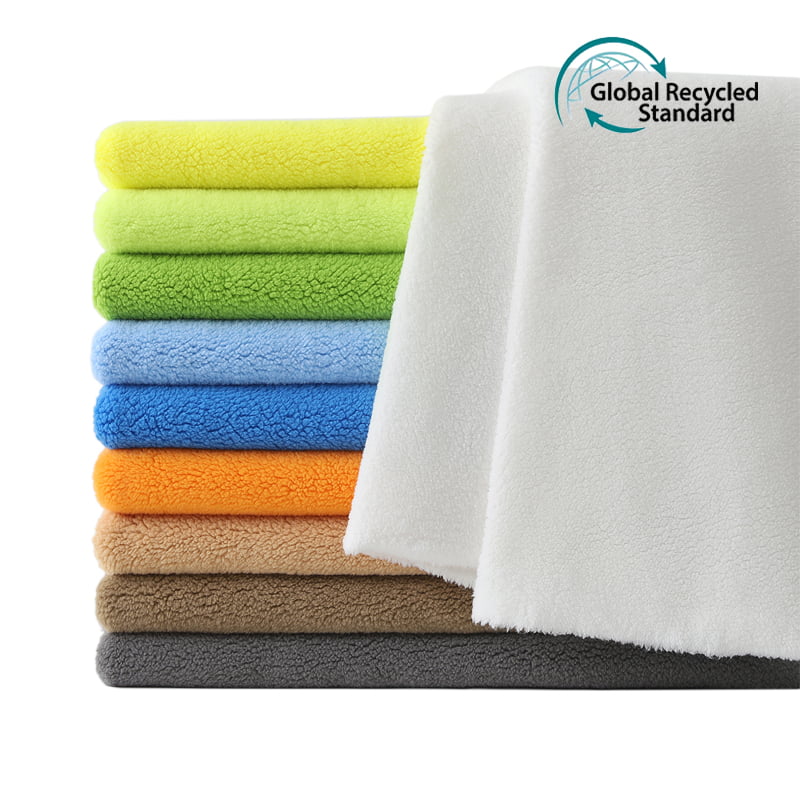
Recycled polyester yarn starts with post-consumer PET bottles or post-industrial waste, which are cleaned, flaked, and re-polymerized into chips for melt spinning. The mechanical properties virtually match those of virgin polyester, but the carbon footprint shrinks by 30–50%. Brands across activewear and home textiles now specify recycled polyester yarn as a baseline for sustainability goals.

| Type | Key Property | Denier Range | Typical Application |
|---|---|---|---|
| POY | Semi-oriented, feeder yarn | 30D–500D | DTY input, texturing feedstock |
| DTY | High bulk, crimp, stretch | 50D–600D | Sportswear, upholstery, carpets |
| FDY | High tenacity, low elongation | 20D–300D | Lining, lace, technical textiles |
| ATY | Spun-like softness | 70D–900D | Outerwear, luggage, automotive |
| Recycled | Same strength, lower footprint | 50D–600D | Eco-activewear, home linen |
Key Performance Properties
Specifiers evaluate polyester yarn through a handful of measurable traits. Tenacity, the force per linear density at break, directly dictates load-bearing capacity. Most apparel-grade polyester falls between 3.5 and 5.5 cN/dtex, while high-tenacity industrial variants can exceed 7.0 cN/dtex. Elongation at break, typically 15–35%, determines how much a yarn stretches before failure—critical for seat belts, airbags, and elastic webbing.
Other essential metrics include hot-air shrinkage (often under 3% for stabilized grades), moisture regain (0.4%, meaning excellent stain release and rapid drying), and UV resistance. The latter can be boosted via masterbatch additives for outdoor furniture and awnings. A quick-reference table helps anticipate performance:
| Property | Typical Range | Significance |
|---|---|---|
| Tenacity | 3.5–7.0 cN/dtex | Load durability |
| Elongation | 15–35% | Flexibility, shock absorption |
| Hot-air Shrinkage | 1–3% (177°C) | Dimensional stability |
| Moisture Regain | 0.4% | Fast drying, stain resistance |
| Melting Point | 250–260°C | Heat-set conditions |
Applications Across Industries
Polyester yarn ends up in everything from delicate georgette blouses to heavy conveyor belts. In apparel, DTY's crimp provides the stretch and recovery needed for leggings and swimwear, while FDY's luster adds sheen to formalwear linings. Home textiles—curtains, sheers, mattress ticking—rely on polyester's resistance to mildew and sagging.
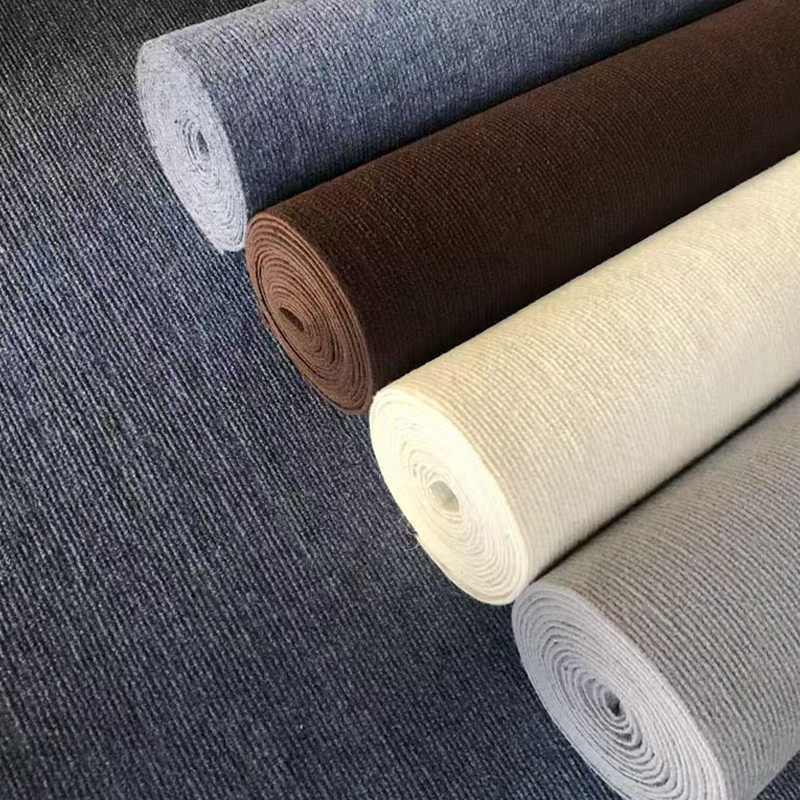
Industrial uses push the yarn's mechanical limits. High-tenacity variants reinforce tires and hoses; low-shrinkage grades stabilize sailcloth and architectural membranes. The carpet sector consumes massive volumes of bulked continuous filament (BCF) polyester, often heavier than 1000D, for soft yet resilient floor coverings. In overlock sewing threads, polyester's low friction and uniform thickness reduce needle heat and skipped stitches even at 8,000+ rpm.
- Apparel: DTY for stretch, FDY for linings
- Home textiles: Upholstery, curtains, bedding
- Automotive: Seat fabric, airbags, trunk liners
- Technical textiles: Conveyor belts, ropes, geotextiles
- Carpets: BCF and twisted yarns for cut/loop pile
Choosing the Right Polyester Yarn
Selection starts with three questions: what load, what feel, and what environment? Denier per filament (dpf) shapes aesthetics and touch—micro-denier (dpf <1) yields peach-like softness, while coarse dpf (5–8) delivers rigidity for industrial fabrics. Filament count then fine-tunes cover and drape; a 150D/288f yarn feels silkier than a 150D/48f version with the same total denier.
Processing route matters equally. Circular knitting demands yarns with low twist and consistent friction to avoid barre defects. Warp knitting and weaving require beam stability, so low-shrinkage FDY is often pre-stabilized. Dyeability must be confirmed early: cationic-dyeable (CD) polyester takes bright shades for activewear, whereas standard disperse dyeability covers most casual apparel. Always request shrinkage data at the manufacturer's recommended heat-set temperature, as even 1% variation can distort pattern alignment in printed fabrics.
- Define end-use mechanical demands (tensile, impact, bend fatigue).
- Choose filament type: flat FDY, textured DTY, or air-jet ATY.
- Specify denier and filament count for target hand and cover.
- Clarify dyeing and finishing environment—CD or standard polyester.
- Request pre-production shrinkage and tenacity lot certificates.