English
 عربى
عربى Türk
Türk Español

Content
- 1 POY Yarn Is Not the End Product — That's the Point
- 2 Key Physical Properties at a Glance
- 3 Product Range: From Fine Denier to Heavy-Duty Grades
- 4 POY vs DTY: Which One Do You Actually Buy?
- 5 How Spinning Technology Shapes the Quality You Receive
- 6 Recycled POY: Real Performance, Not Just a Label
- 7 Three Questions to Ask Before Placing a POY Order
POY Yarn Is Not the End Product — That's the Point
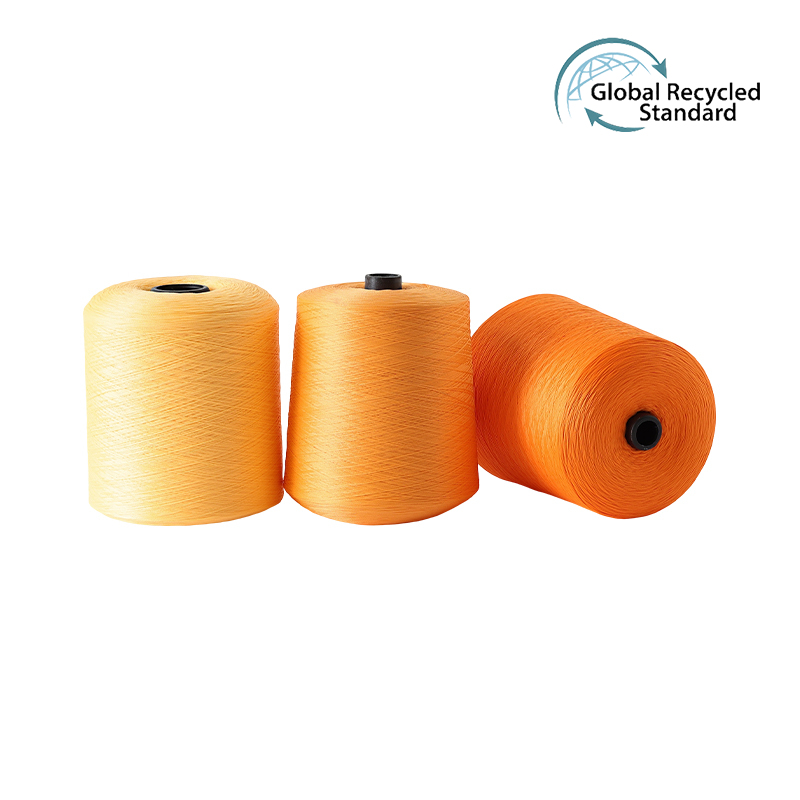
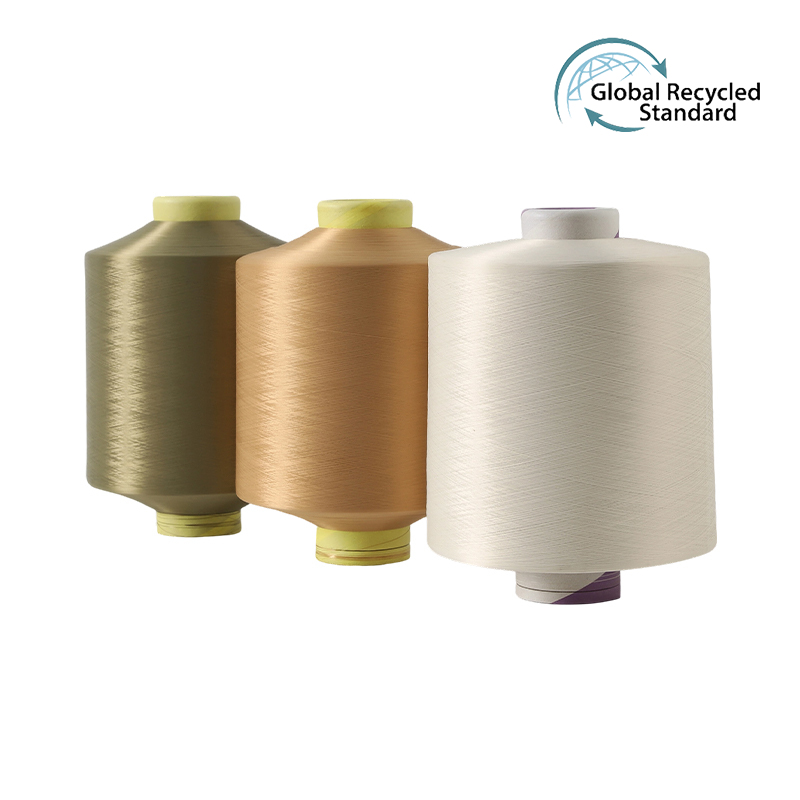
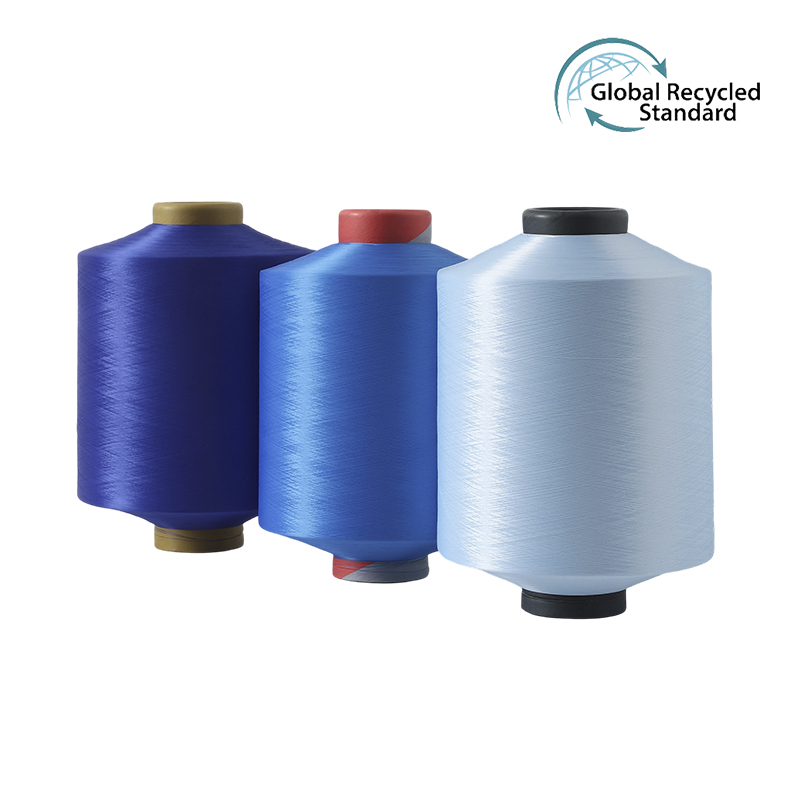
Most synthetic yarn confusion starts here: buyers search for soft and durable partially oriented yarn expecting a finished filament, but POY is deliberately unfinished. Spun at speeds of 3,000–4,000 m/min, the polymer chains are only partially aligned — giving the yarn high elongation (120–180%) and relatively low tenacity. That's not a flaw. It's precisely the property that makes POY the ideal feedstock for draw texturing and downstream fabric production.
If you're sourcing POY for the first time, the grade selection matters more than the price tag. Pick the wrong denier or filament count and your downstream DTY will either over-shrink or under-bulk. This guide covers what you actually need to know.
Key Physical Properties at a Glance
Elongation at break is the defining metric for POY quality. A well-produced partially oriented yarn typically falls between 120% and 180% elongation — enough stretch to survive the draw texturing pin without snapping, yet stable enough to hold its geometry on the winding bobbin. Birefringence (molecular orientation index) should sit in the 0.045–0.065 range for standard polyester POY.
Three other parameters matter when evaluating a lot: denier variation (CV% should stay under 1.5%), oil pick-up rate (0.35–0.55% for smooth downstream processing), and boil-off shrinkage (typically 1–3% for standard grades). Deviations in any of these cascade into uneven dyeing or DTY texture inconsistency downstream.
Product Range: From Fine Denier to Heavy-Duty Grades
Denier and filament count together define what a POY yarn is best suited for in real applications. The table below maps common specification combinations to their end-use strengths:
| Spec | Key Feature | Typical Application |
|---|---|---|
| 50D/36F | Low shrinkage, fine hand feel | Lightweight apparel, linings |
| 75D/72F | Moisture-wicking | Sportswear, activewear |
| 100D/96F | Wear-resistant, anti-pilling | Workwear, mid-layer fabrics |
| 150D/144F | Stain-resistant | Upholstery, uniform fabrics |
| 150D/288F | High durability | Home textiles, curtains |
| 300D/122F | High tensile strength | Outdoor tents, backpacks, conveyor belts, filter materials |
| 300D/144F | Pressure-resistant | Industrial webbing, straps |
| 450D/192F | High strength and toughness | Heavy-duty bags, geotextiles |
| 450D/384F | Stable performance | Carpet backing, technical fabrics |
| 600D/288F | Tear-resistant, non-deformable | Military-grade fabrics, tarpaulins |
Notice how filament count within the same denier changes the end result: 150D/144F gives a softer hand than 150D/288F, even though both share the same weight per length. More filaments = finer individual fibers = softer touch and better moisture management.
POY vs DTY: Which One Do You Actually Buy?
POY and DTY are not competing products — they're sequential stages. POY is the raw input; DTY is the textured output. If you're a fabric mill with draw texturing machines, you buy POY and process it yourself. If you're a garment or home textile manufacturer without texturing equipment, you buy DTY directly.
The cost logic is straightforward: POY is priced lower because it requires further processing. DTY carries a premium because that processing is already done — the yarn is bulked, twisted, and ready to weave or knit. For an in-depth comparison of processing paths and cost tradeoffs, the article on DTY vs POY yarn key differences and how to choose walks through the decision in full technical detail.
How Spinning Technology Shapes the Quality You Receive
Not all POY is equal even at the same denier. The spinning speed, quench air temperature, and spin finish chemistry at the manufacturer level directly determine the elongation uniformity and structural stability of every bobbin. Faster spinning generally increases orientation — pushing the yarn closer to FDY territory — while slower speeds leave more draw capacity for texturing but risk unevenness in the finished DTY.
This is why sourcing from a manufacturer with controlled production parameters matters more than price alone. For a detailed look at how production variables flow downstream, how spinning technology shapes polyester filament performance covers the full chain from melt to bobbin.
Recycled POY: Real Performance, Not Just a Label
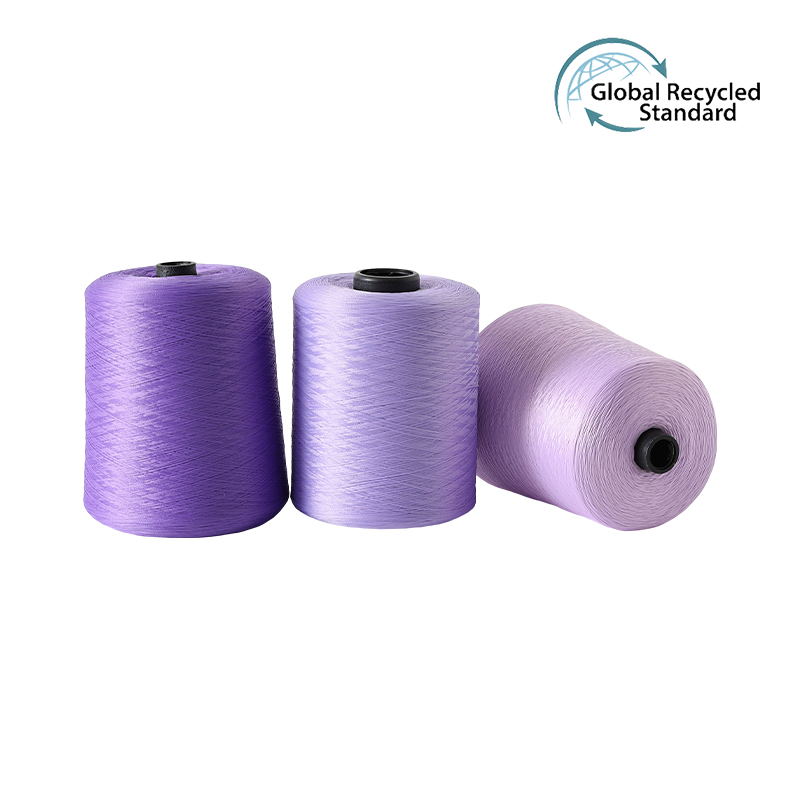
The shift toward recycled feedstock has reached POY production. Recycled POY made from post-consumer PET bottles now matches virgin yarn on elongation consistency and tenacity when the source material is properly sorted and processed. The key specification to verify is intrinsic viscosity (IV) of the PET flakes — a stable IV around 0.75 dl/g ensures the melt produces filaments with predictable molecular weight and draw behavior.
For buyers with sustainability certification requirements (GRS, OEKO-TEX), recycled POY also provides the audit trail needed for downstream compliance. Performance should not be sacrificed — insist on seeing elongation CV% and tenacity data, not just the recycled content certificate.
Three Questions to Ask Before Placing a POY Order
Before committing to a specification, get clear answers on these three points. First: what draw ratio will your texturing machines run? This determines the elongation range your POY must supply. Second: what's the target fabric weight and end use? A 75D/72F designed for sportswear moisture management behaves very differently from a 75D/36F aimed at lining fabrics. Third: does the supplier provide lot-to-lot consistency data? CV% reports and elongation certificates should be standard, not optional, for industrial quantities.
POY sourcing is a technical decision with real downstream consequences. Matching the right grade to the right process is what separates efficient production from costly rework.