English
 عربى
عربى Türk
Türk Español

Content
What Is Recycled DTY and Why It Matters
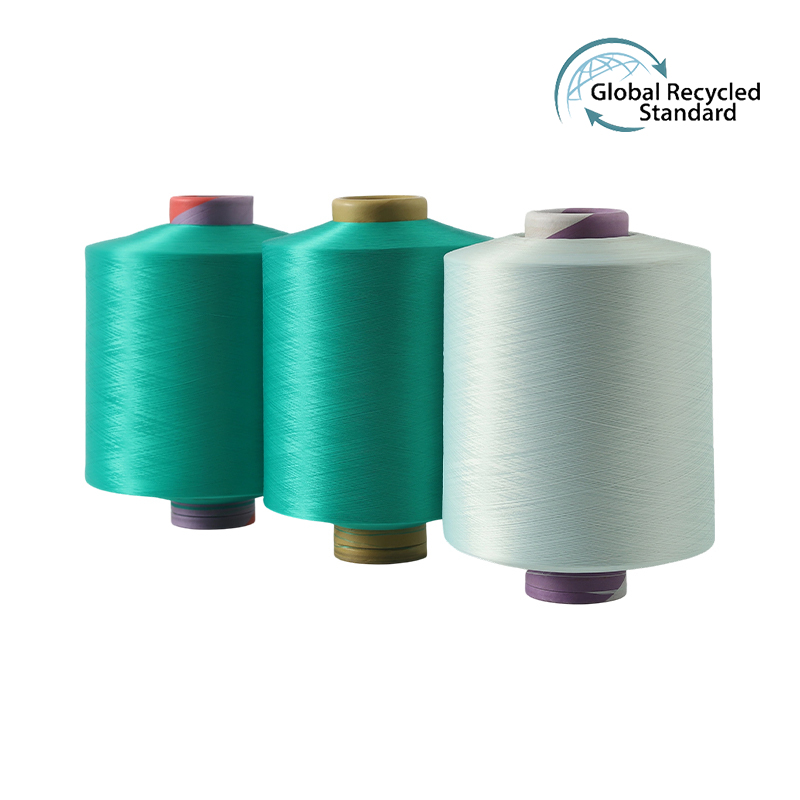
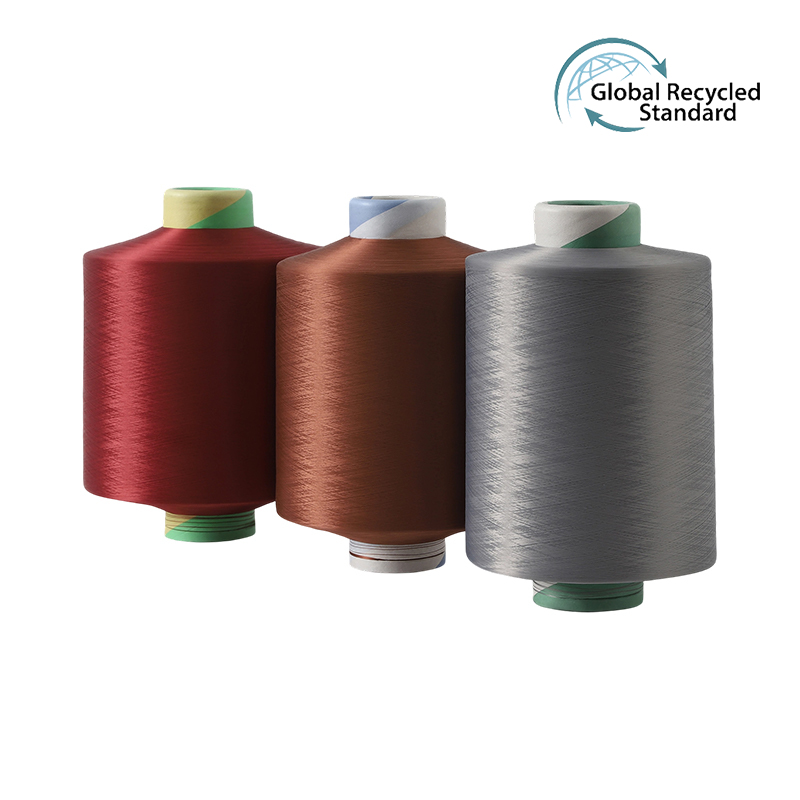
Recycled DTY (Draw Textured Yarn) is a polyester yarn produced by spinning and texturing filaments derived from recycled PET sources—primarily post-consumer plastic bottles (rPET) and pre-consumer industrial polyester waste. The result is a continuous, crimped multifilament yarn that performs comparably to virgin DTY while significantly reducing reliance on fossil-fuel-based raw materials.
The textile industry accounts for roughly 10% of global carbon emissions, and synthetic fiber production is a major contributor. Recycled DTY directly addresses this by reducing carbon emissions by up to 32–45% compared to virgin polyester yarn, depending on the feedstock and energy source used in production. For brands facing tightening ESG requirements and consumer scrutiny, switching to recycled DTY is one of the most scalable steps available today.
From Bottle to Fiber: The Production Process
Understanding how recycled DTY is manufactured helps buyers evaluate quality claims and traceability certifications. The process follows a well-established chain:
- Collection & Sorting: Post-consumer PET bottles are collected, sorted by color (typically clear, blue, or green), and cleaned to remove labels, caps, and contaminants.
- Flaking: Cleaned bottles are shredded into uniform rPET flakes, which are dried to remove moisture that would degrade melt quality.
- Chip Production (optional): Flakes may be re-extruded into rPET chips, which offer more consistent melt-flow index and are preferred by high-end yarn producers.
- Melt Spinning (POY): rPET flakes or chips are melted and extruded through spinnerets to form Partially Oriented Yarn (POY), wound at high speed.
- Draw Texturing: POY is fed through a draw-texturing machine—typically a friction-twist or pin-type texturizer—simultaneously stretching and crimping the filaments to produce the final DTY with bulk, elasticity, and surface texture.
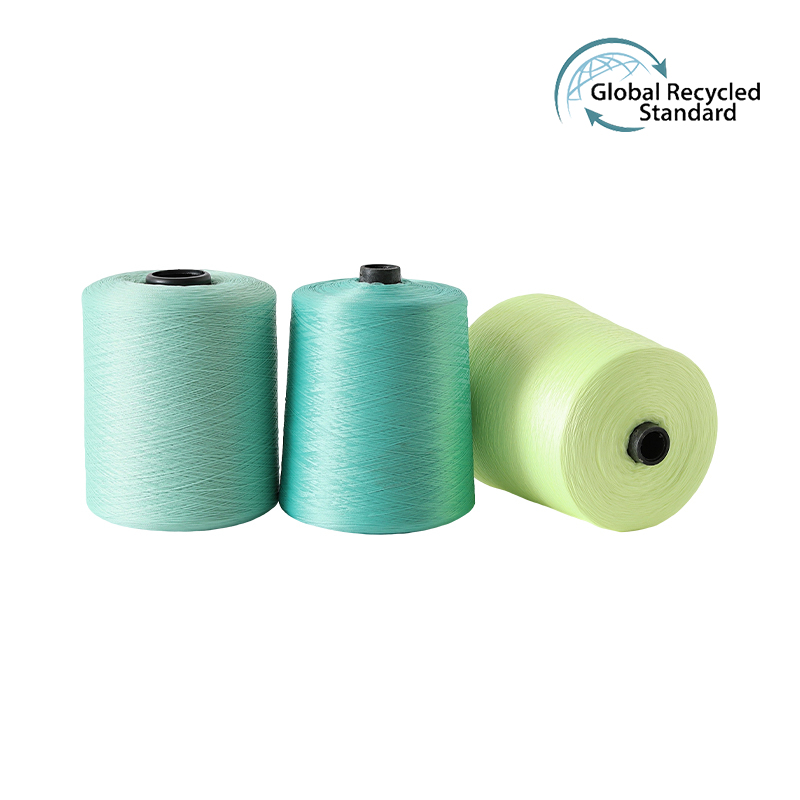
The entire chain can be third-party audited under GRS (Global Recycled Standard) or RCS (Recycled Claim Standard), enabling certified recycled content claims across the supply chain.
Key Specifications and Grade Categories
Recycled DTY is available in a wide range of counts, filament configurations, and functional finishes. The table below covers the most commonly traded specifications:
| Specification | Common Range | Application Impact |
|---|---|---|
| Denier (D) | 50D – 600D | Lightweight fabrics to heavy upholstery |
| Filament Count (F) | 24F – 288F | Higher F = softer hand feel |
| Twist Direction | S-twist / Z-twist | Fabric balance in warp knitting |
| Luster | Bright / Semi-dull / Full-dull | Aesthetic and dyeability variation |
| Tenacity (cN/dtex) | 3.5 – 4.5 | Weaving vs. knitting suitability |
| Elongation at Break | 20% – 35% | Stretch and recovery behavior |
Beyond standard grades, functional variants are increasingly available: moisture-wicking (with engineered cross-section profiles), cationic-dyeable rDTY for deep shades at lower temperatures, and flame-retardant grades certified for contract upholstery and transportation seating.
End-Use Applications Across Industries
Recycled DTY has moved well beyond activewear into virtually every segment of the textile value chain. Its adoption is driven by the combination of material performance and certified sustainability credentials.
- Apparel & Activewear: The largest segment. Recycled DTY knits into jersey, interlock, and tricot for sportswear, outerwear linings, and fast-fashion basics. Major brands including Patagonia, Nike, and H&M Conscious Line have made public commitments to recycled polyester targets of 50–100% by 2025–2030.
- Home Textiles: Woven and knitted fabrics for curtains, pillow covers, and sofa upholstery increasingly specify GRS-certified recycled DTY to meet retailer sustainability scorecards.
- Automotive & Technical Textiles: Heavy-denier recycled DTY (150D–600D) is used in car seat fabrics, trunk liners, and geotextiles where UV stability and abrasion resistance are critical.
- Bags & Accessories: 600D recycled DTY is the standard yarn for eco-friendly promotional bags and backpacks, now widely specified in corporate procurement with mandatory sustainability clauses.
Certifications and Supply Chain Traceability
Certification is the single most important differentiator when sourcing recycled DTY. Without a credible third-party audit trail, "recycled" claims carry no legal or commercial weight in most destination markets.
- GRS (Global Recycled Standard): Issued by Textile Exchange, GRS is the dominant benchmark globally. It certifies recycled input content, chain of custody, and social/environmental processing criteria. Required by most EU and North American retailers for "recycled polyester" labeling.
- RCS (Recycled Claim Standard): A lighter-touch standard that verifies recycled content and chain of custody without the full social compliance scope of GRS. Often used for intermediate supply chain transactions.
- OEKO-TEX STANDARD 100: Tests finished yarn for harmful substances. While not a recycled content certification, it addresses consumer safety concerns—especially relevant for baby textiles and skin-contact fabrics.
- EU ESPR & Green Claims Directive (from 2025): Upcoming European regulation will require substantiated, third-party-verified environmental claims. Brands relying solely on self-declared recycled content will face compliance risk without upstream certification.
When requesting certificates from suppliers, always verify the Transaction Certificate (TC) specific to each shipment—not just the scope certificate, which only confirms that a facility is eligible to produce certified goods.
Sourcing Considerations: What to Evaluate Before Ordering
Buyers new to recycled DTY often encounter a wide price and quality spread. These are the key variables that determine whether a supplier can consistently meet production requirements:
- Feedstock transparency: Confirm whether the supplier uses bottle-grade rPET or lower-cost industrial waste, as this affects dye uptake consistency and mechanical properties.
- Color consistency (ΔE tolerance): Recycled feedstock introduces natural variation. Ask for the supplier's standard ΔE tolerance across production batches—ΔE ≤ 1.0 is the benchmark for color-sensitive end uses.
- Minimum Order Quantity (MOQ): Commodity recycled DTY is typically available from 500 kg per color/count; specialty functional grades may require 2–5 MT MOQ.
- Lead time for GRS-certified goods: Certified batches require documentation preparation. Factor in an additional 5–10 business days versus non-certified shipments when planning procurement timelines.
- Pricing benchmark: As of 2024, GRS-certified recycled DTY trades at a 10–20% premium over equivalent virgin DTY grades, varying with oil price movements and rPET flake supply dynamics in China and Southeast Asia.