English
 عربى
 Türk
 Español


Content
A bonded thread sold as ticket 40 usually measures around tex 30, not tex 40. Buy by the ticket number alone and the linear density reaching the sewing floor can sit roughly 25 percent away from what the tension settings were built around - the seam still closes, but pucker, needle heat and metres per cone all move with it.
Tex removes that guesswork because it reports mass rather than counting length against weight. It can be checked with a scale and a measuring wheel, it converts cleanly between filament and spun yarns, and it keeps its meaning when the supplier changes.
Tex is a direct linear density: grams per 1,000 metres. A larger number means a heavier thread, and the metres on a one kilogram cone fall as tex rises.
What Thread Tex Actually Measures
Thread tex is the mass in grams of 1,000 metres of yarn, so tex 16.7 describes a thread where one kilometre weighs 16.7 grams.
The unit belongs to the direct family of linear density systems. Nothing inverts and nothing counts backwards: a 300 denier feeder yarn is heavier than a 150 denier one, exactly as tex 33 is heavier than tex 16.7. That one property is why filament spinners, sewing thread makers and carpet serge suppliers can all quote tex without a conversion argument.
The working definition: tex equals mass in grams divided by length in kilometres. A dtex figure measures the same thread over 10,000 metres, so 1 dtex is 0.1 tex. Denier measures it over 9,000 metres, so tex equals denier divided by nine.
Because tex is measured over a fixed length, it also absorbs ply. Two ends of a tex 10 yarn twisted together give a tex 20 thread, and the number adds the way the mass does. A spec sheet that quotes tex without stating ply is only half a specification, which is where a good number of overlock and carpet serge disputes begin.
Filament yarn is more often named by denier and filament count, written as 150D/48F. Filament count changes hand, cover, opacity and moisture behaviour; it does not change tex. A 150D/48F and a 150D/72F are both tex 16.7, and either one can be costed against the same seam.
Tex, Denier, dtex and Cotton Count in One Table
All four numbering systems describe the same package, so 150 denier, tex 16.7, dtex 167 and Nm 60 are four labels for one cone.
| Denier (D) | Tex | dtex | Nm | Ne (approx.) |
| 50 | 5.6 | 56 | 178 | 105 |
| 75 | 8.3 | 83 | 120 | 71 |
| 100 | 11.1 | 111 | 90 | 53 |
| 150 | 16.7 | 167 | 60 | 35 |
| 300 | 33.3 | 333 | 30 | 18 |
| 600 | 66.7 | 667 | 15 | 9 |
Only the direction of counting changes. Nm and Ne are indirect: they count how many fixed length hanks fill one kilogram, so a bigger ticket number means a finer thread. The denier, tex, dtex and count conversion walkthrough carries the full arithmetic if you need to audit a mill quotation line by line.
Relative mass per metre, single ply polyester
50D
tex 5.6
150D
tex 16.7
300D
tex 33.3
600D
tex 66.7
Reading Tex on a Real Spec Sheet
A usable thread specification pairs tex with ply, tenacity in cN/tex, shrinkage and finish, because two threads of identical tex can behave very differently on the same machine.
Most seam complaints trace back to a missing column rather than a wrong tex. The five checks below cover what a purchasing team can verify before the first cone goes onto a creel.
- Confirm tex and ply together. Tex 33 as a single end and tex 33 as a two ply of tex 16.5 are different products with the same total number.
- Record tenacity in cN/tex. Standard polyester sewing yarns land near 5.5 to 6.5 cN/tex, high tenacity grades at 7.5 and above for abrasion heavy edges.
- Ask for heat shrinkage at the temperature the seam will actually see, typically 150 C dry heat for polyester. A 1 to 3 percent band is common; anything above that shortens yield.
- Check finish and colour lot. Lubrication affects needle heat, and a shade shift between lots is far more visible on a carpet edge than inside a seam.
- Agree a tolerance band. Plus or minus 3 percent on linear density is a normal commercial figure, and it should be written next to the tex value rather than assumed.
Two cones can both read tex 33 and still differ by 15 percent in tenacity and 2 percent in shrinkage. On a carpet serger that gap decides whether the cut edge stays clean after the roll is trimmed.
How Tex Drives Cost and Machine Settings
Doubling tex halves the metres per kilogram, so at an unchanged price per kilogram the cost of every metre of seam roughly doubles.
The arithmetic is short: metres per kilogram equals 1,000,000 divided by tex. That one line turns a yarn quotation into a seam cost, and it is the fastest way to see why a cheap heavy yarn is rarely cheap per metre.
59,900 m per kg at tex 16.7
30,000 m per kg at tex 33.3
15,000 m per kg at tex 66.7
Machine settings follow the same direction. A tex 17 thread for garment seaming runs comfortably with an 80/12 needle and moderate tension, while a tex 33 or tex 67 carpet serge needs a 100/16 or 110/18 needle, a longer stitch length and looser looper tension to avoid stripping the yarn on the turn.
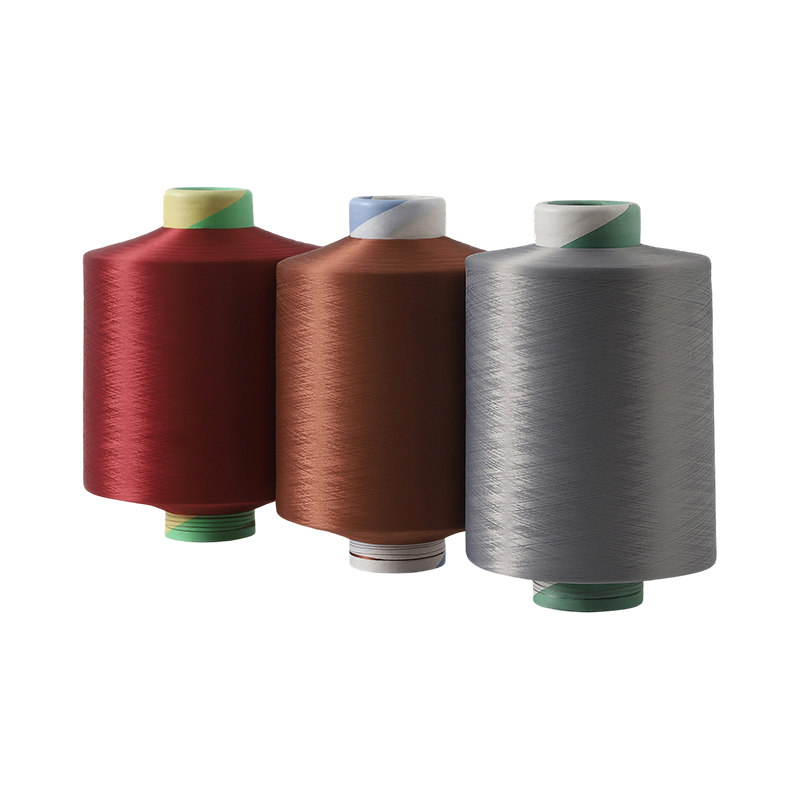 Draw Textured Polyester Yarn for Apparel and Industrial TextilesDTY polyester filament offers elasticity, bulk, smooth processing and broad denier/filament specs for apparel, home and industrial textile applications.View Product →
Where the tex range is fixed by the seam, tenacity is the variable that buys durability. A 7.5 cN/tex yarn at tex 33 usually outlasts a standard tenacity tex 40 thread on an abrasion heavy edge.
Tex Mistakes That Show Up in Sourcing
Most tex errors in purchasing come from mixing direct and indirect systems, or from quoting a number without its ply and tolerance attached.
- Reading a ticket as tex. A Ne 40/2 bonded thread is about tex 29.5, so ordering against the ticket number alone can leave a machine tensioned for a heavier thread than it receives.
- Quoting tex without ply. The plied value is the sum of the ends, and a supplier who only hears the total can deliver a construction the looper will not accept.
- Comparing filament denier with spun count directly. One is a mass over fixed length, the other counts hanks per kilogram, and the two cross only through a conversion step.
- Ignoring shrinkage. A 2 percent boil out shifts the effective linear density and the yield per kilogram, which quietly changes the seam cost you calculated.
- Accepting an average without a tolerance. A lot average of tex 33 with a wide spread behaves differently on a high speed overlock than one held inside plus or minus 3 percent.
A practical check before any purchase order: ask for tex, ply, tenacity and shrinkage in one written line, then compare that line against the previous lot. If any of the four is missing, the comparison is not a comparison.
Matching Tex to End Use
Towelling, garment seaming and carpet edge binding sit in three different tex bands, and staying inside the right band matters less than matching tenacity and elongation to the seam that has to survive.
Towel edge binding
tex 17 to 33
High elastic 150D to 300D yarns that recover after repeated washing and drying, keeping the binding flat against a terry edge.
Garment seaming
tex 25 to 40
Balanced tenacity and elongation so the seam moves with the fabric rather than fighting it under a domestic wash cycle.
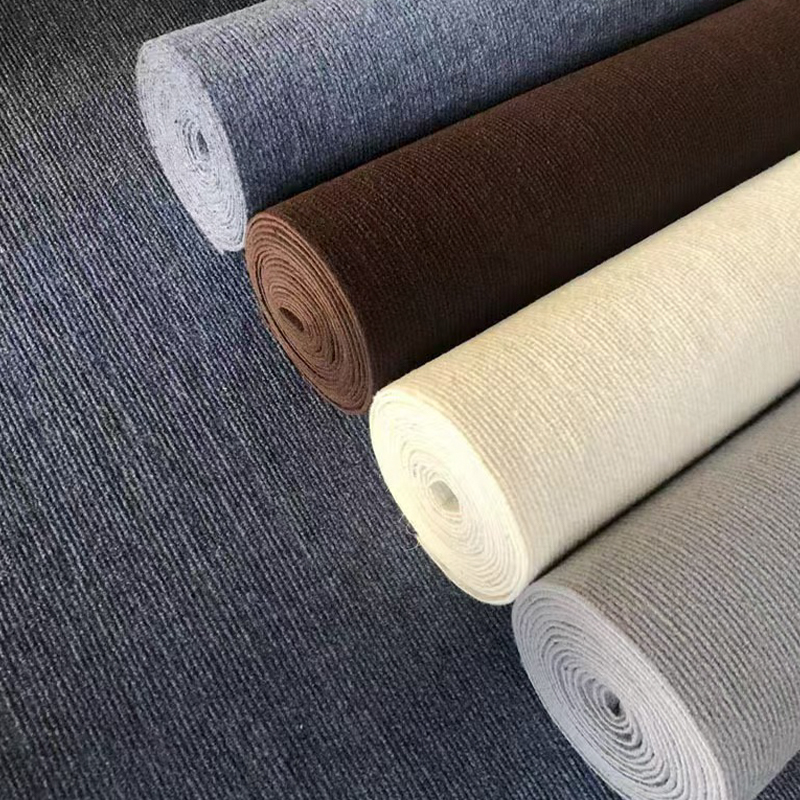
Carpet serging
tex 33 to 67
300D to 600D yarns with the mass and abrasion resistance to hold a cut pile edge through wrapping, transport and vacuuming.
The heavier end of the carpet band is where tex stops being an abstraction and becomes a handling decision. A tex 67 serge fills a bobbin roughly four times faster than a tex 17 garment thread, so bobbin changes per shift belong in the costing, not just in the machine room conversation.
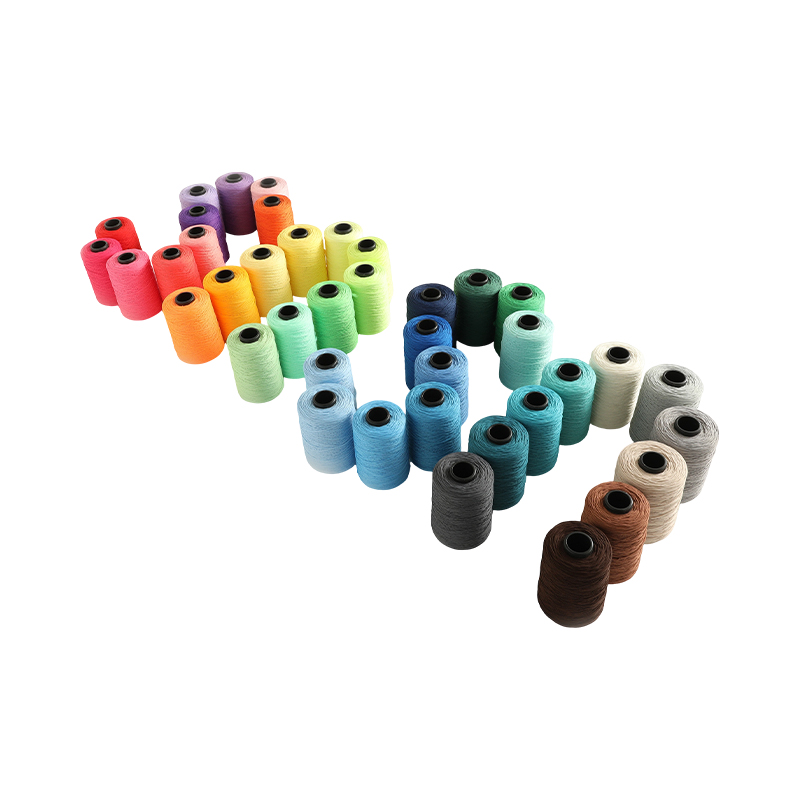 Polyester DTY Overlock Thread for Carpet Edge-Locking100% polyester carpet overlock yarn with zero joints, dense coils, strong resilience and 2100D construction supports high-speed edge-locking across many colors.View Product →
On the towelling side the opposite pressure applies. Elastic recovery matters more than raw mass, because a bound edge that stays stiff after the third wash reads as a defect even when the seam itself is intact.
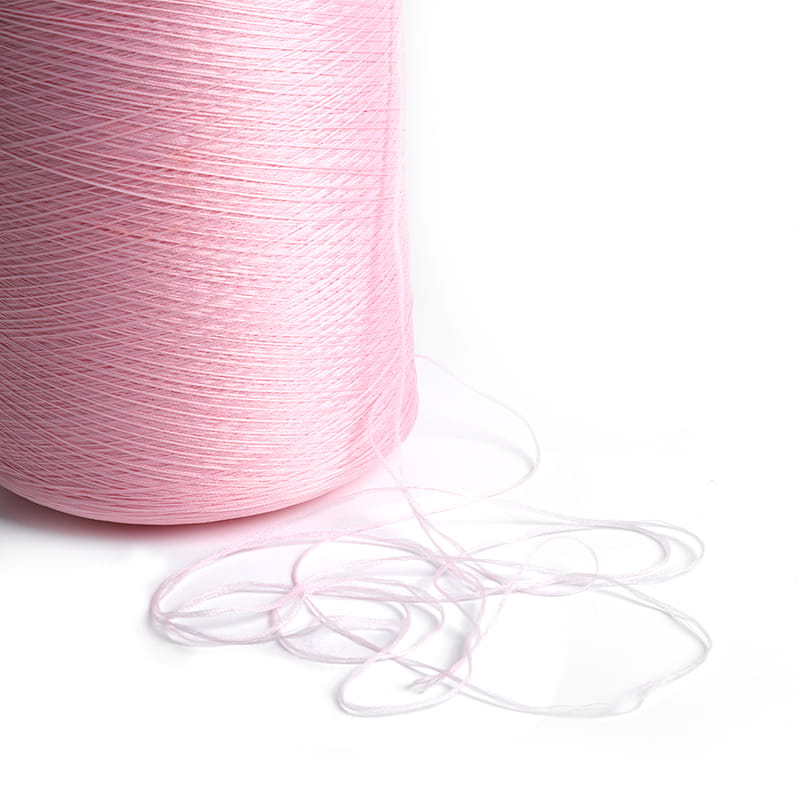 High-Elastic Polyester Towel Overlock Sewing YarnColor-spun 300D/96F polyester towel yarn offers high elasticity, low pilling and durable edges for kitchen and disposable towel overlocking.View Product →
A simple rule that holds across all three bands: choose tex for the machine and the seam thickness, then choose tenacity, elongation and shrinkage for the service life. Reversing that order is how a technically correct tex value still produces a failed edge.
Thread Tex FAQ
Is thread tex the same as thread weight?
No. Thread weight, often printed as a ticket or size number, is an indirect count where a larger number means a finer thread. Tex is direct: a larger number means a heavier thread. A ticket 40 bonded thread sits near tex 30, which is why the two numbers rarely match on the same label.
How do I convert 150 denier to tex?
Divide denier by nine. A 150 denier yarn is tex 16.7, which is the same as 167 dtex and roughly Nm 60 in metric count. A two ply of that yarn is tex 33.3, not tex 16.7, because the plied linear density adds the two ends together.
What tex is standard for sewing thread?
Garment seaming typically uses tex 25 to tex 40, towelling edge binding tex 17 to tex 33, and carpet serging tex 33 to tex 67. Those are starting points, not rules, because tenacity and elongation decide performance once the tex band is fixed.
Why do two suppliers quote different tex for the same yarn?
Usually because one figure is an average and the other is a nominal target, or because one supplier counts plies and the other does not. Ask for the tolerance band and the ply count alongside the tex value, then compare like with like.
If two quotations still look unequal after that check, send your target tex, ply and tenacity requirement through the contact page and ask both suppliers to confirm the same four figures in writing before the trial order.
Tex is only a number until it is tied to ply, tenacity and shrinkage. Fix those four together and the yarn stops being a commodity line item and becomes a specification you can repeat across lots.