English
 عربى
عربى Türk
Türk Español

Content
Two quotes landed on the same desk last month for what both suppliers called the same edge-locking thread. One mill shipped 150D/144F. The other shipped 300D/72F. Same order form, nearly the same price per kilogram, and a finished carpet edge that frayed after two thousand abrasion cycles on one roll while the other held past ten thousand. The number that would have caught the mismatch before the container left port is thread weight.
What Thread Weight Actually Measures
Thread weight is a linear density figure. It records how much a fixed length of thread weighs, and it does not directly describe thickness, strength or stitch appearance.
9,000 m Fixed length behind one denier
1,000 m Fixed length behind one tex
840 yd One hank in the cotton count system
Every system works the same way. Pick a length, weigh it, divide. The systems only disagree about which length to use and which unit to report, which is why 150 denier, 16.7 tex and 166.7 dtex can all describe exactly the same polyester yarn from three different angles.
Definition: thread weight is the mass per unit length of a thread, written either as a direct density such as denier, tex or dtex, or as a count, which is the number of fixed length units required to reach one unit of mass.
Direction is where most buyers get burned. With denier, tex and dtex, a larger number means a heavier and thicker thread. With cotton count and metric count, a larger number means a finer thread. A 40/2 Ne cotton thread and a 40 Nm polyester thread are nowhere near the same product, even though both are written with the number 40.
The Systems You Will See on a Spec Sheet
Most thread weight numbers on a textile purchase order belong to one of six systems.
| System | Fixed length | Unit | Larger number means | Typical use |
| Denier (D) | 9,000 m | gram | Heavier thread | Polyester filament, overlock and edge-locking yarn |
| Tex | 1,000 m | gram | Heavier thread | Sewing thread and industrial yarn specifications |
| dtex | 10,000 m | gram | Heavier thread | European spec sheets and filament yarn data |
| Cotton count (Ne) | 840 yd | pound | Finer thread | Cotton and spun sewing thread |
| Metric count (Nm) | 1,000 m | kilogram | Finer thread | Wool, spun blends and some polyester yarns |
| Weight (wt) | Brand specific | Nominal | Finer thread | Machine embroidery and decorative stitching |
The first thing to check is which direction the number runs. The second is whether the figure describes a single ply or the finished plied thread. A 150D/2 yarn is two 150 denier plies twisted together, so the finished linear density is roughly 300 denier, not 150. A supplier quoting ply weight and a supplier quoting finished weight will never agree on price, and neither of them is wrong.
A specification that says 150D without a ply count is incomplete. Ask for the ply count and the twist direction before you compare two quotations.
Converting Between Weight, Tex and Count
Every conversion runs through one relationship: one tex equals nine denier.
- Convert the quoted unit to tex first. Denier divided by nine gives tex, and dtex divided by ten gives tex.
- Convert tex into a count when the buyer works in counts. 1,000 divided by tex gives Nm, and 590.5 divided by tex gives Ne.
- Check the ply before you use the number. Multiply single ply tex by the ply count to reach finished linear density.
- Confirm the unit printed on the packing list, not only the unit printed on the purchase order.
A 150D/144F polyester yarn converts to 16.7 tex, or 166.7 dtex. Inverted, that is about 60 Nm or about 35 Ne. On a towel edge-locking line the same yarn may be quoted as 150D by one supplier and 167 dtex by another, and a buyer comparing the two numbers alone would see a gap that does not exist.
The longer version of this math, including how weight, tex and denier relate during day to day purchasing, is covered in this guide to converting weight, tex and denier.
Rule of thumb: denier is about nine times tex. If a conversion lands more than three percent away from that ratio, one of the numbers on the sheet is a nominal figure rather than a measured one.
What Thread Weight Changes on the Machine
On an overlock line, higher denier buys coverage and seam strength, and it costs needle clearance, seam bulk and sometimes stitch density.
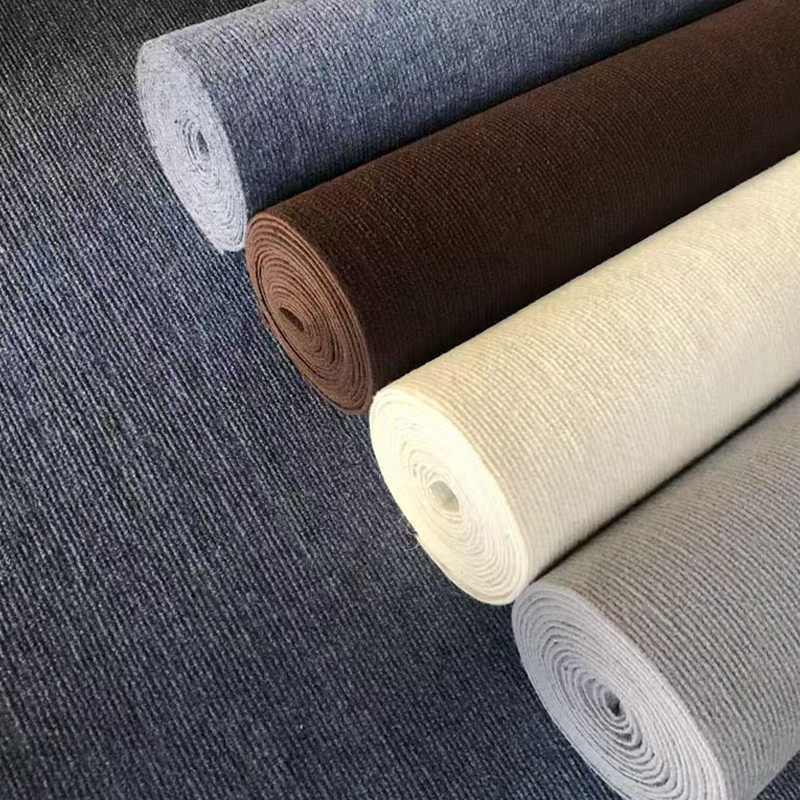
Carpet edge-locking yarn is usually specified between 150D and 300D, because the seam has to survive abrasion, vacuuming and repeated foot traffic without the pile pulling free. A heavier carpet overlock thread holds the cut edge of a loop pile or cut pile carpet more securely, but it needs a larger needle and a slower machine speed.
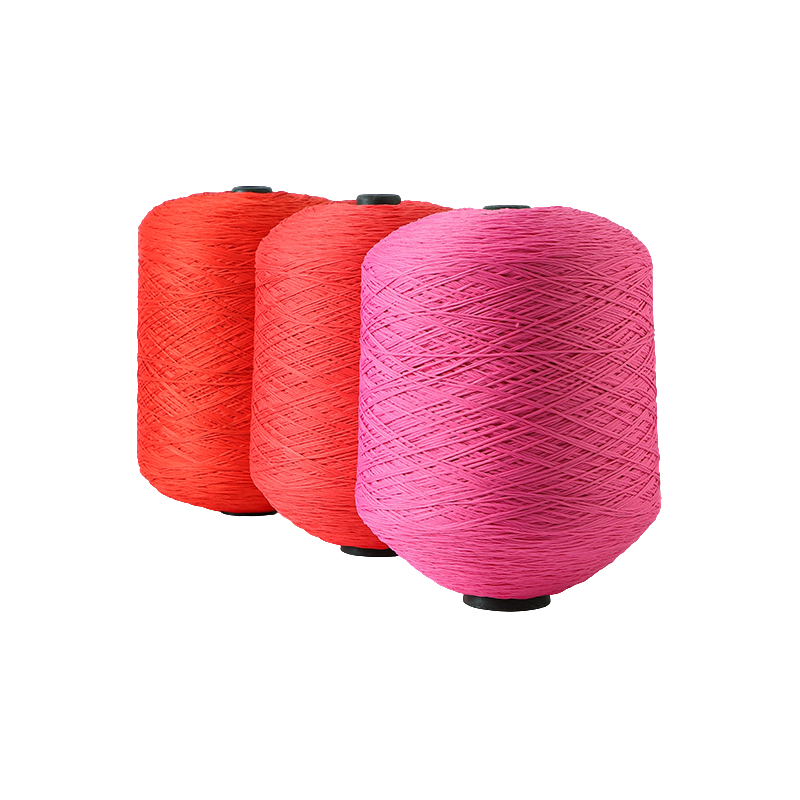
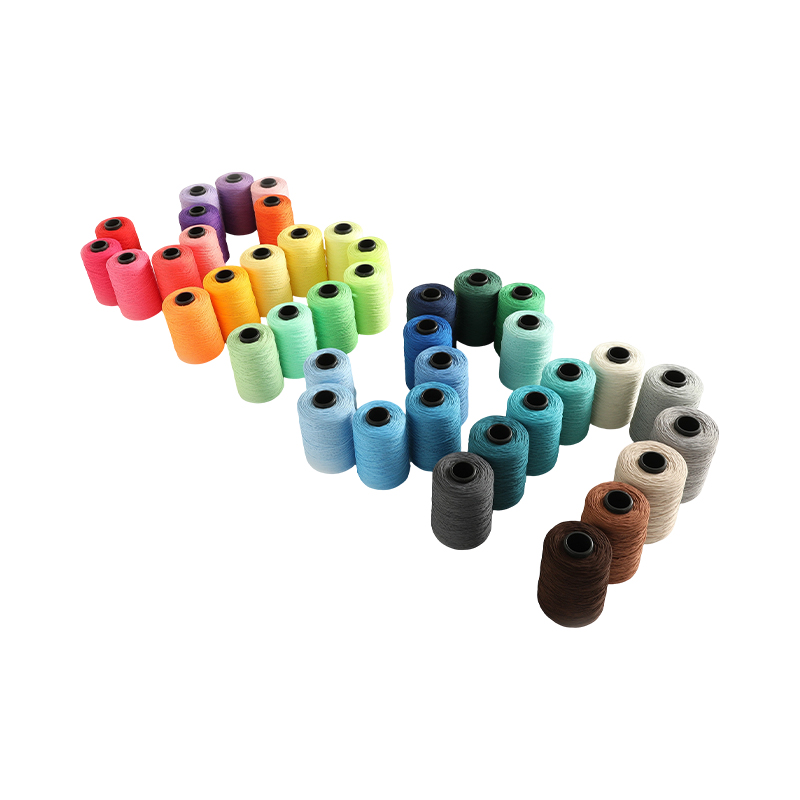
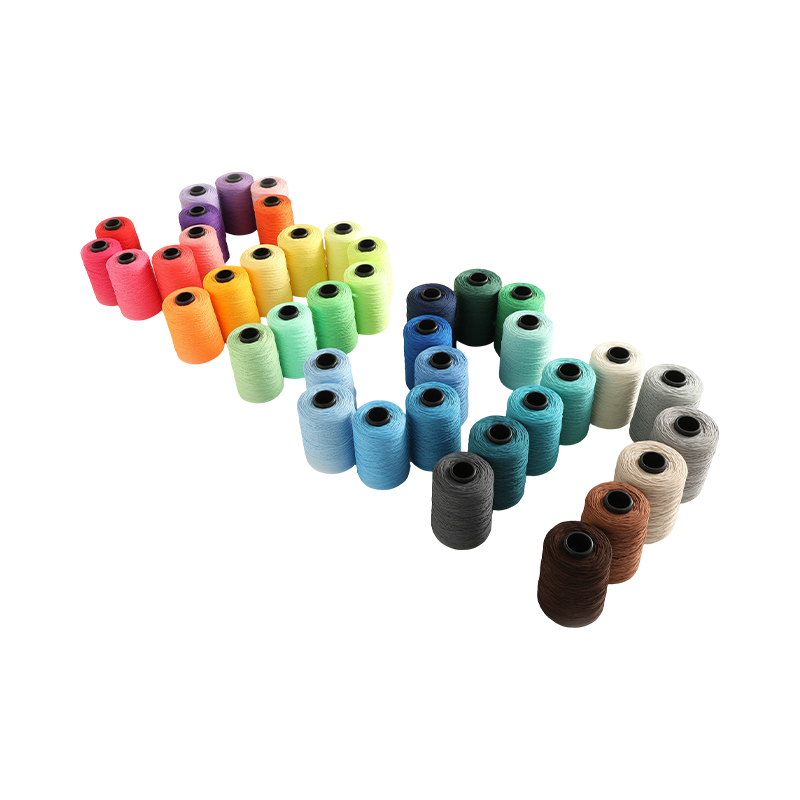 DTY Overlock Thread for Carpet Edging and SeamingCarpet overlock thread with 2100D 100% polyester construction, good wear resistance, and over 200 color options for edging.View Product →
Towel production runs the other way. Terry towels are washed far more often than they are walked on, and the edge has to stay flat through hot washing and tumble drying. A 100D to 150D yarn with good elastic recovery keeps the seam from puckering and helps it spring back after each cycle. Towel overlock thread carrying too much mass per meter can look heavy on the shelf and go wavy at the hem after twenty washes.
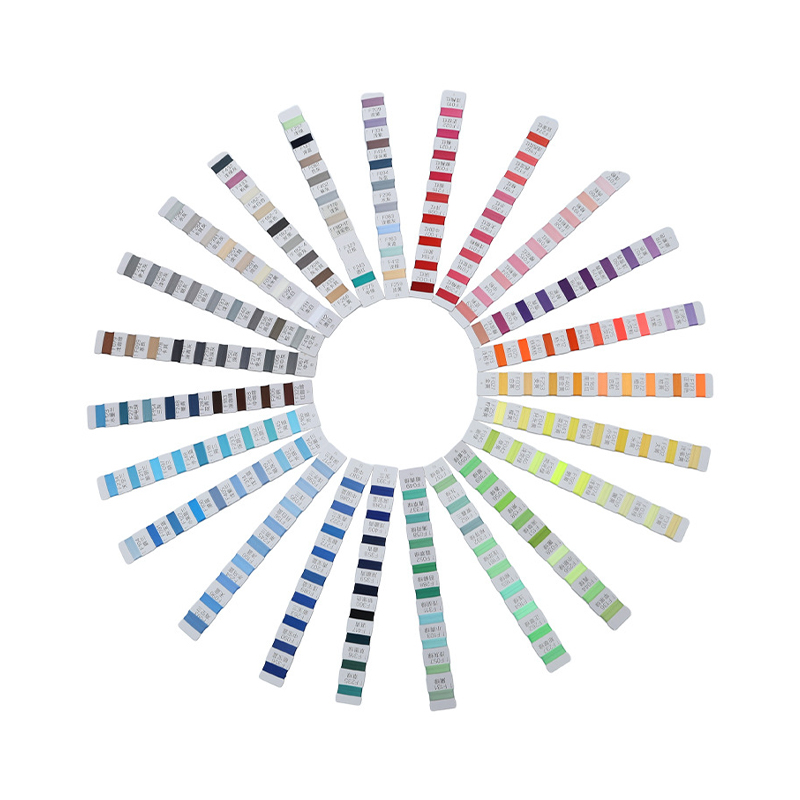 DTY Overlock Thread for Towel Edging and SeamingTowel overlock thread made from high-tenacity DTY polyester, designed to resist breaking, tangling, and pilling on washed terry edges.View Product →
Elasticity matters as much as weight here. A high elastic towel overlock sewing yarn is engineered so the stretched thread recovers after the stitch is formed, which is what stops the edge from curling. Weight alone will not tell you whether a yarn does that.
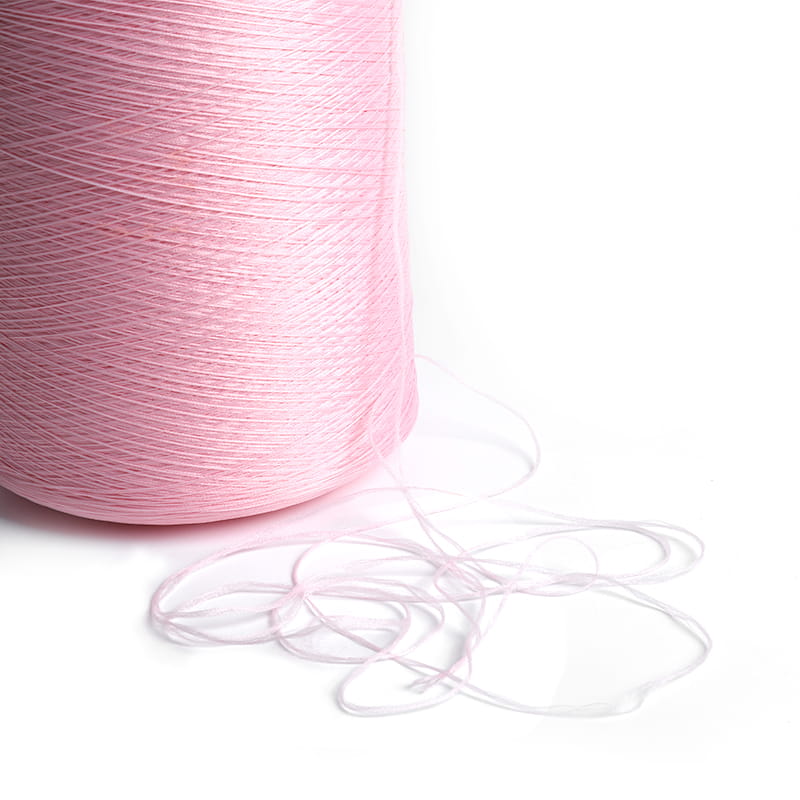 Polyester High Elastic Towel Overlock Sewing YarnHigh-elastic polyester overlock yarn for kitchen and disposable towels, with 300D/96F construction and 18 cm stretch for flat, tight edges.View Product →
A practical starting point: match the thread weight to the fabric weight, then move one step up or down after a wash test. Never change weight and needle size at the same time, or you will not know which change fixed the seam.
Reading a Thread Weight Spec Before You Order
A usable thread weight specification contains four things: a unit, a ply count, a tolerance and a test method.
Ready to quote
- The unit is stated as denier, tex, dtex or a named count
- The ply count is written, for example 150D/2
- A tolerance is given, for example plus or minus three percent
- The test method and conditioning are named
Sample first
- A bare number with no unit attached
- Mixed systems on one sheet, such as 150D next to 60 Nm
- Standard weight with no tolerance band
- Weight quoted for the yarn but not for the finished plied thread
Tolerance is the part buyers skip. A 150D yarn running four percent heavy is 156 denier, which sits inside most commercial ranges and is still enough to shift coverage on a high speed overlock line. If your cost model assumes a fixed mass per meter, put a tolerance band in the purchase order and ask how the number was measured.
Ask one question before the trial run: what length of thread did you weigh, and was the sample conditioned first? Humidity changes the mass of polyester by a small but real amount, and a supplier who cannot answer this is guessing at the number.
Frequently Asked Questions About Thread Weights
Is a higher denier thread always stronger?
No. Denier describes mass per length, not tensile strength. A 300D yarn with low tenacity and poor interlace can break before a well made 150D yarn. Compare tenacity in cN/dtex or breaking strength in newtons alongside the denier figure, and test the finished seam rather than the yarn alone.
What does the number after the slash mean, as in 150D/144F?
The F number is the filament count. 150D/144F means 144 individual filaments make up a 150 denier yarn. More filaments usually means a softer hand and better flexibility at the same weight, while fewer filaments give a crisper, stiffer yarn. Both carry the same 150D label.
Can a 40 wt embroidery thread replace a 150D overlock yarn?
No. The weight system used for embroidery thread is a nominal scale rather than a linear density, and 40 wt is far finer than 150 denier. The two numbers cannot be converted without the manufacturer's own chart.
How do I verify a supplier's thread weight claim?
Cut a known length, condition the sample, and weigh it on a laboratory balance. One hundred meters is a practical length for a 150D yarn. Compare the measured tex with the quoted tex. A difference beyond the agreed tolerance is a supply risk, not a rounding error.
Bottom line: thread weight is a purchasing tool, not a quality grade. Fix the unit, the ply and the tolerance in writing, and the number does its job.