English
 عربى
 Türk
 Español


Content
- 1 The Core Answer: Thread Is Fiber Plus Twist
- 2 Natural Fibers: Cotton, Linen, Silk, and Wool
- 3 Synthetic Fibers: Polyester, Nylon, Viscose, and Aramid
- 4 From Fiber to Spool: How Thread Is Actually Made
- 5 Reading Thread Size: Ticket, Tex, and Denier
- 6 Matching Thread to Carpet and Towel Production
- 7 Frequently Asked Questions
Fiber, twist, and specification
Reel off a metre of sewing thread and you are holding a rope built in reverse: thousands of fibers, spun or extruded, twisted together, then twisted again in the opposite direction. What thread is made of fixes nearly every number a buyer cares about, including tenacity, elongation, shrinkage after washing, color fastness, and whether the thread survives a needle running at 7,000 stitches per minute.
Fiber choice is the first decision. Twist, ply, and surface finish are the next three, and they are the ones most often left off a purchase order.
The Core Answer: Thread Is Fiber Plus Twist
Thread is made of staple fibers that are spun into a yarn or continuous filament fibers that are twisted together, and that yarn is then plied, finished, and wound onto a package.
Thread is a linear textile structure formed from natural staple fiber or synthetic filament, spun or twisted into a yarn, plied two or more times to balance the twist, and finished for the needle it will run through.
Two fiber families, one mechanical logic. Cotton, linen, and wool arrive as short staple; silk arrives as a natural filament. Polyester, nylon, and aramid are extruded as continuous filament through a spinneret. Staple fibers must be parallelized and twisted, because friction between overlapping fibers is what carries the load. Filament fibers already carry load along their length, so twist exists mainly to bundle them and control abrasion.
That is also why yarn and thread are not the same purchase. A single yarn can be knitted straight into fabric. A sewing thread is almost always plied, with two or more singles twisted together in the direction opposite to the first twist, then lubricated, bonded, or glazed.
Four levers decide how a thread behaves on the machine:
- Fiber type, plus staple length or filament denier
- Twist per metre, and the number of plies
- Surface finish: lubrication, bonding, glazing, or wax
- Dyeing and heat setting, which can cost tenacity if the profile is wrong
| Fiber | Form | Typical thread role | Main trade-off |
| Cotton | Natural staple, 2 to 6 cm | Apparel seams, quilting, towelling | Aabrades and shrinks unless pre-shrunk |
| Silk | Natural filament | Fine tailoring and buttonhole work | High cost, poor abrasion resistance |
| Polyester | Synthetic filament or staple | Overlock, carpet, industrial seams | Low moisture regain, heat sensitive above 180 C |
| Nylon | Synthetic filament | Heavy upholstery, outdoor goods | UV degradation, high elongation |
| Viscose | Regenerated cellulose | Embroidery, soft seams | Loses much of its strength when wet |
| Aramid | Synthetic filament | Heat and flame protection | Poor UV resistance, very low elongation |
Natural Fibers: Cotton, Linen, Silk, and Wool
Cotton is the most common natural thread fiber, and it dominates apparel and household sewing because it spins cleanly, dyes to deep shades, and tolerates needle heat without glazing.
- Cotton. Staple length runs from 2 to 6 cm, and combed long-staple cotton can be 15 to 30 percent stronger than a carded cotton of the same count. Mercerized cotton shrinks less and takes dye deeper.
- Linen. Extremely low elongation and poor flex resistance, so it suits decorative stitching and heavy goods where a stiff seam is acceptable.
- Silk. A continuous natural filament, fine and strong for its size, but expensive and quick to abrade.
- Wool. Warm and elastic, yet it felts under heat and moisture, so it rarely serves as a structural seam thread.
Staple length is the hidden variable. Two cotton threads printed with the same ticket number can differ by a third in strength once combing and staple length are accounted for, which makes price per cone a poor comparison without a tenacity figure.
When the choice sits between a cotton and a polyester seam, compare strength, shrinkage, and seam durability in the same units before the sampling stage rather than after the first wash test.
Synthetic Fibers: Polyester, Nylon, Viscose, and Aramid
Polyester is the most widely used synthetic thread fiber, and filament polyester is the default for high-speed overlock lines and industrial seams because it pairs high tenacity with a moisture regain of roughly 0.4 percent.
PET is melt-spun and supplied bright, semi-dull, or dope-dyed; low-shrinkage and high-elastic variants come from changing the draw and texturing profile rather than the polymer itself. Nylon is tougher and more elastic but degrades under UV. Viscose is soft and absorbent yet loses much of its strength when wet. Aramid holds its properties in heat and flame exposure, at the cost of poor UV resistance and very low elongation.
Where natural fibers win
- Comfort and hand feel against skin
- Dye depth and matte appearance
- High moisture regain, so less static build-up
Where synthetic fibers win
- Tenacity and abrasion resistance at fine counts
- Low shrinkage with predictable recovery
- Resistance to rot, mildew, and UV with the right stabilizer
Filament and staple polyester are different products under the same name. Filament gives a smooth, strong, almost glass-clear thread with no protruding fiber ends. Staple polyester is spun, softer, more matte, and roughly 20 to 30 percent weaker at equal count.
Textured polyester, sold as DTY, is the base material behind most overlock threads used on carpet and towelling edges, because the false-twist crimp supplies both bulk and stretch recovery.
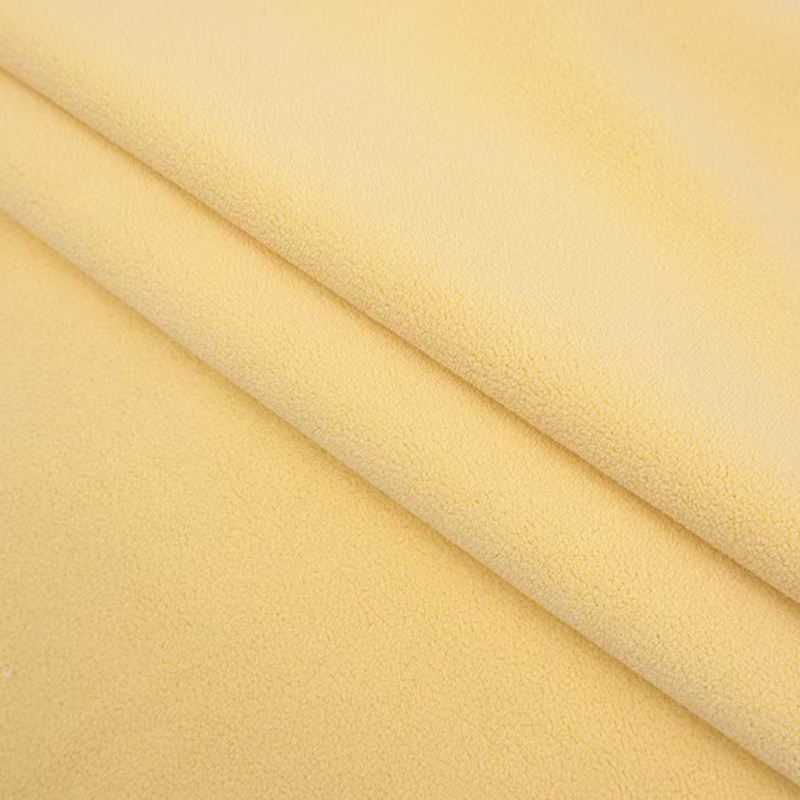
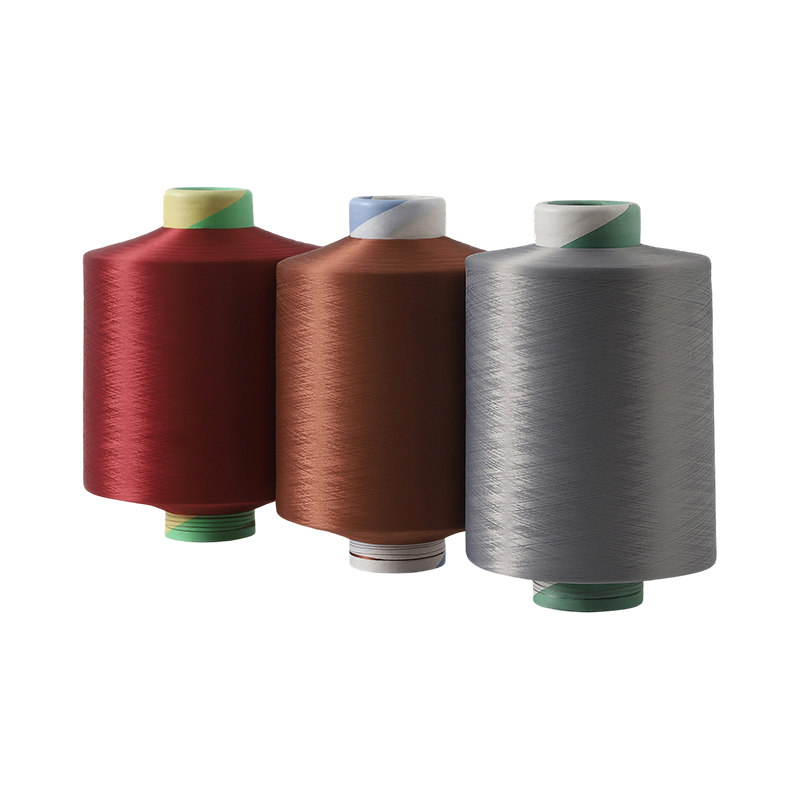 Draw Textured Polyester Yarn DTYPolyester DTY offers elasticity, bulk, and a soft handfeel for home textiles, apparel, and industrial uses, with dyed yarn options available.View Product →
From Fiber to Spool: How Thread Is Actually Made
Thread production runs through four stages, and each one can move the number printed on the cone.
- Spinning or extrusion. Staple fiber is carded, combed, drawn, and spun; polymer is melt-spun into filament of a set denier and filament count.
- Drawing and texturing. Filament is drawn to build tenacity, then false-twisted or air-textured to add bulk, stretch, and cover.
- Twisting and plying. Singles are twisted, then two or three are plied in reverse so the finished thread hangs straight and does not snarl.
- Finishing and winding. Lubricant, bonding, or glazing goes on last, followed by dyeing and winding onto cones or tubes.
A two-ply thread is not simply twice as strong as a single of the same size, but it is far better balanced. The second twist cancels the live twist of the first, which is exactly what stops a thread from kinking, throwing loops, and skipping stitches at speed.
Reading Thread Size: Ticket, Tex, and Denier
Thread size is written in three competing systems, and mixing them is the most common specification error on a purchase order.
Tex
Grams per 1,000 metres. The metric route, used across most industrial specifications.
Denier
Grams per 9,000 metres. Standard for filament yarn and polyester sewing thread.
Ticket
An inverse count: the higher the ticket number, the finer the thread.
None of the three describes a plied thread on its own. A 150D/3 polyester thread is three 150-denier singles twisted together, so the resultant size lands near 450 denier before twist take-up.
| End use | Typical fiber | Size call | What to watch |
| Light apparel seams | Cotton or polyester staple | Ticket 60 to 80 | Needle heat and tension settings |
| Denim and heavy wovens | Core-spun polyester | Ticket 20 to 30 | Abrasion at the seam fold |
| Towel overlock | High-elastic polyester | 150D/2 to 150D/3 | Shrinkage and recovery after washing |
| Carpet overlock | Bulked polyester | 300D/2 to 300D/3 | Edge bulk and coverage |
For worked conversions between weight, tex, and denier, this guide to thread weight conversion walks through the arithmetic with practical examples.
Matching Thread to Carpet and Towel Production
In carpet and towel manufacturing, thread is chosen by the seam it has to survive rather than by the fabric it is meant to match.
Towel overlock seams meet repeated washing at 60 degrees C and mechanical drying, so the thread needs high elastic recovery and low shrinkage; a high-elastic polyester overlock yarn keeps the edge flat instead of puckering after fifty cycles. Carpet overlock is a different problem, because the thread sits at the cut edge where it rubs against subfloor, vacuum brushes, and chair castors, so bulked polyester with controlled texturizing and solid abrasion resistance is the practical standard.
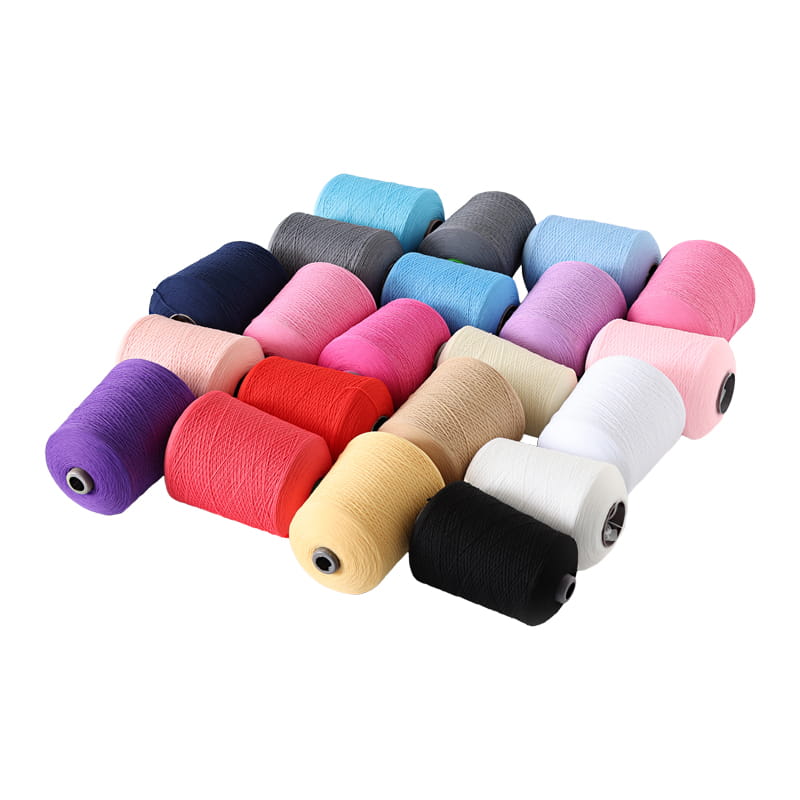
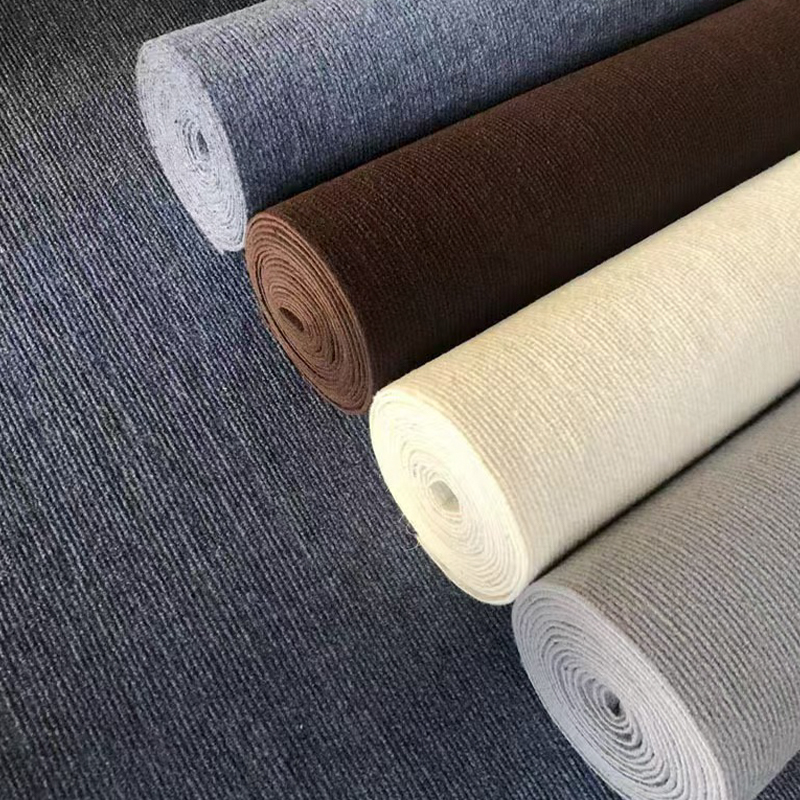
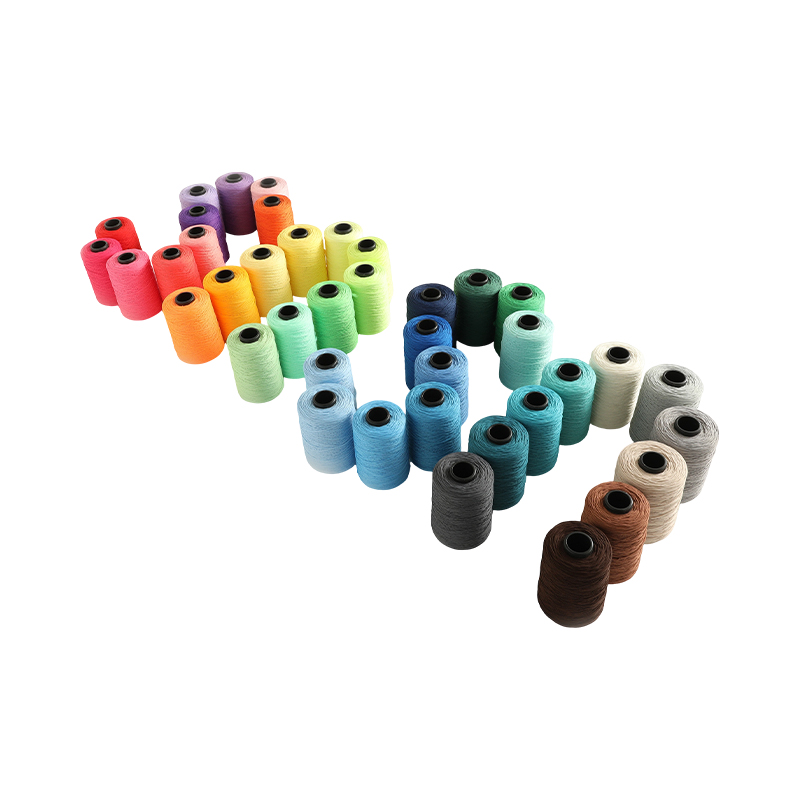 DTY Overlock Thread for Carpet EdgesBulked polyester overlock thread with dense coils, high toughness, and more than 200 colors for carpet edge-locking and related sewing applications.View Product →
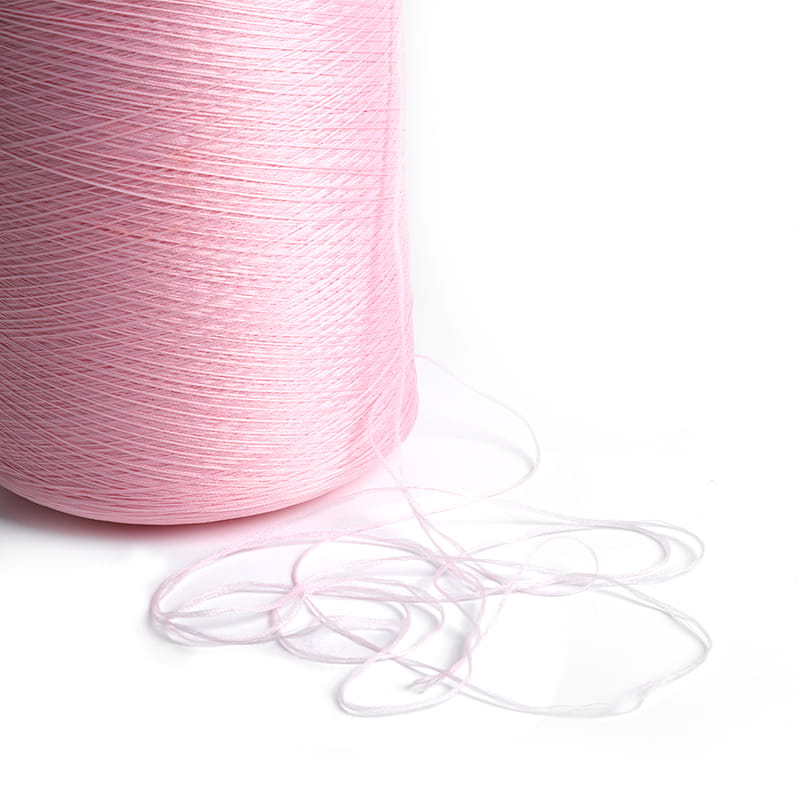 High-Elastic Polyester Towel Overlock YarnColor-spun polyester overlock yarn with high elasticity and level 4 fastness, suited to kitchen and disposable towel seaming on manual or automatic machines.View Product →
Seam failure is usually a specification mismatch, not a manufacturing defect: the wrong ply, the wrong elongation, or a shrinkage figure that only appears after the third wash.
Fiber selection, texturizing, plying, and packing under one roof shortens the loop between a failed seam and the next production lot. Suzhou Tongdeli runs spinning, texturizing, winding, and packing inside a single plant, a setup that is set out in more detail on the company profile page.
Frequently Asked Questions
Is thread made of plastic?
Part of the market is, yes. Polyester, nylon, and aramid threads are synthetic polymers, while cotton, linen, silk, and wool threads are natural fibers. Viscose sits between the two as a regenerated cellulose fiber.
What is the difference between thread and yarn?
Yarn is the base strand and is often single. Thread is a finished sewing product, normally plied two or more times and then lubricated, bonded, or glazed so it can pass through a needle at speed without fraying.
Why is polyester used for overlock thread?
Polyester combines high tenacity, low moisture regain, and low shrinkage, and it can be textured for elasticity. That is what a towel or carpet edge needs in order to recover after washing instead of puckering.
Does the fiber change shrinkage?
It does. Cotton can shrink several percent on the first wash, while low-shrink polyester filament is often held under 1 percent. Ply and twist also affect how much the finished seam moves.
The shortest reliable brief for any thread purchase: fiber, resultant size, ply, twist direction, elongation, shrinkage after wash, and finish. Everything else is negotiation.