English
 عربى
عربى Türk
Türk Español
Content
- 1 What Manufactured Fibers Are Made From: The Two Feedstock Families
- 2 Polyester: PTA, MEG and a Great Many Shredded Bottles
- 3 Nylon, Polypropylene, Acrylic and Elastane: The Other Synthetic Feedstocks
- 4 From Polymer to Filament: Spinning, Drawing and Texturing
- 5 Wood Pulp, Solvents and Recycled Flakes: The Other Starting Points
- 6 What to Verify Before You Buy
- 7 Frequently Asked Questions
A manufactured fiber starts life as a polymer: either one nature already built and we dissolve and re-form, or one synthesised in a reactor from petrochemical or bio-based building blocks. That is the whole answer in one line, and it is far less useful than it sounds. What actually decides how a yarn behaves on your machine is which polymer it is, how it was melted or dissolved, and what the spinneret and the drawing rolls did to it afterwards.
Follow a carpet yarn, a towel overlock thread or a sports jersey back to its origin and you never arrive at a field. You arrive at a chemical plant, a dissolving pulp mill or a bale of shredded drink bottles. Around seven of every ten kilos of fiber spun worldwide each year are manufactured rather than grown, and polyester alone accounts for more than half of that total.
Manufactured fiber
A fiber formed from a fiber-forming substance that is not naturally fibrous. The polymer is melted, dissolved or chemically converted, then forced through a spinneret and solidified into a continuous filament or cut into staple.
What Manufactured Fibers Are Made From: The Two Feedstock Families
Manufactured fibers come from one of two feedstock families: regenerated natural polymers, where cellulose from wood pulp is dissolved and re-formed, and synthesised polymers built from petrochemical or bio-based monomers, plus a small inorganic group that includes glass and carbon.
The split matters commercially. Regenerated cellulose takes dye easily and feels cool, but loses strength when wet. Synthetics are stronger and more uniform, yet they need heat and dispersive dyes, and their price follows oil and recycled flake markets rather than harvests.
| Fiber | Base feedstock | Forming route |
| Polyester (PET) | PTA plus monoethylene glycol, or recycled PET flake | Melt spun |
| Nylon 6 | Caprolactam | Melt spun |
| Nylon 6,6 | Adipic acid plus hexamethylenediamine | Melt spun |
| Polypropylene | Propylene | Melt spun at lower temperature |
| Acrylic | Acrylonitrile, 85 percent or more by mass | Dry or wet spun from solvent |
| Elastane | Polyurethane from PTMEG and MDI | Dry spun |
| Viscose and modal | Dissolving-grade wood pulp cellulose | Wet spun through a spin bath |
| Lyocell | Cellulose dissolved in NMMO | Dry-jet wet spun |
| Acetate | Cellulose plus acetic anhydride | Dry spun |
| Glass and carbon | Silica sand and limestone, or a PAN precursor | Melt spun, or carbonised above 1,000 C |
If you want the wider taxonomy, with natural, regenerated and synthetic families side by side, our overview of fiber definition and types sets out where each group sits.
Polyester: PTA, MEG and a Great Many Shredded Bottles
Polyester fiber is made from polyethylene terephthalate, a polymer produced by condensing purified terephthalic acid with monoethylene glycol, or by melting PET recovered from bottles and textile waste back into filament.
The virgin route starts with naphtha or natural gas, cracked and oxidised into PTA, then reacted with MEG at 270 to 290 C under vacuum until the molecular chains reach the right length. From there the melt either goes straight to a spinning manifold or is cast into chips that are dried and re-melted later. In both cases the chain length, measured as intrinsic viscosity, is what everything downstream depends on.
Virgin PET route
- Feedstock: PTA and MEG from petrochemicals, or bio-based MEG from sugarcane.
- Polymerisation at 270 to 290 C under vacuum to drive off glycol.
- Narrow viscosity window and predictable colour, priced against oil and PTA.
Recycled PET route
- Feedstock: post-consumer bottles, flake, or depolymerised textile waste.
- Sorting, washing, flake drying, filtration and sometimes solid-state polycondensation.
- Wider viscosity range and colour scatter, with contamination risk from PVC and adhesives.
What changes in the fiber: recycled PET usually arrives with a wider intrinsic viscosity window and more colour variation than virgin polymer, and trace PVC or label adhesive can create brittle spots when filtration is weak. Ask for the IV range, a colour tolerance and the certificate behind the recycled claim before committing to a bulk order.
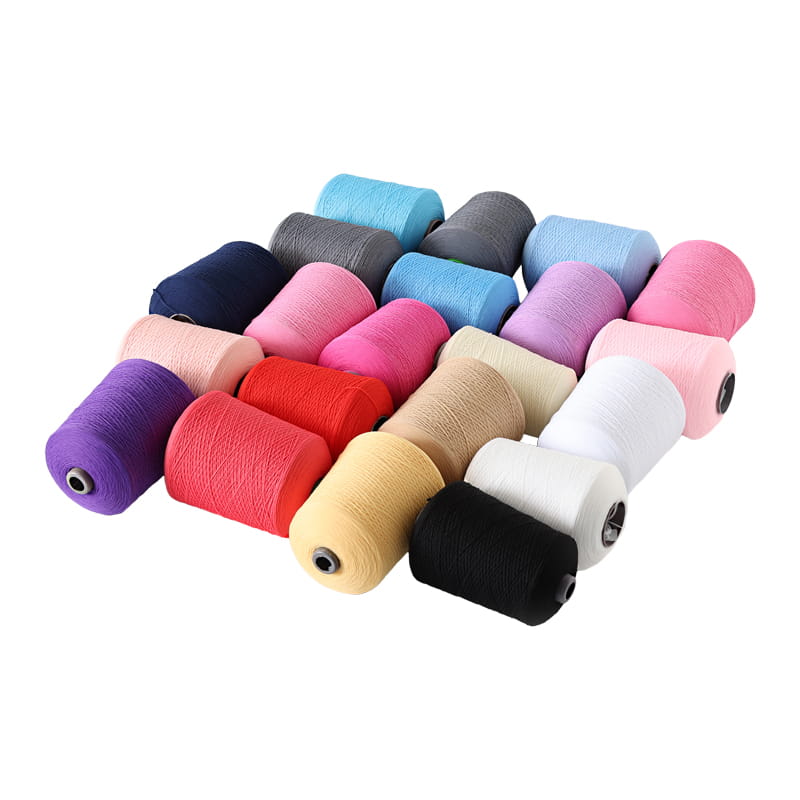
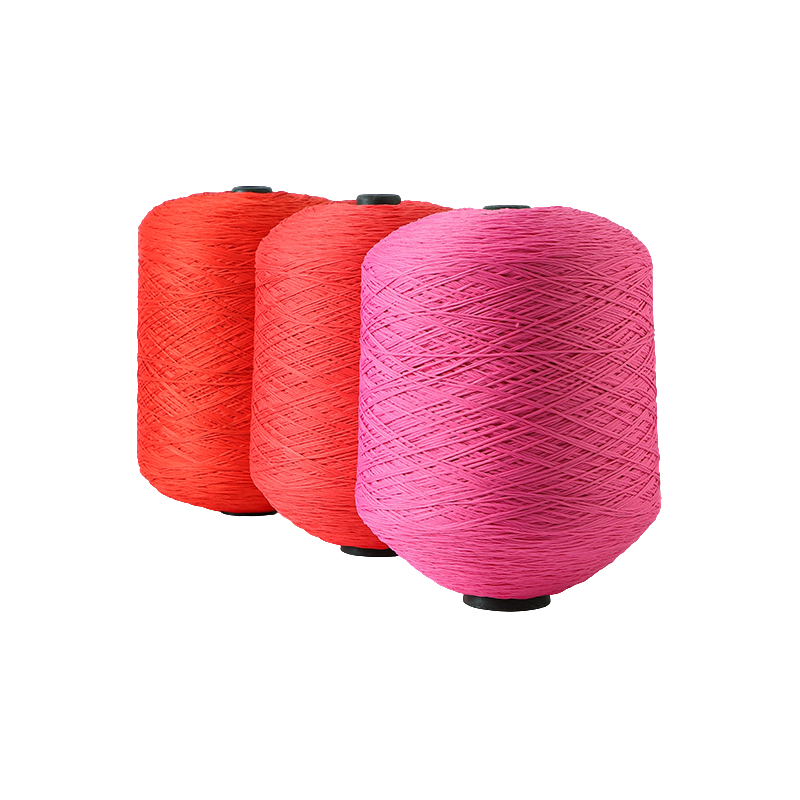
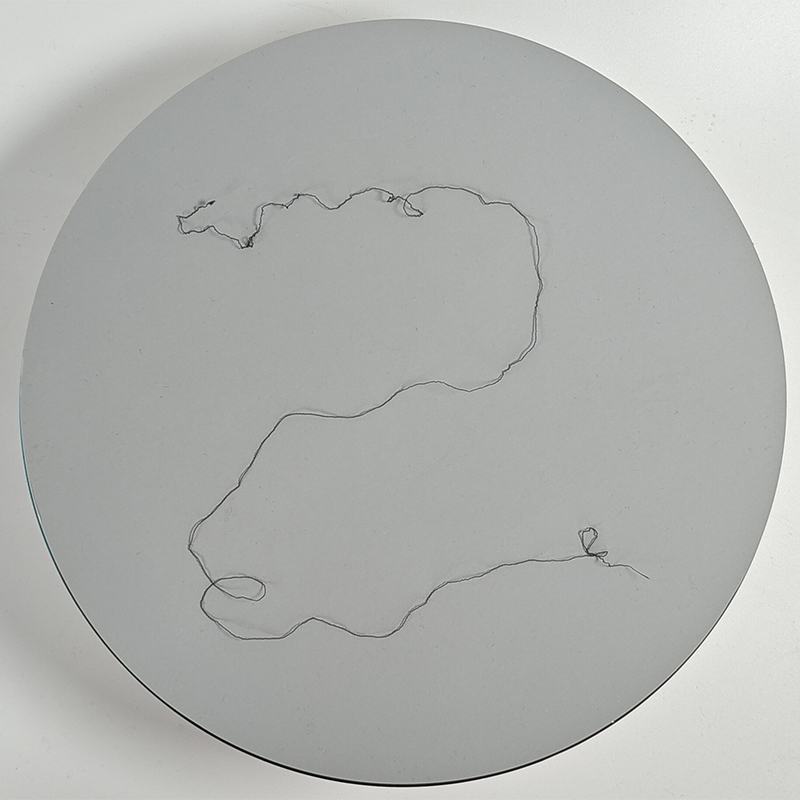 Super Polyester Elastic Filament for Spandex ReplacementHigh-grade polyester yarn with heat-activated elasticity, color-spun options, OEKO-TEX and GRS qualifications; review IV, colour tolerance and dyeing limits before bulk sourcing.View Product →
Recycled polyester is not a lower grade by default. Mechanical recycling keeps the polymer intact, and chemical recycling breaks it back to monomers so the output is indistinguishable from virgin resin. What varies is input quality, which is a filtration and testing question rather than a chemistry question.
Nylon, Polypropylene, Acrylic and Elastane: The Other Synthetic Feedstocks
After polyester, the main synthetic feedstocks are caprolactam for nylon 6, adipic acid plus hexamethylenediamine for nylon 6,6, propylene for polypropylene, acrylonitrile for acrylic, and a polyurethane built from PTMEG and MDI for elastane.
- Nylon 6: caprolactam rings are opened and polymerised, then melt spun at roughly 250 to 270 C. It dyes deeply and resists abrasion, which is why carpet face yarn relies on it.
- Nylon 6,6: a stiffer, higher-melting polyamide with better heat resistance, used in industrial cord and demanding carpet specifications.
- Polypropylene: polymerised from propylene and melt spun at 230 to 260 C. It is lighter than water, chemically inert, and common in nonwovens and backing fabrics.
- Acrylic: at least 85 percent acrylonitrile, dissolved in DMF or DMAc and dry spun into a wool-like, UV-stable filament.
- Elastane: a segmented polyurethane that stretches to several times its length, which is why a small percentage carries a whole fabric.
- Glass and carbon: melted minerals or a carbonised PAN precursor. They are manufactured fibers too, just not the ones you sew.
Terminology check
Do not treat synthetic as a single material. Polyamide, polypropylene, acrylic and elastane dye at different temperatures, shrink at different rates and melt at different points, so a blend needs a dyeing recipe built around its weakest component.
From Polymer to Filament: Spinning, Drawing and Texturing
Whatever the feedstock, the fiber is formed by spinning: the polymer is melted or dissolved, filtered, metered through a spinneret, quenched, then drawn and textured to fix its final properties.
Melt spinning covers polyester, nylon and polypropylene. Solution spinning covers acrylic, viscose, lyocell, acetate and elastane, where the polymer is dissolved in a solvent and solidified in a bath or in hot air. The spinneret is the same idea in both cases: a plate with one hole or several thousand, each producing one filament.
Polymer preparation
PET chips are dried to below about 50 ppm moisture before melting. Skip this and hydrolysis during extrusion eats molecular weight, which later shows up as broken filaments.
Extrusion
The melt is filtered to remove gels and particles, then metered through the spinneret at 260 to 290 C. Hole diameter and throughput set the filament linear density.
Quenching and finish
Filaments are cooled in cross-flow air and coated with a spin finish, a dilute oil that controls friction and static through drawing and weaving.
Drawing
The bundle is stretched roughly three to four times between godets. This aligns the polymer chains and sets tenacity, elongation and boiling water shrinkage.
Texturing or interlacing
False-twist texturing gives DTY its bulk and softer hand. Flat yarns may instead be air interlaced to hold filaments together without adding twist.
Winding and conditioning
Package density, tail length and moisture conditioning decide whether the yarn runs clean at 800 metres per minute or breaks on the loom.
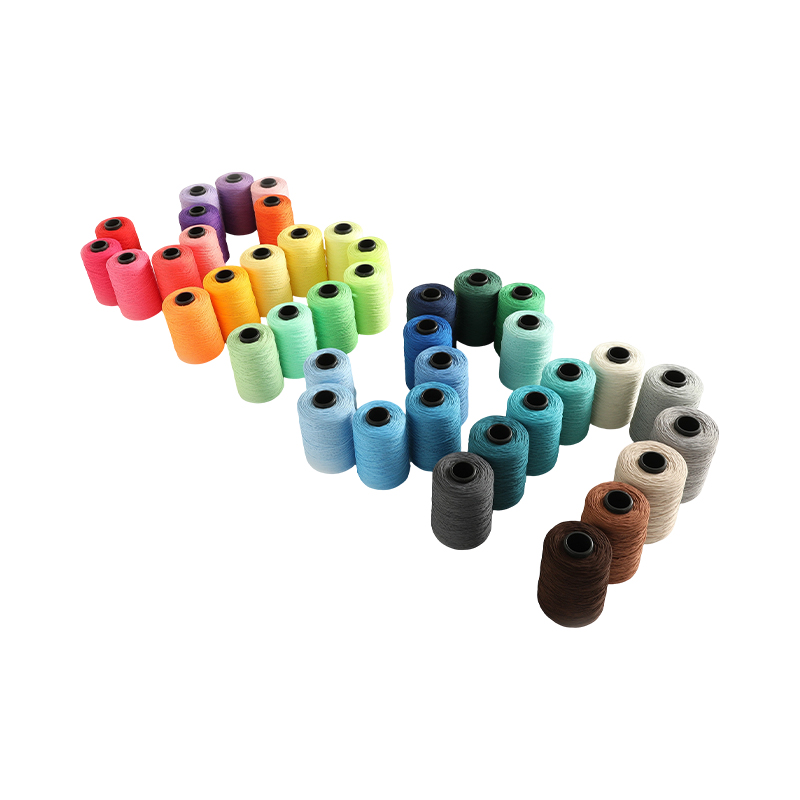
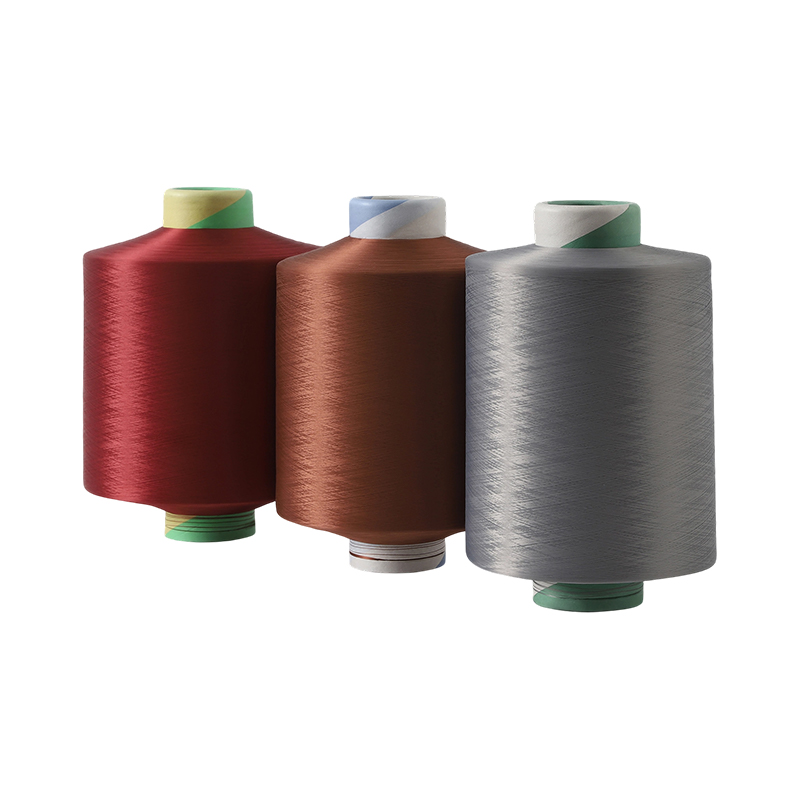 DTY Draw Textured Polyester Filament for Textile UsesDrawn and false-twist textured polyester filament offering bulk, stretch and soft hand; compare with POY and FDY and check denier-per-filament before sourcing.View Product →
Wood Pulp, Solvents and Recycled Flakes: The Other Starting Points
Viscose, modal, lyocell and acetate are all made from cellulose, the same polymer that builds a tree, dissolved in a chemical system and re-formed into filament.
Cellulose route
Dissolving-grade wood pulp is steeped in caustic soda, aged and reacted with carbon disulphide, then wet spun into an acid bath. Lyocell skips that step, dissolving cellulose directly in NMMO with most of the solvent recovered.
Recycled synthetic route
Bottle flake and textile waste feed the recycled DTY and POY lines. Mechanical recycling re-melts the polymer; chemical recycling returns it to monomers. The fiber chemistry stays PET either way.
Bio-based and inorganic route
Bio-based MEG from sugarcane is drop-in for conventional MEG. Polylactic acid spun from corn starch is compostable but softens at low heat. Carbon and glass come from precursors and minerals rather than polymers.
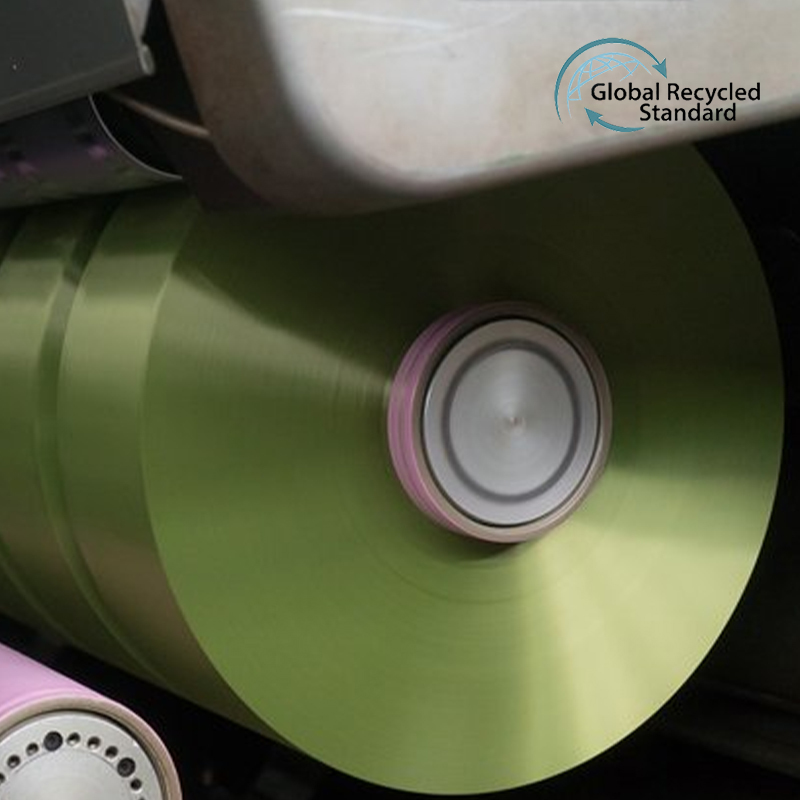 Recycled POY Color-Spun Polyester Yarn for CarpetsRegenerated polyester POY color-spun yarn for carpets and towels, with broad specifications and sustainability claims; verify recycled-content traceability and certification before sourcing.View Product →
Bio-based is a loaded word. A fiber can carry bio-attributed content through mass balance accounting, meaning the bio-feedstock entered a shared production system rather than that specific batch. If bio content sits in your specification, ask whether the claim is physically traceable or mass balance, and which certificate verifies it.
What to Verify Before You Buy
Ask for five things and one certificate: the polymer, the denier and filament count, the tenacity, the boiling water shrinkage, and the recycled or bio-based content with the certificate that backs it.
150D
Denier is the mass in grams of 9,000 metres. Decitex uses 10,000 metres, so convert before comparing quotes.
36F to 288F
Filaments per bundle. More filaments at the same denier gives a softer, denser hand.
3.5 to 8 cN/dtex
Textile filament sits at the low end, industrial grades at the top, and higher tenacity usually means lower elongation.
1 to 10 percent
Boiling water shrinkage is set by heat history: low for warp yarns, higher for textured filling.
Buying tip
Lot-to-lot consistency causes more production problems than the headline specification. Two shipments can both read 150D/144F and still behave differently if the spin finish level, interlacing density or colour route differs. Ask whether the supplier spins the polymer in-house or resells purchased yarn, because that decides who can actually answer a shrinkage question three months into a contract.
We run spinning, texturing, winding and packing under one roof, so a specification question tends to reach the person who set the machine rather than a trading desk. You can see how that is arranged on our spinning-to-finished-goods production page.
Frequently Asked Questions
What are manufactured fibers made from?
They are made from a fiber-forming polymer that is melted, dissolved or chemically converted and then extruded through a spinneret. The feedstock is either a regenerated natural polymer such as cellulose from wood pulp, or a synthesised polymer such as polyester, nylon, polypropylene, acrylic or elastane, with glass and carbon forming a smaller inorganic group.
Is polyester natural or synthetic?
Synthetic. Polyester fiber is polyethylene terephthalate, built by reacting purified terephthalic acid with monoethylene glycol. The glycol can be bio-based and the polymer can come from recycled bottles, but the molecule itself is man-made rather than grown.
Are any manufactured fibers made from wood?
Yes. Viscose, modal, lyocell and acetate all begin with dissolving-grade wood pulp. The cellulose is separated from the lignin, dissolved in a solvent system and re-formed into filament, which is why they are classed as regenerated rather than synthetic fibers.
Does recycled polyester perform the same as virgin polyester?
In the fiber itself, yes, provided the flake is clean, intrinsic viscosity is controlled and filtration is adequate. Differences show up in colour consistency, viscosity spread and trace contamination rather than in tenacity or shrinkage, so the testing regime matters more than the recycling route.
The short version: manufactured fibers are made from polymers, not plants. Regenerated cellulose fibers start with wood pulp. Synthetic fibers start with monomers such as PTA and MEG, caprolactam, propylene or acrylonitrile. A growing share now starts with recycled flake or bio-based feedstock instead.